
If your furnace has been running nonstop and your Monticello, MN home still feels like a walk-in freezer, the problem is almost certainly your building envelope, not your heating system. In Minnesota’s Climate Zone 6, where winter temperatures regularly drop well below zero, insufficient insulation and unsealed air leaks allow the heat your furnace produces to escape almost as fast as it is generated. The result is a house that never reaches a comfortable temperature, no matter how high you crank the thermostat. The real fix involves identifying where heat loss occurs through conduction, convection, and air leakage, and then addressing those specific problem areas with the right insulation and air sealing strategy. A professional spray foam insulation installation can help eliminate many of these energy-loss pathways and improve overall home comfort.
Monticello, MN, falls within Climate Zone 6, one of the coldest climate zones in the continental United States. According to the Department of Energy, homes in Zone 6 need attic insulation rated at R-60 for uninsulated attics, and R-49 where 3 to 4 inches already exist. U.S. Department of Energy – Insulation. For walls, the recommendation is R-20 or higher with continuous insulation, and floors over unheated spaces should reach R-30. When a home in this climate zone has outdated or compressed insulation, or insulation that was never properly installed, the temperature difference between the heated living space and the outdoor air creates aggressive heat loss through every weak point in the building envelope. Wikipedia notes that around 40% of energy consumption in buildings is attributed to heating and cooling, and that insufficient insulation directly increases the load on HVAC systems while reducing thermal comfort Wikipedia – Building Insulation.
Understanding why your house stays cold starts with understanding how heat moves. The Department of Energy explains that heat transfers through three basic mechanisms, and your home is vulnerable to all of them:
Air leakage is frequently the biggest reason a home feels cold despite constant heating. The U.S. Department of Energy describes air leakage as outside air entering and conditioned air leaving the house uncontrollably through cracks and openings, and emphasizes that relying on air leakage for ventilation is not recommended U.S. Department of Energy – Air Sealing Your Home. During cold Minnesota winters, uncontrolled cold air infiltration is excessive, creating drafts, cold spots, and rooms that never feel warm.
Common air leakage paths in Monticello-area homes include:
The Department of Energy also notes that air sealing alone does not eliminate the need for proper insulation. Both must work together to effectively reduce heat flow through the building envelope.
If you notice thick ridges of ice building up along the edge of your roof in winter, you are looking at direct evidence that your home is losing heat into the attic. The University of Minnesota Extension explains that ice dams form when heat from the house warms the upper portions of the roof surface above 32 degrees Fahrenheit while lower portions remain below freezing, causing melting snow to refreeze at the roof edge. University of Minnesota Extension – Dealing with and Preventing Ice Dams.
This heat reaches the roof through conduction through insufficient insulation and, more significantly, through convection caused by air leakage from the living space into the attic. The University of Minnesota Extension specifically identifies heat loss by air leakage through ceiling penetrations as the major mode of heat transfer leading to ice dam formation in many homes. Their long-term recommendation is straightforward: first, make the ceiling airtight so warm air cannot flow into the attic, then increase ceiling or roof insulation to reduce conductive heat loss. This approach also aligns with why many builders improve profit margins with spray foam insulation, as better air sealing and energy performance add long-term value to residential construction projects.
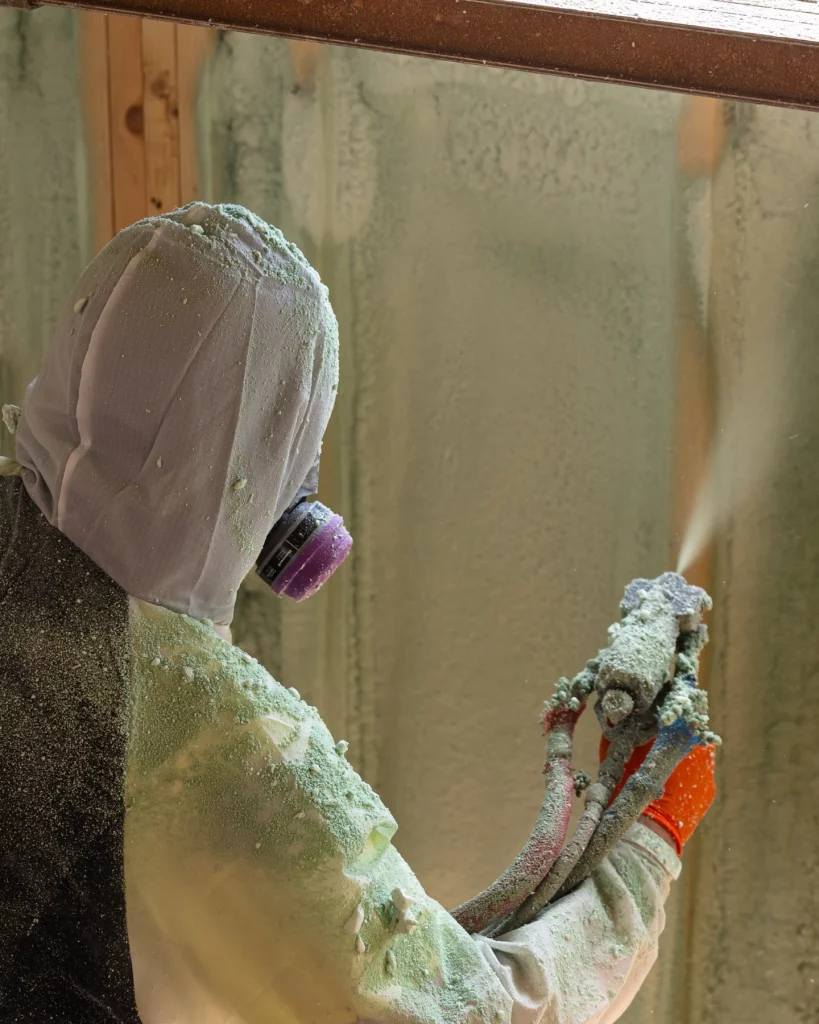
Many homeowners assume that adding more fiberglass batts or blown-in insulation will solve their comfort problems. In practice, insulation materials like fiberglass and cellulose slow conductive heat flow but do little to stop air movement through gaps and cracks. If warm indoor air can still escape through penetrations and bypass the insulation entirely, adding more insulation on top has diminishing returns. This is why many homeowners work with a Professional Spray Foam Contractor in Monticello, MN to address air leakage before investing in additional insulation.
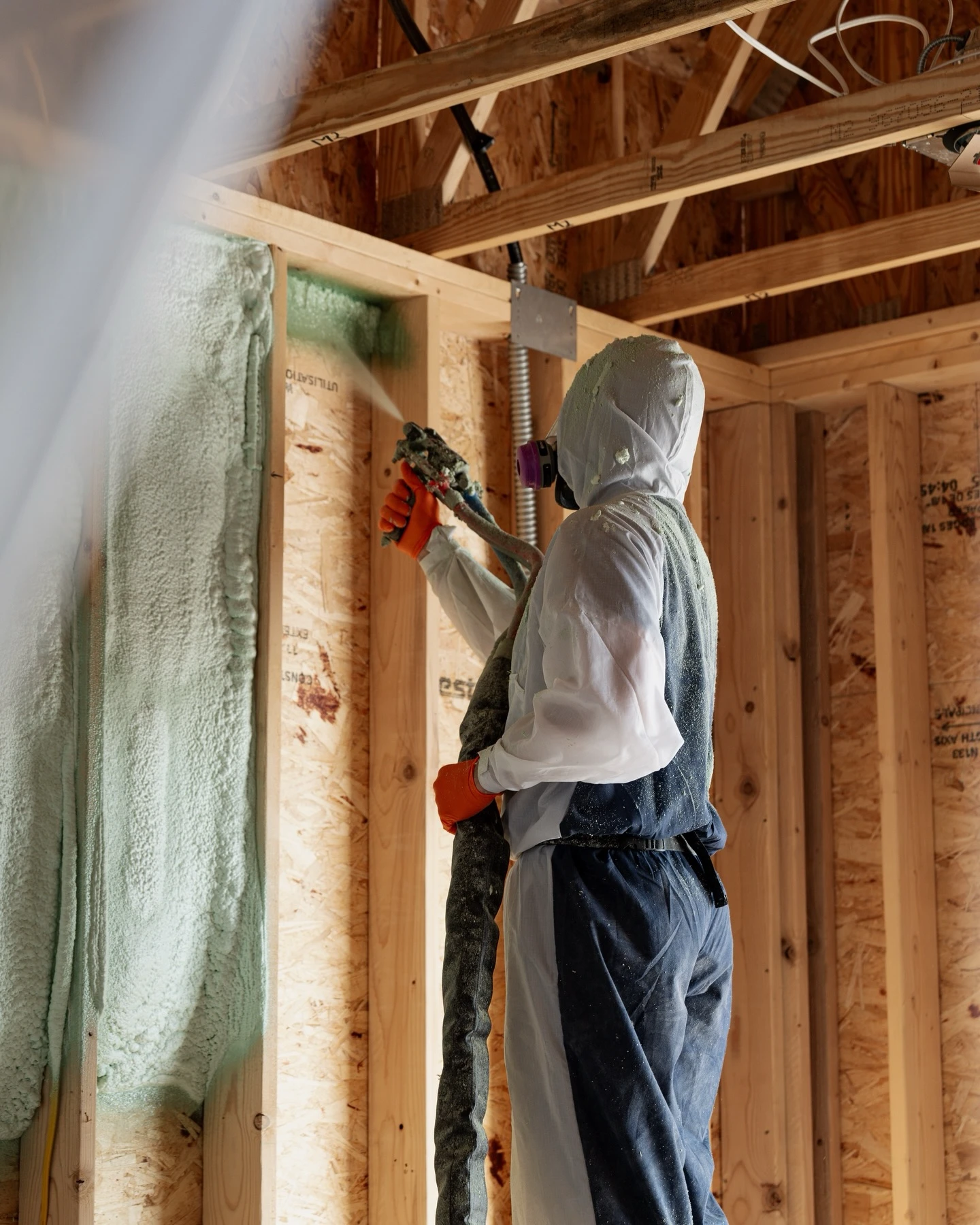
Spray foam insulation addresses both problems simultaneously. The EPA recognizes spray polyurethane foam as a “highly-effective and widely-used insulation and air sealant” that is applied as a liquid and expands to fill cavities, cracks, and gaps. U.S. EPA – Spray Polyurethane Foam Insulation. This dual function, insulating while creating an airtight barrier, is what makes spray foam particularly effective in cold climates like Monticello, where air sealing and high R-value insulation are both essential.
Not every part of your home loses heat equally. Prioritizing the areas with the greatest heat loss will give you the most noticeable improvement in comfort.
| Area | Priority Level | Why It Matters | Recommended Action |
|---|---|---|---|
| Attic / Ceiling | Highest | Warm air rises and escapes through the ceiling into the attic, the largest source of heat loss in most homes | Air seal all penetrations, then insulate to R-60 |
| Rim Joists / Band Joists | High | The junction between foundation and framing is often completely uninsulated and heavily air-leaking | Spray foam rim joists to seal and insulate in one step |
| Walls | Medium-High | Large surface area with potential for conduction through framing, especially if built before modern codes | Dense-pack or spray foam depending on cavity access |
| Crawlspace / Basement Ceiling | Medium | Unconditioned spaces below living areas pull heat downward through floors | Insulate and seal rim joists and crawlspace walls |
| Windows and Doors | Lower | Contribute to drafts but represent a smaller total area than walls and ceilings | Weatherstrip, caulk, or upgrade to insulated glazing |
Choosing the right professional to diagnose and fix your home’s heat loss makes the difference between a warmer home and a wasted investment. Here are indicators that you are working with a qualified team:
The University of Minnesota Extension specifically recommends hiring weatherization contractors who conduct blower door tests and may use infrared cameras to identify excessive heat loss areas.
Peak Spray Foam Insulation helps Monticello, MN homeowners solve the exact problem you are dealing with: homes that stay cold no matter how long the furnace runs. Our team evaluates your building envelope, identifies exactly where heat is escaping, and installs spray foam insulation that seals air leaks while delivering the high R-value performance that Minnesota winters demand.
Call us at (612) 482-4742 or email [email protected] to request a quote or schedule an insulation assessment today.
Thermostats only measure the temperature in one location. If your home has air leaks or uneven insulation, distant rooms can be significantly colder than the area near the thermostat.
Yes. According to the University of Minnesota Extension, sealing air leakage between the house and attic and then adding insulation are the two long-term steps needed to prevent ice dams by keeping roof surfaces uniformly cold.
For older homes with numerous air leaks and outdated insulation, spray foam is particularly effective because it seals gaps while insulating, addressing both problems at once.
Monticello is in Climate Zone 6, where the Department of Energy recommends R-60 in uninsulated attics and R-49 where some insulation exists. Most older homes fall well short of these levels.
Proper air sealing should be paired with controlled ventilation. A qualified contractor will assess your ventilation needs to maintain healthy indoor air quality after tightening your home.