
If you walk through your home on a January morning in Annandale and notice certain rooms feel drafty while others stay toasty, you are likely experiencing the effects of inadequate or uneven insulation. Minnesota winters are unforgiving, and the gap between a well-insulated home and a poorly insulated one shows up on your energy bill, your comfort level, and even the lifespan of your building materials. This guide is built from years of hands-on insulation work in central Minnesota homes, and it covers everything you need to know about choosing, installing, and maintaining home insulation that actually performs in our climate. For homeowners seeking local expertise, Peak Spray Foam Insulation provides solutions designed for Minnesota’s demanding weather conditions.
Insulation works by resisting the flow of heat. In winter, it keeps the warmth your furnace generates inside. In summer, it keeps the heat outside. The effectiveness of any insulation material is measured by its R-value, which is simply a number that describes how well the material resists heat flow. Higher R-values mean better insulating power. According to the U.S. Department of Energy, the material itself matters less than getting the right R-value for your climate zone and installing it correctly with proper air sealing.
The connection between insulation and your energy costs is well-documented. The EPA estimates through Why Seal and Insulate? that homeowners can save an average of 15% on heating and cooling costs, or roughly 11% on total energy costs, by air sealing their homes and adding insulation in attics, floors over crawl spaces, and accessible basement rim joists. In a climate like Annandale’s, where heating dominates your energy use for roughly seven months of the year, those savings add up quickly. ENERGY STAR also reports that 9 out of 10 homes in the United States are under-insulated, which means there is a very good chance your home falls into that category.
Insulation does more than save money. It reduces moisture problems by keeping interior surfaces above the dew point, limits ice dam formation on your roof, cuts down on noise from outside, and makes your home feel consistently comfortable from room to room. When we inspect homes in the Annandale area, we frequently find homes built in the 1970s, 1980s, and even the 1990s that have far less insulation than current code requires, particularly in attics and above crawlspaces.
Key Takeaways:
Annandale sits in Wright County, which is in IECC Climate Zone 6A. This is a heating-dominated climate with long, cold winters and warm but relatively short summers. Climate zone 6 is one of the most demanding zones for insulation performance in the continental United States. Only zones 7 and 8, which cover the extreme northern portions of Minnesota and parts of Alaska, require more.
Minnesota’s residential energy code, outlined in Minnesota Rules Chapter 1322.0402, sets the following minimum insulation requirements for Climate Zone 6:
| Building Component | Minimum R-Value (Zone 6) | Minimum R-Value (Zone 7) |
|---|---|---|
| Ceiling / Uninsulated Attic | R-49 | R-49 |
| Wood Frame Wall | R-20 + R-5 continuous, or R-13 + R-5 continuous | R-21 (cavity only) |
| Mass Wall | R-15/20 | R-19/21 |
| Floor Over Unconditioned Space | R-30 | R-38 |
| Basement Wall | R-15 | R-15 |
| Crawlspace Wall | R-15 | R-15 |
| Slab Edge | R-10, 3.5 ft depth | R-10, 5 ft depth |
These are minimums, not targets. In practice, exceeding these values, especially in the attic, often makes economic sense. The payback period for adding insulation above code minimum in an attic is typically short because attic upgrades are relatively affordable and the heat loss through an under-insulated ceiling is significant.
Expert Tip: When evaluating wall insulation requirements, pay close attention to the continuous insulation component. In Climate Zone 6, building science research suggests that exterior continuous insulation should be roughly 50% of your cavity insulation R-value to prevent condensation inside the wall assembly. This means R-20 cavity insulation paired with at least R-10 continuous insulation creates a safer wall in our cold climate than R-20 cavity insulation with only R-5 continuous.
R-value is not just about total thickness. Different insulation materials deliver different R-values per inch, which matters when you have limited cavity space to work with.
| Insulation Material | R-Value Per Inch | Common Forms |
|---|---|---|
| Closed-cell spray foam | R-6.0 to R-7.0 | Sprayed, foamed-in-place |
| Open-cell spray foam | R-3.6 to R-3.9 | Sprayed, foamed-in-place |
| Fiberglass (batts) | R-2.9 to R-3.8 | Batts, rolls, loose-fill |
| Fiberglass (high-density) | R-4.2 to R-4.3 | Batts |
| Mineral wool | R-3.3 to R-4.2 | Batts, rolls, loose-fill |
| Cellulose (loose-fill) | R-3.1 to R-3.8 | Blown-in, dense-pack |
| Polyisocyanurate (polyiso) | R-5.6 to R-6.5 | Rigid foam board |
| Extruded polystyrene (XPS) | R-5.0 | Rigid foam board |
| Expanded polystyrene (EPS) | R-3.6 to R-4.2 | Rigid foam board |
This table helps explain why closed-cell spray foam is often chosen for areas with limited depth, like a 2×4 wall cavity, where you need high R-value in a small space. With fiberglass batts, a standard 2×4 cavity (3.5 inches deep) yields about R-13. Closed-cell spray foam in that same space can deliver R-21 or higher.
According to the Insulation Institute, the Building Sciences Corporation has found that all insulation types perform equally well when properly installed and air sealed. The type of material you choose has less impact on energy savings than correct installation, proper air sealing, and maximizing R-value per dollar spent. This is a point worth repeating because marketing often pushes certain materials as inherently superior. The reality is that an R-49 attic filled with properly installed fiberglass will perform just as well as an R-49 attic filled with spray foam, assuming both are air sealed correctly.
Fiberglass is the most widely used insulation material in the United States. It is made from finely spun glass fibers and is available in pre-cut batts, continuous rolls, and as a loose-fill material that is blown into cavities using specialized equipment. The U.S. Department of Energy program notes that fiberglass batts and rolls are suited for standard stud and joist spacing that is relatively free from obstructions, and they are relatively inexpensive compared to other options.
Most fiberglass products today contain 40% to 60% recycled glass content. High-density fiberglass batts are available for tighter cavities, such as cathedral ceilings or 2×4 walls, where standard batts would not reach the target R-value. A high-density R-15 batt for a 2×4 wall is a common upgrade over the standard R-13.
Where it works best:
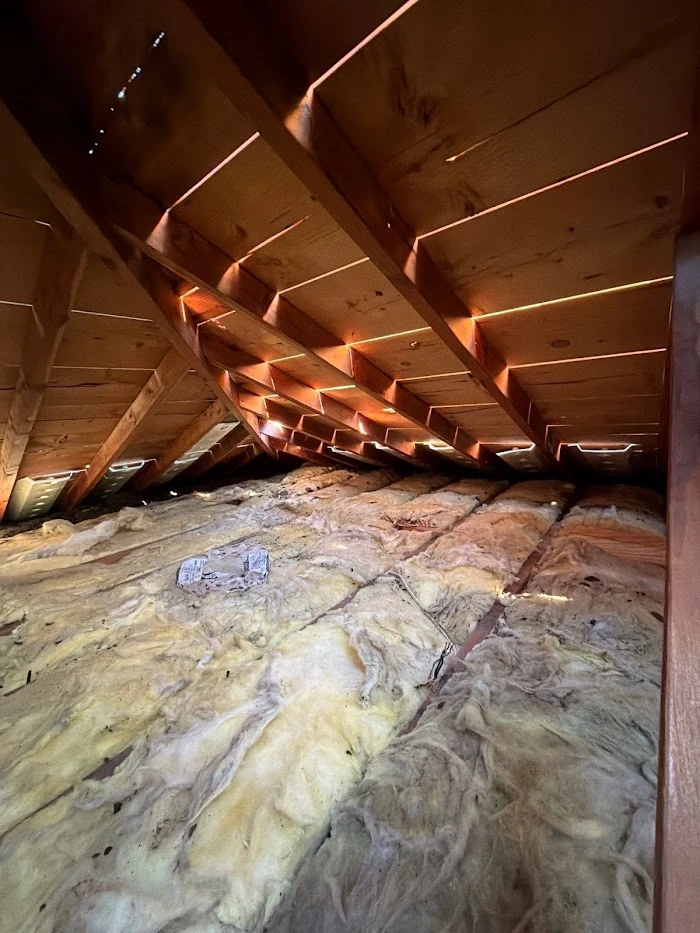
What to watch out for: Fiberglass batts are prone to gaps, compression, and voids if not installed carefully. If a batt is compressed behind an electrical wire or plumbing pipe, it loses insulating power. Gaps between batts and framing allow air to circulate the insulation, bypassing it entirely. Loose-fill fiberglass in attics can settle over time if not installed at the correct density, reducing the effective R-value.
Cellulose is made primarily from recycled newsprint and paper products, typically containing 82% to 85% recycled content. The paper is fiberized and treated with borate for fire and insect resistance. According to the DOE, cellulose insulation, when installed at proper densities, cannot settle in a building cavity.
Cellulose is installed as a blown-in material for open attics or as a dense-packed fill for closed wall cavities. In existing homes, dense-packing cellulose into wall cavities is a popular retrofit method because it fills around obstructions and conforms to irregular spaces. Installers drill small holes, insert a fill tube, and blow the material in at high density, typically 1.5 to 3.5 pounds per cubic foot.
Where it works best:
What to watch out for: Cellulose can absorb moisture if exposed to water, which can reduce its effectiveness and lead to mold concerns. In damp basements or crawlspaces, it is generally not the best choice. The chemical fire treatment can also wear off over time, as noted by the Insulation Institute, though this is debated within the industry.
Mineral wool is made from rock or blast furnace slag that is melted and spun into fibers. It contains an average of 75% post-industrial recycled content. Unlike fiberglass and cellulose, mineral wool is naturally fire-resistant without additional chemical treatment. It is available in batts, rolls, and loose-fill forms.
Mineral wool has a higher density than fiberglass, which gives it better sound-dampening properties. Its Noise Reduction Coefficient (NRC) is about 0.95 to 1.0, compared to roughly 0.75 for spray foam. This makes it a strong choice for shared walls, home theaters, or rooms where sound control matters alongside thermal performance.
Where it works best:
What to watch out for: Mineral wool is heavier than fiberglass, which can make it harder to handle during installation in ceiling applications. It also tends to be more expensive per square foot than fiberglass.
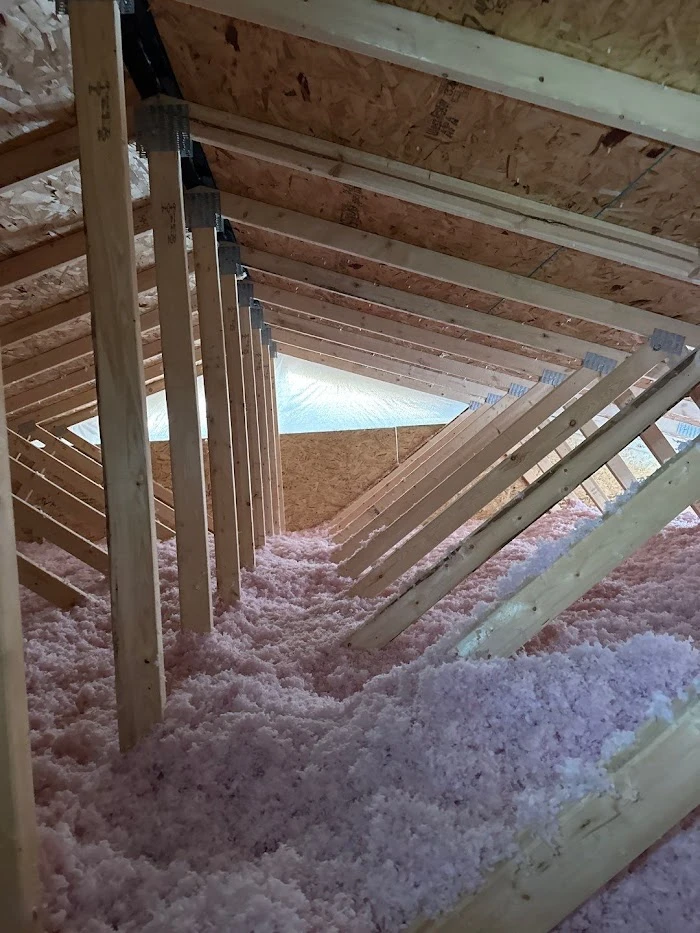
Spray foam insulation is a two-component chemical mixture that is combined on-site and sprayed into cavities or onto surfaces, where it expands and cures into a solid foam. The DOE classifies spray foam into two main types: open-cell and closed-cell.
Open-cell spray foam has a lower density (about 0.5 pounds per cubic foot), is filled with air rather than gas, and has a spongy texture. It expands significantly during application, filling cavities thoroughly. Its R-value is roughly R-3.6 to R-3.9 per inch. It is vapor-permeable, meaning moisture can pass through it, which is an advantage in some wall assemblies but a disadvantage in basements or crawlspaces where you need a moisture barrier.
Closed-cell spray foam is much denser (about 2.0 pounds per cubic foot), has cells filled with a gas that gives it higher R-value (R-6.0 to R-7.0 per inch), and acts as both a vapor barrier and an air barrier when applied at sufficient thickness. This makes it the preferred choice for below-grade applications, basements, crawlspaces, and anywhere moisture control is critical.
Where spray foam works best:
Expert Tip: When choosing between open-cell and closed-cell spray foam, the deciding factor is often moisture, not R-value. In Annandale’s climate, closed-cell foam is almost always the right call for any below-grade surface or any area that contacts the ground. Open-cell foam can work well in above-grade wall cavities and vented attics where the cost savings of the lower-density material offset the slightly lower R-value.
Rigid foam boards are solid panels of insulation made from polystyrene (EPS or XPS), polyisocyanurate (polyiso), or polyurethane. They provide high R-value per inch and create a continuous layer of insulation when installed over framing, which eliminates thermal bridging, the heat loss that occurs through wood studs and other structural elements.
Polyiso boards typically offer R-5.6 to R-6.5 per inch and often come with a foil facing that acts as a radiant barrier when facing an air space. XPS offers about R-5.0 per inch and has good moisture resistance. EPS is the most affordable option at R-3.6 to R-4.2 per inch.
Where rigid foam works best:
What to watch out for: Some foam board types, particularly XPS, can lose R-value over time through thermal drift as the blowing gas escapes. EPS and polyiso are more dimensionally stable. All foam boards must be covered with a thermal barrier, typically a half-inch gypsum board, for fire safety when installed on interior surfaces.
Radiant barriers and reflective insulation work differently from other insulation types. Instead of resisting conductive and convective heat flow, they reflect radiant heat. They are most effective in hot climates where reducing summer heat gain is the priority. According to the DOE, some studies show radiant barriers can lower cooling costs 5% to 10% in warm, sunny climates.
In Minnesota’s heating-dominated climate zone 6, radiant barriers provide limited benefit. The priority here is maximizing thermal resistance, which means traditional insulation materials rather than reflective systems. If you are considering a radiant barrier for an Annandale home, it is worth discussing with an insulation professional whether the investment makes sense for your specific situation.
Key Takeaways:
Different surfaces in your home have different insulation needs, and the right material for one surface might not be ideal for another. Understanding where each type belongs is essential to getting the most from your investment.
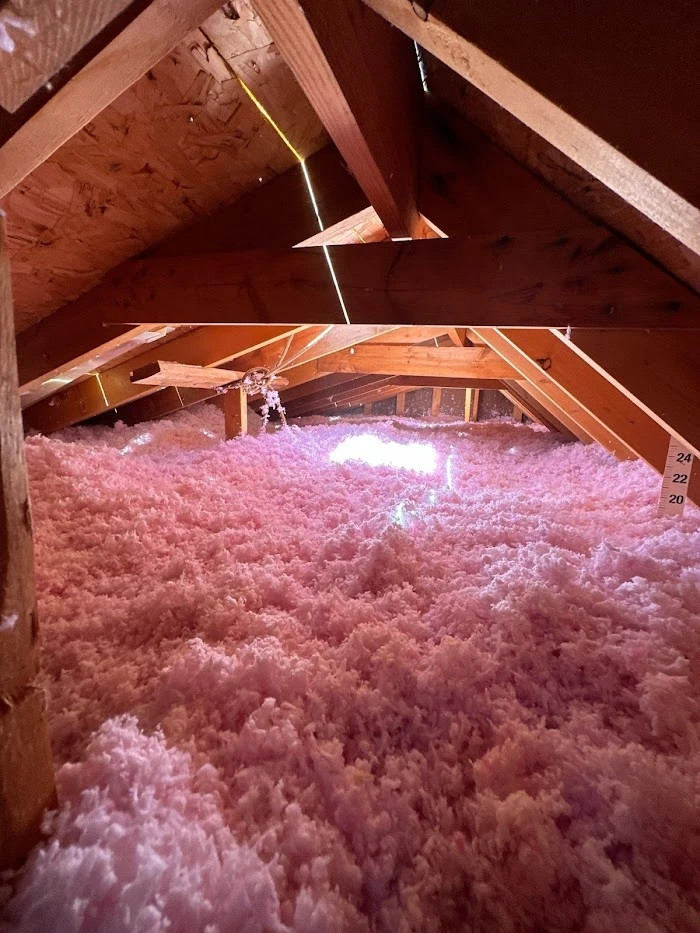
Your attic is typically the single largest source of heat loss in a Minnesota home. Heat rises, and if your attic insulation is thin, degraded, or poorly installed, your furnace is essentially heating the sky. For Climate Zone 6, Minnesota code requires a minimum of R-49 in ceilings below uninsulated attics. In many older Annandale-area homes, we find attics with as little as R-11 or R-19, which is far below what the climate demands.
Best materials for attics:
Expert Tip: Before adding insulation to your attic, air seal first. The biggest air leaks in most homes are in the attic, around recessed lights, plumbing vents, electrical penetrations, and the top plates of interior walls. If you pile insulation over these leaks without sealing them, you still lose heat through air movement, and the insulation may actually mask the leak while moisture from your home condenses in the cold attic space.
Walls are more challenging to insulate than attics because they are enclosed behind finished surfaces. In new construction, you have the advantage of choosing your insulation before the drywall goes up. In existing homes, adding insulation to walls usually means either drilling and filling with blown-in material or removing some siding to add rigid foam board to the exterior.
For wood-frame walls in Climate Zone 6, the code minimum is R-20 with R-5 continuous insulation, or R-13 cavity with R-5 continuous. As mentioned earlier, building scientists recommend even more continuous insulation, closer to R-10, for cold-weather condensation control in Minnesota.
Best materials for exterior walls:
Basement insulation is critical in Minnesota because the ground temperature stays cold year-round. Without insulation, your basement walls act as a giant heat sink, constantly pulling warmth from your home. Minnesota code requires R-15 insulation on basement walls from the top of the wall down to 10 feet below grade or to the footing, whichever is less.
Closed-cell spray foam is one of the most effective materials for basement walls because it provides both thermal insulation and a moisture barrier. Rigid foam board is another strong option, particularly for interior applications where it can be covered with gypsum board.
What to watch out for with basement insulation: Minnesota code has specific requirements for interior foundation insulation to prevent moisture problems. Interior insulation, other than closed-cell spray foam, shall not exceed R-11 on concrete and masonry foundations. This restriction exists because too much insulation on the warm side of a basement wall can push the dew point inside the wall cavity, leading to condensation, mold, and wood rot. Closed-cell spray foam is exempt from this restriction because it serves as its own vapor barrier when applied at sufficient thickness.
Crawlspaces are one of the most commonly under-insulated and problematic areas in Minnesota homes. An uninsulated or vented crawlspace in our climate allows cold air to circulate under your floor, and the floors above it will feel cold regardless of how much insulation is in the walls or attic.
There are two main approaches to crawlspace insulation: insulating the floor above the crawlspace or insulating the crawlspace walls and treating the space as conditioned. In Minnesota’s cold climate, sealing and insulating the crawlspace walls with closed-cell spray foam or rigid foam board, then conditioning the space, is generally the better approach because it keeps pipes from freezing and eliminates the moisture problems associated with vented crawlspaces.
Best materials for crawlspaces:
Expert Tip: If your crawlspace has a dirt floor, cover it with a minimum 6-mil polyethylene vapor retarder before insulating. Seal the edges of the plastic to the stem walls and overlap seams by at least 6 inches. This simple step dramatically reduces the amount of moisture that enters your crawlspace and your home.
The rim joist (also called the band joist) is the area where the floor framing meets the foundation wall. It is one of the most leaky and under-insulated parts of most homes. The wood rim joist has virtually no insulating value, and the joints between the framing members are a direct path for air infiltration.
Closed-cell spray foam is widely considered the best material for insulating rim joists because it fills the irregular spaces between framing members, seals air leaks, and provides a moisture barrier. Rigid foam board with spray-foam sealant at the edges is a less expensive alternative, though it is harder to get a complete seal with rigid boards in an irregular space.
Slab-on-grade foundations lose heat at the perimeter where the slab edge meets the exterior. Minnesota code requires R-10 insulation extending 3.5 feet below grade (or 5 feet in zone 7) for heated slabs. Rigid foam board, either XPS or EPS, is the standard material for this application because it can withstand the pressure of backfill and resist moisture in the ground.
Before deciding on upgrades, you need to know what you already have and whether it is performing adequately. Here is a practical approach to evaluating your current insulation.
The attic is the easiest place to inspect. Pull back the access hatch or walk into the space and look at the insulation on the attic floor. Measure the depth in several locations. For fiberglass batts, check the facing label for the R-value rating. For loose-fill material, the depth is your main indicator. Here is a rough guide:
| Material | Approximate Depth for R-49 |
|---|---|
| Fiberglass loose-fill | ~18 to 19 inches |
| Cellulose loose-fill | ~13 to 14 inches |
| Fiberglass batts (R-30) | ~9.5 inches (would need additional layer) |
Checking wall insulation requires a bit more effort. The DOE recommends turning off the power to an electrical outlet, removing the cover plate, and shining a flashlight into the gap around the box. You can often see whether insulation is present and get a rough sense of its thickness. Check outlets on multiple floors and in different parts of the house, because insulation levels can vary significantly from one area to another, especially in homes that were built in stages or have had partial renovations.
Look at the basement walls and ceiling. If the ceiling is insulated with fiberglass batts between the floor joists but the walls have no insulation, you have a code-compliant but sub-optimal setup for Minnesota winters. In the crawlspace, check whether there is insulation on the walls or between the floor joists above, and whether the crawlspace is vented or sealed.
A whole-home energy assessment from a qualified professional is the most thorough way to evaluate your insulation. An energy auditor will use a blower door test to measure air leakage, infrared thermography to find insulation gaps and air leaks in walls and ceilings, and a detailed inspection of every building component. Many utility programs in Minnesota offer discounted or even free energy audits.
After years of inspecting and correcting insulation problems in Minnesota homes, we have seen the same errors repeated across hundreds of projects. Here are the most common ones and how to prevent them.
This is the single biggest mistake homeowners make. Insulation without air sealing is like wearing a thick winter coat with the zipper open. The heat still escapes through the gaps. Air leaks are found at every penetration in your building envelope: around windows and doors, through electrical outlets, at plumbing and wiring penetrations, around recessed lights, at the top and bottom plates of walls, and at the rim joist. Seal these leaks with caulk, spray foam, or gaskets before you insulate. The DOE provides detailed guidance on air sealing locations and methods.
Fiberglass and cellulose get their R-value from trapped air pockets. When you compress these materials to fit them into a tight space, you squeeze out those air pockets and reduce the R-value. A fiberglass batt compressed behind a plumbing pipe from 3.5 inches to 2 inches loses roughly half its insulating power. Instead of forcing a thick batt into a shallow space, choose a product sized for the actual cavity depth.
Gaps between insulation and framing create paths for air to bypass the insulation entirely. In a wall cavity, even a 1% gap in coverage area can reduce the effective R-value of the entire assembly by 25% to 50%. This is why blown-in materials and spray foam, which fill cavities, often outperform batt insulation even when the nominal R-value is the same. If you are installing batts, take the time to cut them carefully around obstructions and ensure a snug fit at all edges.
When you add insulation, particularly spray foam or dense-packed cellulose, you can accidentally block soffit vents in your attic, which are needed for proper ventilation. If your attic has soffit vents at the eaves and you fill the entire floor cavity with insulation without leaving an air channel, the ventilation system stops working. Baffles or ventilation chutes should be installed at each rafter bay to maintain the air path from the soffit vent to the ridge vent.
Putting open-cell spray foam in a basement or crawlspace is a common mistake because open-cell foam absorbs water. Using fiberglass batts against a damp basement wall is another one because fiberglass does not stop moisture vapor, and the batts can become saturated, losing effectiveness and potentially leading to mold. Matching the material to the moisture conditions of the surface is essential for long-term performance.
Expert Tip: If you are adding insulation to an existing home and you suspect moisture issues, address those first. Insulating over a moisture problem does not fix it. It can make it worse by trapping moisture inside the assembly, where it is harder to detect and more expensive to remediate. Look for water stains, musty odors, peeling paint, or efflorescence (white mineral deposits) on concrete surfaces before proceeding with insulation upgrades.
Upgrading your home insulation can qualify you for several financial incentive programs, which help reduce the out-of-pocket cost of the project.
The federal Energy-Efficient Home Improvement Credit, described by the DOE, provides a tax credit for insulation and air sealing improvements that meet the 2021 International Energy Conservation Code (IECC) requirements. This means the insulation must meet or exceed the R-values prescribed for your climate zone. The credit applies to both existing homes and new construction, and it can be claimed for improvements made to your primary residence. The specifics of the credit, including dollar limits and carry-forward provisions, change periodically, so check current IRS guidance before planning your project.
Many Minnesota utility companies offer rebates for insulation upgrades. Xcel Energy, Great River Energy, and local cooperatives frequently have programs that pay a per-square-foot rebate for attic insulation, wall insulation, and other improvements. These programs often require a pre- and post-installation inspection or a blower door test to verify the improvement. The Minnesota Center for Energy and Environment maintains updated information on available programs.
The Minnesota Department of Commerce administers the Weatherization Assistance Program for income-eligible households. This program provides free insulation, air sealing, and other energy efficiency improvements to qualifying homeowners and renters. If your household income falls within the program guidelines, this can cover the entire cost of insulation upgrades.
Key Takeaways:
With all these options and requirements, making a decision can feel overwhelming. Here is a framework to help you choose based on your specific situation.
In a new build, you have the most flexibility. A strong insulation package for a Climate Zone 6 home might include:
When upgrading insulation in an existing Annandale home, prioritize based on impact and cost-effectiveness:
Getting your home properly insulated in Annandale’s Climate Zone 6 is one of the most impactful investments you can make. It reduces energy costs, improves comfort year-round, protects your building from moisture damage, and increases the value of your property. The key steps are straightforward: evaluate your current insulation, air seal first, choose materials matched to each surface and its moisture conditions, and aim for R-values that meet or exceed Minnesota code minimums. Working with an experienced insulation contractor can help ensure each step is completed correctly for long-term performance and energy savings.
Use this guide as a reference as you work through the process. Whether you are building new, retrofitting an older home, or addressing a specific problem like ice dams or cold floors, the principles are the same. Start with the biggest opportunity (usually the attic), work through each surface systematically, and take advantage of the financial incentives available to you.
If you are ready to evaluate your home’s insulation or want help choosing the right approach for your specific situation, our team at Peak Spray Foam Insulation is here to help. You can reach us at [email protected] or call (612) 482-4742 to get a free quote and to schedule a consultation. We serve Annandale and the surrounding communities with professional insulation services for attics, walls, basements, crawlspaces, and more.
For Climate Zone 6, the Minnesota code requires a minimum of R-49 in your attic ceiling. We recommend aiming for R-60 if your attic framing can accommodate it. For blown-in fiberglass, that is roughly 19 to 22 inches of depth. For cellulose, about 14 to 16 inches.
Fiberglass batts in accessible attic floors and walls can be a do-it-yourself project. Blown-in insulation, spray foam, and dense-pack cellulose require specialized equipment and experience, and are best left to professionals. The DOE recommends obtaining written cost estimates from several contractors and asking about their experience with the specific product and application you need.
Most insulation materials last the life of the building when installed correctly and kept dry. Fiberglass and mineral wool do not degrade over time. Cellulose can settle slightly if not installed at the proper density. Spray foam is permanent once cured. The main threat to insulation longevity is moisture, which can cause mold, compression, and loss of R-value.
Yes, inadequate attic insulation and attic air leaks are the primary cause of ice dams. When warm air from your living space escapes into the attic, it warms the roof deck, melting snow from below. The meltwater runs down to the colder eaves and refreezes, forming ice dams. Increasing attic insulation to R-60 and sealing air leaks keeps the roof deck cold, preventing the melt-freeze cycle.
When properly installed by trained professionals and allowed to fully cure before re-occupancy, spray foam insulation is considered safe for residential use. Closed-cell foam, in particular, provides a moisture barrier and air seal that can improve indoor air quality by reducing moisture infiltration and mold risk. It is important to follow the manufacturer’s re-occupancy guidelines after installation.
Insulation does reduce sound transmission to some degree, particularly dense materials like mineral wool and dense-pack cellulose. However, standard thermal insulation is not designed as a soundproofing product. For significant noise reduction, dedicated acoustic assemblies are more effective than adding thickness to your thermal insulation.