
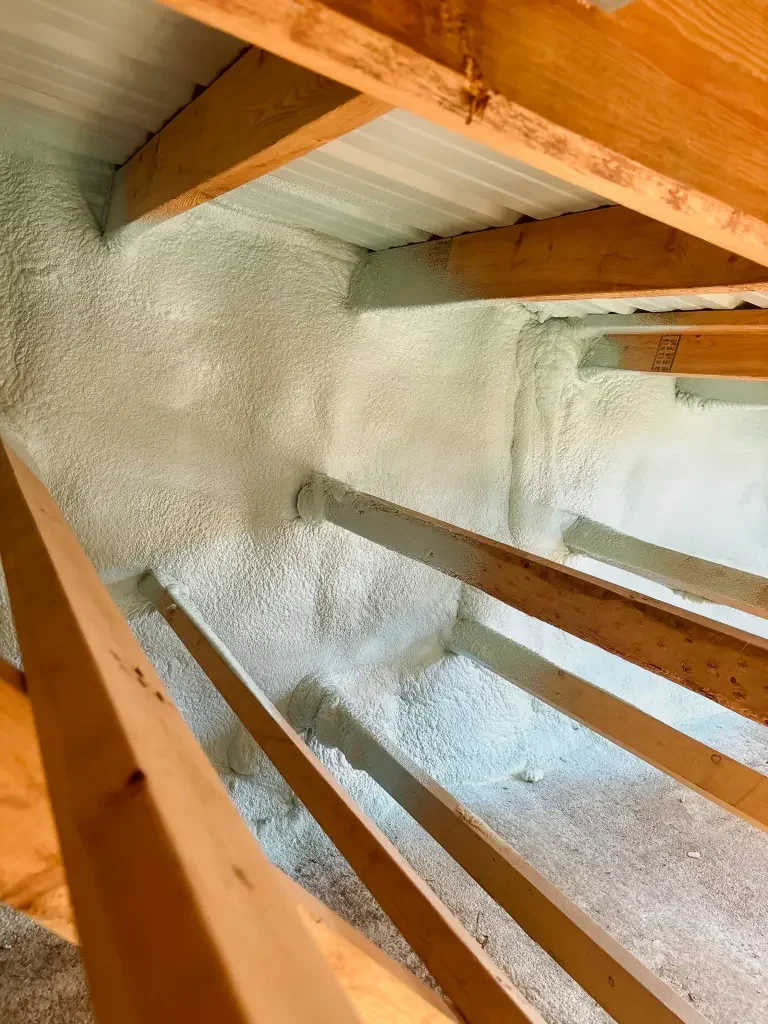
Roughly half the air you breathe inside your home drifts up from the crawl space beneath it. When that space is vented, damp, and uninsulated, everything down there- moisture, spores, and stale, polluted air- works its way into your living rooms, bedrooms, and hallways. Crawl space encapsulation services from Peak Spray Foam seal the area off at the source using a heavy-duty vapor barrier, closed-cell spray foam on the walls and rim joists, and controlled moisture management. The result is a clean, dry, protected space that supports your home instead of working against it.
The value of crawl space encapsulation reaches well past moisture control, touching nearly every part of how your home performs and feels. Sealing the ground away from the rest of the house cuts off the damp conditions that feed mold, warp wood, and drive up indoor humidity. The EPA puts it plainly: the key to control is moisture control. Applied to the most ignored area of the house, that principle pays off in cleaner air, warmer floors, lower utility bills, and a stronger structure. Most homeowners feel the difference quickly, since cold floors and heavy air disappear once the space is sealed.
Minnesota weather makes this work even more urgent. Freeze-thaw swings and humid summers create constant condensation in vented crawl spaces, which leads to the musty smells and damp subfloors so many Annandale homeowners complain about. Sealing the space completely breaks that cycle, and our crew fixes the cause rather than masking symptoms, so the results hold up year after year.
Benefits of Crawl Space Encapsulation:
Stops growth and moisture damage before it spreads into your living space
Cuts heating and cooling costs by up to 20%
Clears out musty odors and improves the air your family breathes
Gives you a clean, dry storage area that pests cannot ruin
Shields structural wood from rot and decay
Lowers humidity so your home feels more comfortable year-round
Keeps mice, insects, and rodents from nesting under your floors
Adds resale value and buyer appeal
If has already taken hold, our crawl space removal services clear out the contamination first, and encapsulation then keeps it from coming back.
Materials We Use:
Closed-Cell Spray Foam
Rigid Foam Board
Our professional crawl space encapsulation process follows proven steps built for Minnesota's climate. Work starts with careful preparation, where our crew clears out debris and old insulation, levels the soil surface if needed, and fixes any existing moisture or structural problems. From there, we handle the crawl space vapor barrier installation, rolling a heavy-duty liner across the entire floor, sealing every seam, and running it up the foundation walls well above grade so ground moisture has no path into your home.
Next comes air sealing and insulation. We close foundation vents, insulate the rim joists and crawl space walls, and seal around every pipe, wire, and duct penetration. Where water is a concern, our crawl space drainage solutions, such as perimeter drains and sump pumps, move standing water out before it becomes a problem, and crawl space dehumidifier installation holds humidity in the safe range for homes that need extra control. When the work is finished, the space beneath your home behaves like part of the house rather than an open hole in the building envelope.
Industry Fact: According to Advanced Energy, homes with closed crawl spaces are known for fewer drafts, warmer floors, reduced dust, steadier humidity, and fewer pests, and energy savings often follow when the HVAC system lives inside the sealed space. That makes encapsulation one of the smartest home performance upgrades money can buy.
Applications for Crawl Space Encapsulation Services:
Sealing
Crawl Space Insulation Area
Residential Buildings
Commercial Buildings
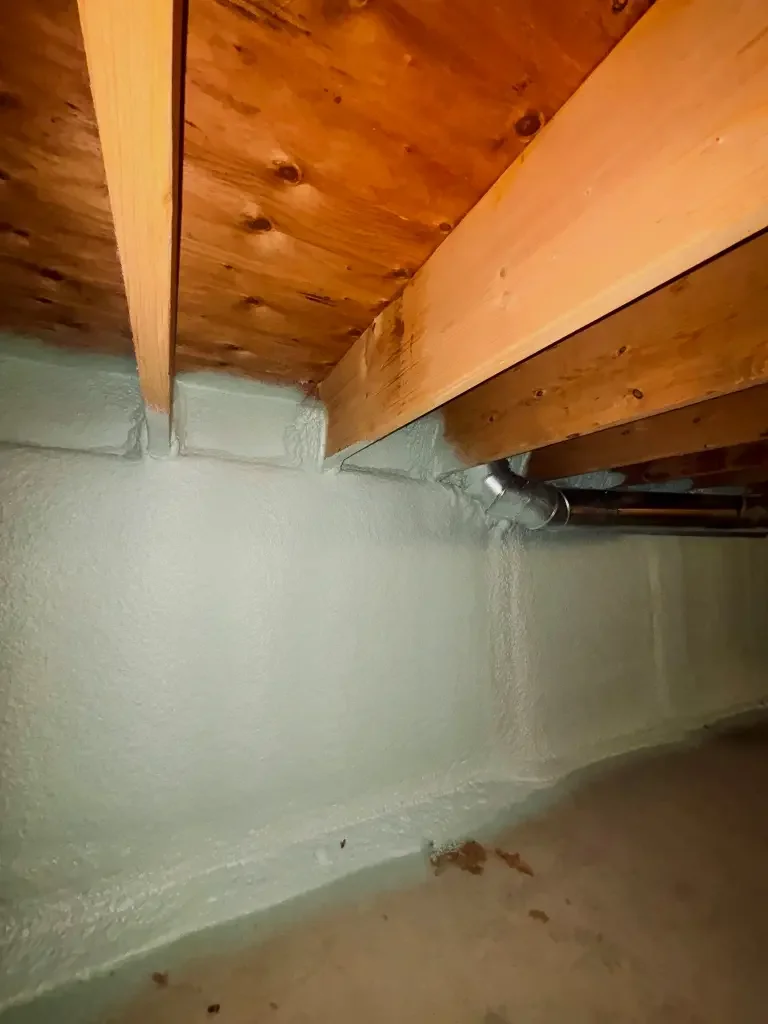
Material quality decides whether your encapsulation lasts for decades or starts failing within a few years. Our team installs premium vapor barriers for crawl spaces, typically 10-20 mil reinforced polyethylene that stands up to foot traffic while resisting the tears and punctures that ruin cheaper liners. Along with our crawl space insulation services, we match every material to the specific job, and our spray foam crawl space encapsulation projects rely on closed-cell foam because it expands into gaps and cracks while delivering roughly R-6 to R-7 per inch. Rigid foam board covers foundation walls where spray application is not practical, and for heavier water problems, we pair the system with crawl space waterproofing solutions such as drain tile and sump setups.
Still wondering about the best insulation for dirt floor crawl spaces? Fiberglass batts fail in this environment because they soak up moisture, sag, and invite pests, which is why we never recommend them under a home. The two tables below show how the pieces fit together.
Encapsulation System Layers:
| System Layer | Material Used | Material Used |
|---|---|---|
| Ground cover | 10-20 mil reinforced polyethylene liner | 10-20 mil reinforced polyethylene liner |
| Walls and rim joists | Closed-cell spray foam | Insulates and air seals in one step |
| Foundation walls | Rigid foam board | Continuous insulation where spray foam is not practical |
| Air quality | Crawl space dehumidifier | Holds relative humidity in the safe range |
Comparison of Insulation Options for Crawl Spaces:
| Insulation Type | R Value Per Inch | Vapor Barrier | Air Sealing | Best Application |
|---|---|---|---|---|
| Closed-Cell Spray Foam | R-6 to R-7 | Yes | Excellent | Rim joists and crawl space walls |
| Rigid Foam Board | R-4 to R-6.5 | Yes | Good | Foundation walls |
| Fiberglass Batt | R-4 to R-6.5 | No | Poor | Not recommended for crawl spaces |
Minnesota's climate punishes crawl spaces harder than almost anywhere else, with winter temperatures dropping well below zero and summer humidity climbing steeply. Vented crawl spaces become liabilities in both seasons, giving you icy floors in January and muggy, moisture-loaded air in July. Our crawl space moisture repair services are engineered for these regional conditions rather than copied from generic national templates that fall apart the first hard winter.
If you browse Reddit's r/HomeImprovement or read through Quora threads about damp crawl spaces, the same warning appears over and over: do not just cover the dirt; seal and insulate the whole space and manage the air. That is exactly how our team works. We have served under older Annandale homes with stone foundations and newer builds with poured concrete, and our crawl space repair services cover every issue in between, from seasonal moisture and pest damage to structural concerns and failed insulation. Local knowledge of water tables, soil composition, and regional building habits shapes every plan we write.
Things to Consider Before Crawl Space Encapsulation:
Existing moisture and drainage problems should be corrected before work begins
Some lots need drainage work to keep water from collecting around the foundation
Certain building codes spell out ventilation and air-quality requirements
Old, damaged insulation often needs removal for the best results
Permanent Moisture Management: ends the dampness cycle that damages foundations and framing
Energy Savings of 15-20%, lower heating and cooling bills that continue for the life of the system
Healthier Indoor Air: spores and humid air stay out of what your family breathes
Warmer, Steadier Floors: consistent temperatures in every room above the space
Usable Storage Space: a clean, dry area that finally makes sense for storing belongings
Structural Protection: stops wood rot and foundation deterioration before it starts
Free, No-Pressure Quotes: Every project begins with a free inspection and written estimate
Peak Spray Foam has been part of the Annandale community since 2020, and our family-owned business has built its reputation on quality workmanship and honest advice that Minnesota homeowners can count on. As a local crawl space encapsulation contractor, we see firsthand how spring thaw floods poorly sealed spaces and how winter cold turns vented areas into major heat leaks, and our crew has encapsulated crawl spaces across Central Minnesota and the Twin Cities metro.
That field experience matters. Knowing local soil conditions, water tables, and construction methods helps us design encapsulation systems that perform through Minnesota's famous temperature extremes, and every plan we write reflects what your specific property actually needs.
Every project starts with a free, no-obligation quote. Peak Spray Foam Insulation will visit your Annandale property, measure and inspect the space, walk you through your options in plain language, and hand you a detailed written estimate with zero pressure to commit. Call us at (612) 482-4742 or email [email protected] today to schedule your free crawl space encapsulation quote and take the first step toward a cleaner, drier, healthier home.
That odor is moisture rising from the crawl space soil and seeping up through your floors, and sealing the space with a vapor barrier removes the source entirely.
Yes, sealing and insulating the space keeps subzero air away from your subfloor, so floors feel warmer and heating bills drop.
Absolutely, the space becomes clean, dry, and pest-resistant, which turns it into practical storage that was unusable before.
No, a dehumidifier only fights moisture that keeps pouring in from outside air and the ground, while encapsulation stops those sources from entering in the first place.
No, a properly built system blocks ground moisture and controls remaining humidity through drainage and dehumidification, which is why our team always checks drainage conditions before starting any installation.