
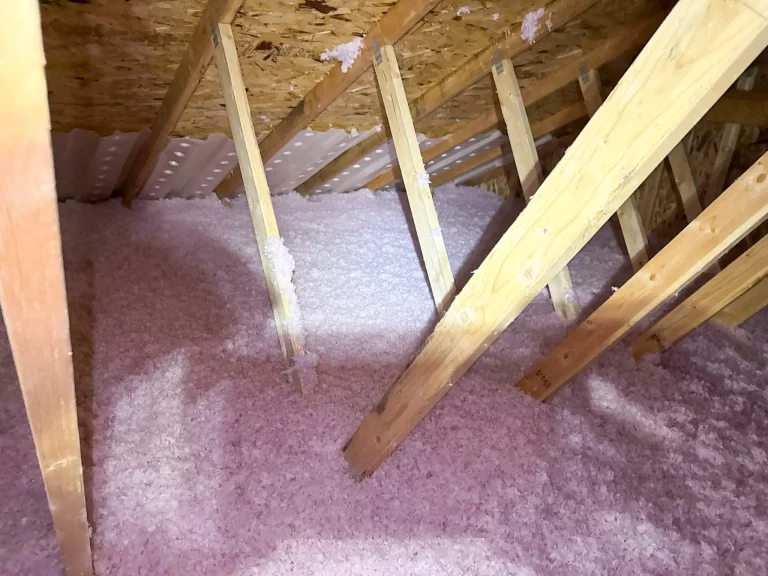
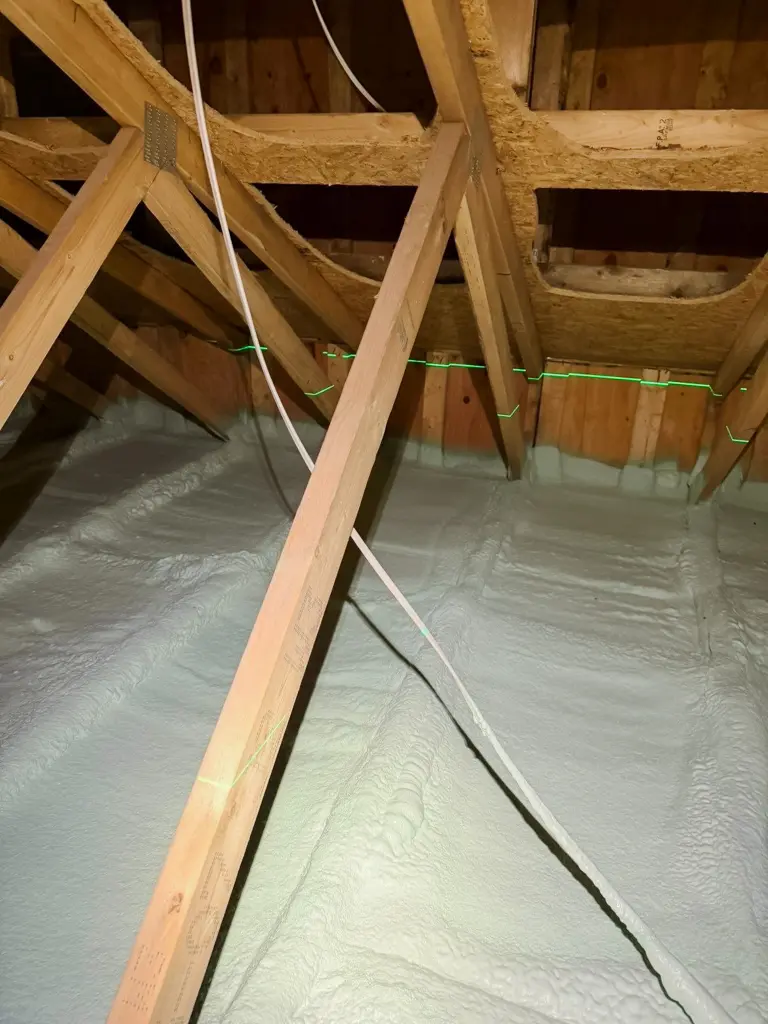
Professional Attic Insulation in Annandale starts with sealing the air leaks between your living space and the attic, then building the insulation up to the level Minnesota sets for our climate. State rules put the ceiling minimum at R-49 for both Climate Zone 6 and Zone 7. Peak Spray Foam Insulation installs blown-in, spray foam in Annandale homes, and the quote is free.
Attics come in three basic conditions. Some are nearly bare, some hold old batts that have packed down, and some are new framing that still needs its first layer. Our attic insulation services cover each of these:
R-value measures how well insulation slows heat loss. A higher number means more resistance. There are two targets to know: the legal minimum and the recommended level.
The Minnesota Rules set R-49 as the ceiling requirement in Zones 6 and 7. The state has also been working toward adopting a newer residential energy code, so that minimum could go up in later years.
For homes that are already built, ENERGY STAR recommends R-60 in Zone 6 when an attic has no insulation, and adding R-49 when the attic already has 3 to 4 inches. These are recommendations, not code requirements. We give you both numbers and you decide how far to go.
Peak Spray Foam installs spray foam, fiberglass batt and loose-fill insulation, so as an attic insulation company we have no reason to push one product. The right choice depends on the shape of your attic, how easy it is to get into, and what is already up there.
| Type | Best For | Trade-Offs |
|---|---|---|
| Blown-in attic insulation | Open attic floors, topping up old layers | Rated by settled R-value; needs baffles at the eaves |
| Attic spray foam insulation | Tight spaces, rooflines, sealing gaps | The household has to leave during and after the install |
Thick insulation can't stop air that flows straight through it. Warm air moves through standard insulation whenever there are leaks, no matter how deep the layer is.
University of Minnesota Extension says air leakage is the main way heat reaches the roof and forms ice dams in many homes. It advises making the ceiling airtight first and adding insulation after that. Extension also says mechanical attic ventilation is not a recommended fix for ice dams in Minnesota.
Getting the order right also lowers your bills. ENERGY STAR says sealing and insulating together are two of the most cost-effective ways to improve a home's efficiency and comfort.
You don't always have to tear out old insulation. If the existing layer is dry and clean, adding new material over it usually costs less than full removal. Replacement makes sense when you see:
Moisture is the main thing to watch for. Water that gets in from ice dams can lead to mold and mildew.
HomeAdvisor's local data lists an Annandale average of about $1,822, with projects ranging from roughly $700 to $3,730. Use that range as a rough guide only. Your price depends on:
Only a measurement of your own attic gives you a real number. That's why the assessment comes first.
Our attic insulation installation services follow the same order every time. Here's how a typical job runs:
A few minutes of looking around now will make your assessment faster and more useful.
If your upstairs rooms feel drafty, your bills keep going up, or ice builds up along the eaves every winter, the problem may be in your attic. Our owner, Wayne Dearing, has done insulation work across Minnesota since 2020, and we serve Annandale. As your local attic insulation contractor, we'll measure your attic, explain what we find in plain language and give you a free quote.
Peak Spray Foam Insulation in Annandale, MN Phone: (612) 482-4742 Email: [email protected]
A typical attic job takes one to two days, and spray foam can take one to three. Removing old insulation adds time.
Yes. Federal consumer guidance says households, including pets, should leave during and after installation for at least 24 hours. The safe re-entry time depends on the specific product, so ask which formula is being used.
It depends on the material, because fiberglass, cellulose and foam each give a different R-value per inch. As a general guide, homes in northern climates may need about 16 to 18 inches.
Yes. Insulation helps keep a home cool in summer as well as warm in winter. Sealing and insulating can also reduce outside noise, pollen and dust.
You can handle a simple blown-in top-up, but you need to do it carefully. You'll have to keep insulation away from heat sources and make sure attic vents stay clear. Spray foam is not a DIY job. EPA says only workers wearing protective gear should be present while it is applied.