
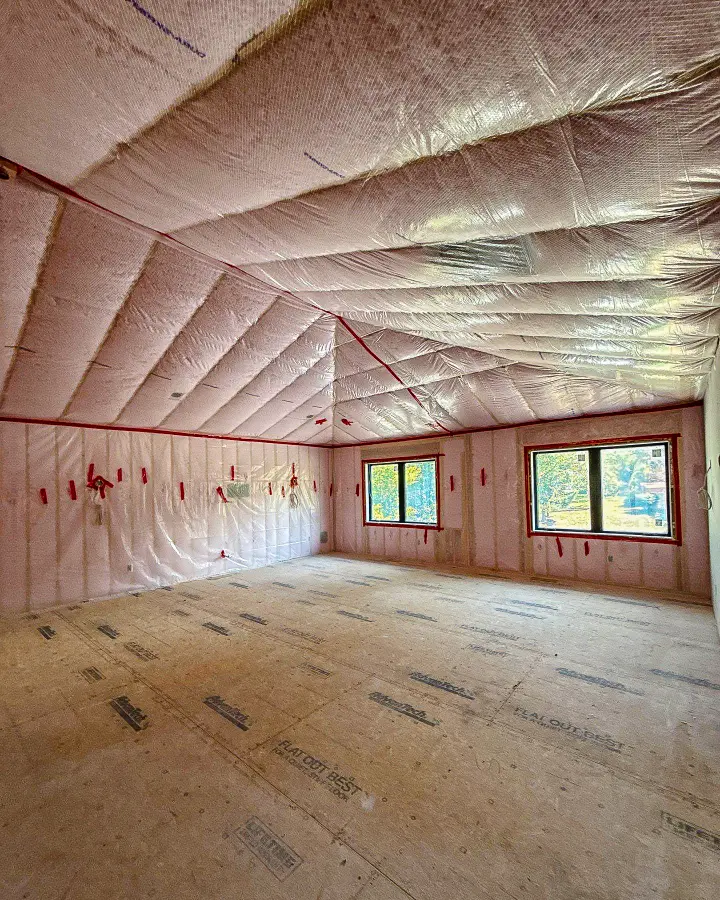
If you look up in your attic and see flattened, discolored insulation that barely covers the joists, or you walk past certain walls in your home and feel a noticeable temperature difference, your home is losing heat through areas that are either underinsulated or not insulated at all. The problem with older insulation is that it settles over time, leaving gaps that let warm air escape right through your ceiling and walls. Blown-in fiberglass insulation from Peak Spray Foam fills those voids completely by packing loose-fill material into every corner, irregular space, and hard-to-reach cavity that batts and rolls cannot cover, bringing your home up to the R-value levels Minnesota winters actually demand, especially when paired with professional air sealing services to eliminate hidden air leaks.
Blown-in insulation offers remarkable performance advantages that make it a smart choice for homeowners seeking to improve their home's efficiency and comfort. When you invest in professional blown-in insulation services, you're not just lowering your monthly energy bills; you're creating a more consistent indoor environment that protects your home from Minnesota's harsh weather extremes. The Department of Energy estimates that proper insulation can reduce heating and cooling costs by up to 15%, making it one of the most cost-effective home improvements available.
Key Benefits of Blown-in Insulation:
The versatility of blown-in insulation makes it perfect for virtually any area of your home that requires thermal protection. Whether you're insulating a drafty attic, retrofitting wall cavities in an older home, or upgrading floor insulation above an unheated space, our blown-in insulation company delivers precise applications that maximize performance and value. According to the Insulation Institute, loose-fill fiberglass can achieve R-values of R-2.2 to R-2.7 per inch, making it an efficient choice for Minnesota's demanding climate requirements.
Applications Where Blown-in Insulation Excels:
Premium Insulation Materials We Use:
Every blown-in insulation project follows a careful process designed to ensure complete coverage and optimal thermal performance throughout your home. Our experienced installers use specialized equipment to distribute loose-fill fiberglass evenly, creating a continuous thermal blanket that eliminates gaps and weak spots where energy loss commonly occurs. The North American Insulation Manufacturers Association reports that homes with proper insulation experience significantly improved comfort levels and reduced strain on HVAC systems, extending equipment life while lowering operating costs.
Our installation begins with a thorough assessment of your home's current insulation levels and identifies areas where loose-fill fiberglass insulation will deliver the greatest impact. We then prepare the work area, set up containment measures to keep your home clean, and use professional blowing equipment to install the material at the correct density for maximum R-value and long-term performance.
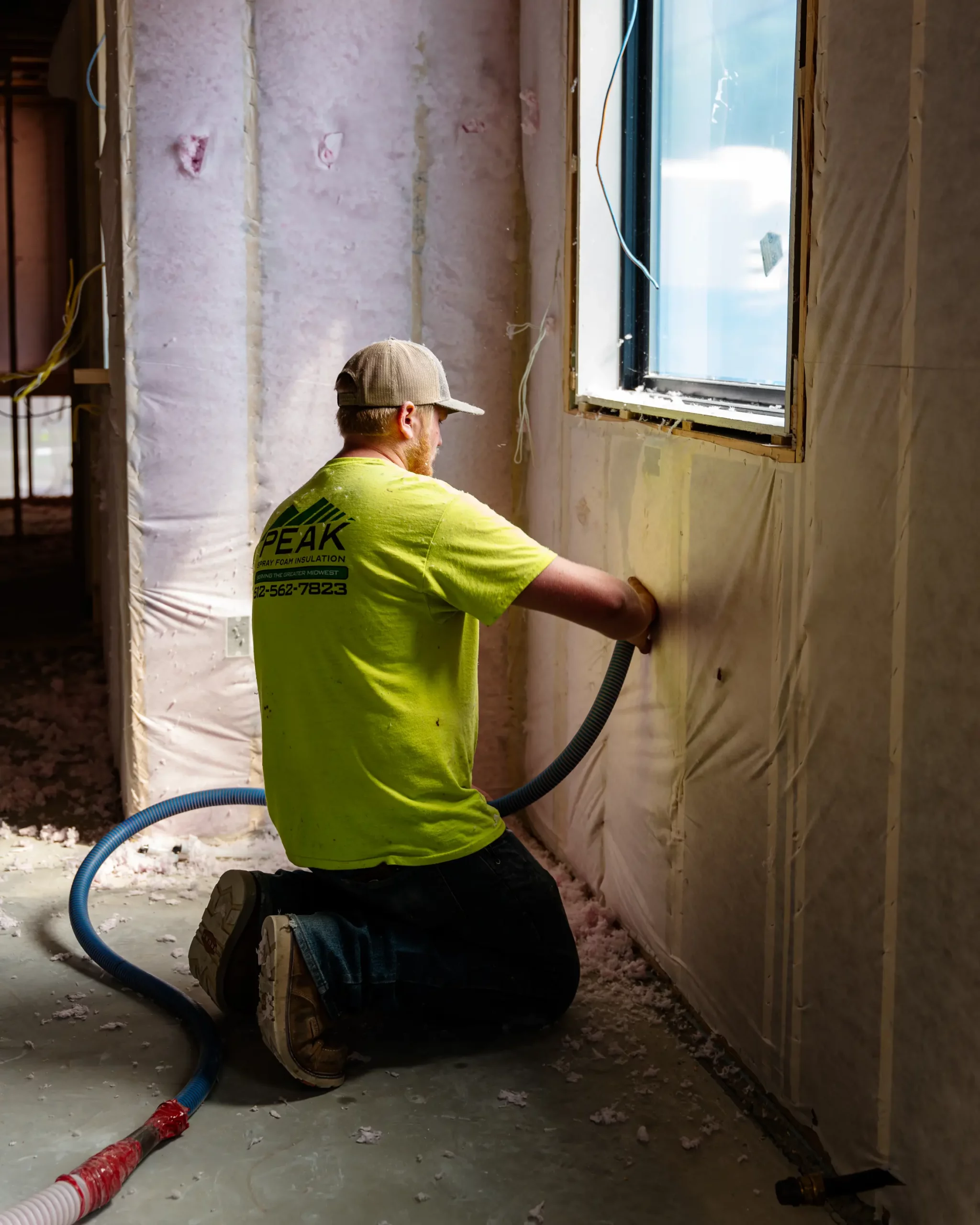
Understanding the differences between insulation types helps you make informed decisions about what's best for your specific situation and budget. While various insulation options exist, blown-in insulation using loose-fill fiberglass offers an excellent combination of affordability, performance, and versatility that makes it a popular choice for Minnesota homeowners seeking reliable comfort improvements.
| Insulation Type | Installation Method | Best Application | Typical R-Value Per Inch |
|---|---|---|---|
| Loose-fill Fiberglass | Blown in | Attics, walls, hard-to-reach spaces | 2.2-2.7 |
| Batts | Cut to fit, placed by hand | Standard framed walls, new construction | 2.9-3.8 |
| Spray Foam | Sprayed as a liquid | Air sealing, irregular spaces | 3.5-6.5 |
Things to Consider Before Installation:
Choosing the right insulation for your home is a significant decision that impacts comfort, energy costs, and indoor air quality for years to come. Blown-in insulation from Peak Spray Foam delivers proven performance backed by decades of successful installations throughout Central Minnesota's challenging climate conditions.
Why Blown-in Insulation is the Smart Choice:
Minnesota's brutal winters and humid summers demand insulation solutions that can handle extreme temperature swings while maintaining consistent comfort levels inside your home. Peak Spray Foam understands the specific challenges that Annandale homeowners face, from ice dam formation on poorly insulated roofs to heat loss through drafty attics and walls. Our locally-based team brings extensive experience with Minnesota building codes, regional construction practices, and climate-specific insulation requirements that out-of-area companies simply can't match.
The Department of Energy recommends attic insulation levels of R-49 to R-60 for Minnesota homes, and blown-in insulation provides an efficient, cost-effective way to achieve these targets. When you choose our blown-in insulation services, you're working with professionals who understand everything from local weather patterns to the unique characteristics of homes in our community.
Ready to upgrade your home's comfort and efficiency with professional blown-in insulation? Contact Peak Spray Foam today for a comprehensive assessment and free quote specifically designed for your Annandale home insulation needs. Our certified team will evaluate your current insulation, discuss your comfort goals, and provide detailed recommendations with transparent pricing. Call us at (612) 482-4742 or email [email protected] to schedule your free consultation and discover why homeowners throughout Central Minnesota trust Peak Spray Foam for their insulation projects.
Blown-in fiberglass fills around joists, wires, and ductwork that batts cannot conform to, eliminating the gaps and compression issues that reduce the effectiveness of rolled insulation in attics with irregular framing.
In most cases we can blow new fiberglass directly over your existing insulation as long as it is dry, undamaged, and free of mold or pest activity, saving you the cost and mess of a full removal.
Yes, we drill small access holes through the exterior or interior, blow the fiberglass into each wall cavity to the proper density, and then patch the holes, leaving your walls intact and fully insulated.
Raising your attic insulation to R-49 to R-60 keeps warm air from escaping through your ceiling and heating the roof, which is the primary cause of snow melt and ice dam formation along your eaves.
Properly installed blown-in fiberglass is treated to resist settling and moisture absorption, and when applied at the correct density, it maintains its R-value for 50 years or more under normal conditions.