
Uneven concrete around buildings is more than a cosmetic issue. In Annandale, MN, where freeze-thaw cycles and variable soil conditions cause slabs to shift seasonally, sunken sidewalks, tilted patios, and uneven driveway sections create real trip hazards that affect everyone who visits or lives on your property. Concrete lifting, also known as slabjacking, addresses these problems by raising settled concrete back to its original position without the cost, disruption, and waste of full slab replacement. The right approach depends on the extent of settlement, the condition of the existing concrete, soil conditions beneath the slab, and whether the property is residential or commercial. Methods include mudjacking, limestone grout leveling, and expanding polyurethane foam injection, each suited to different project needs. A comprehensive concrete lifting guide can help property owners determine which method is best for their specific situation.
Annandale sits in Wright County, an area with soil types ranging from sandy loam to heavy clay. These soils respond differently to moisture and seasonal temperature swings. Clay-rich soils retain water and expand during wet periods, then contract as they dry. During Minnesota’s winters, the freeze-thaw cycle penetrates deep into the ground, creating what engineers call frost heave. As moisture in the soil freezes, it expands and pushes upward against concrete slabs. When the ground thaws, the soil settles again, often unevenly.
The Minnesota Department of Labor and Industry recognizes the seriousness of frost effects on foundations, noting that frost depth requirements have remained largely unchanged for decades despite changing climate patterns. In Annandale’s region, frost penetration is significant enough to disturb concrete that was poured on poorly compacted base material or backfill. Soil erosion from improper drainage compounds the problem, washing away the support beneath sidewalks, driveways, and patios. Over time, even well-installed concrete can develop uneven sections as the ground beneath it shifts.
According to Wikipedia’s overview of concrete leveling, common causes of settlement include inconsistency of soil moisture, soil erosion from improper drainage, consolidation of naturally occurring soils, and poorly compacted backfill around foundations. All of these factors are present in Minnesota’s climate and geology.
Uneven concrete creates hazards that affect visitors, customers, employees, and residents. The risks fall into several categories:
Trip and fall hazards. Even a small vertical change between concrete slabs can cause someone to catch a foot and lose balance. The severity ranges from minor bruises to fractures, head injuries, and worse.
Slip hazards. Uneven slabs often develop cracks that allow water to pool. In Minnesota winters, this water freezes and creates slick surfaces around already uneven transitions.
Liability exposure. Property owners have a legal obligation to maintain safe premises. When an owner knew or reasonably should have known about a dangerous surface and failed to repair it, they can be held liable for resulting injuries.
Vehicle damage. Uneven driveway sections and parking lot slabs can damage vehicles, create drainage problems that accelerate deterioration, and reduce usable space.
The scope of fall-related injuries in the U.S. is significant. According to NIOSH Fast Facts on traumatic occupational injuries, 18% of nonfatal work injuries resulting in days away from work in 2020 were related to slips, trips, and falls. Falls to the same level, which includes tripping on uneven concrete, remain one of the most common causes of workplace injury across all industries.
For commercial properties and public buildings in Annandale, accessibility is not optional. The Americans with Disabilities Act (ADA) sets specific standards for ground surfaces along accessible routes. According to the U.S. Access Board’s guide to floor and ground surfaces, accessible surfaces must be firm, stable, and slip-resistant. The standards limit vertical changes in level to one-quarter inch without any treatment, and changes up to one-half inch are only permitted with a beveled slope no steeper than 1:2. Anything beyond one-half inch requires a ramp or curb ramp.
When concrete slabs settle and create height differences between adjacent sections, they directly violate these requirements. A sidewalk leading to a building entrance with a half-inch drop between panels can be impassable for someone using a wheelchair, walker, or cane. Even for people without mobility aids, these level changes create stumbling blocks.
Concrete lifting restores the level surface required by ADA standards. By raising settled slabs back into alignment, property owners eliminate vertical changes that block accessible routes and create documented trip hazards. This applies to sidewalks, entry approaches, parking lots, and any pathway the public uses to reach a building.
The three primary methods for leveling settled concrete each have distinct advantages. The right choice depends on slab condition, project scope, budget, and long-term performance expectations.
| Method | How It Works | Hole Size | Cure Time | Best Applications |
|---|---|---|---|---|
| Mudjacking | Cement-soil slurry is pumped under the slab via hydraulic pressure | 1 to 2 inches | 24 to 48 hours | Large residential slabs, driveways, and areas where budget is the main concern |
| Limestone Grout Leveling | Pulverized limestone slurry is pumped beneath the slab at low pressure | 1 inch | 24 to 72 hours | Sidewalks, patios, and areas needing fine lift control |
| Polyurethane Foam Injection | Two-part polymer injected beneath the slab; expanding foam lifts and supports | Less than 1 inch | 15 to 30 minutes | Commercial walkways, ADA compliance projects, and areas with erosion concerns |
Based on the Wikipedia article on concrete leveling, expanding structural foam leveling offers several practical advantages for safety and accessibility projects. The foam reaches a hydrophobic state when cured, meaning it does not retain moisture and resists erosion from rainwater or groundwater. Closed-cell polymer foams used in slabjacking can provide lifting capabilities of 6,000 pounds per square foot, and some formulations achieve compressive strengths equivalent to 7,200 to 14,000 pounds per square foot of support. The small injection holes and rapid cure time mean treated areas are usable almost immediately, minimizing disruption to building access.
Mudjacking remains a viable lower-cost option, but it requires larger access holes, longer cure times, and more cleanup. The cementitious grout used in mudjacking can also be susceptible to erosion over time if water infiltrates beneath the slab, potentially leading to resettlement.
Different types of properties face different levels of urgency when it comes to uneven concrete.
Commercial buildings. Owners of stores, offices, restaurants, and other public-facing properties in Annandale should treat trip hazards as immediate priorities. ADA compliance is enforceable, and customer injuries on commercial premises generate costly liability claims. Walkways leading to entrances, parking areas, and any route the public uses should be inspected regularly.
Residential properties. Homeowners should focus on high-traffic areas like front walks, driveway approaches, and steps leading to entries. While private residences are not subject to ADA requirements, homeowner liability insurance may not cover injuries from known hazards that were never addressed. Families with elderly members, young children, or anyone with mobility limitations face the highest risk at home.
Multi-unit housing. Landlords and property managers serving apartment complexes or mixed-use buildings carry heightened responsibility. Tenants and their guests have legal protections, and common areas must meet basic safety standards. Sidewalks connecting units, shared parking areas, and laundry or utility building approaches all warrant regular assessment.
Not every crack or uneven section demands immediate action, but certain indicators signal that professional assessment is warranted:
If you notice any of these conditions around your property in Annandale, documenting them with photos and measurements is a smart first step. This creates a record that shows you are aware of the condition and taking it seriously, which matters from a liability standpoint.
Full slab replacement is sometimes necessary, particularly when concrete is severely cracked, crumbling, or structurally compromised. However, replacement involves demolition, debris hauling, new concrete pouring, and a curing period that can keep areas inaccessible for days or longer. Concrete leveling works when the slab is still in reasonably sound condition, which covers the majority of settlement cases in residential and light commercial settings.
The environmental angle is worth noting as well. Concrete leveling keeps existing slabs out of landfills and avoids the resource demands of manufacturing and transporting new concrete. According to the Wikipedia article on concrete leveling, slabjacking offers minimal or no environmental impact compared to replacement, primarily by keeping waste out of landfills and reducing the disturbance to surrounding landscaping.
Concrete lifting corrects the immediate problem, but preventing future settlement requires attention to the root cause. In Annandale, the most common drivers of renewed settling include:
Combining concrete lifting with drainage correction and soil stabilization gives the best long-term result. A professional assessment should evaluate not just the visible concrete but also the conditions beneath it.
Peak Spray Foam Insulation serves property owners throughout Annandale, MN, and the surrounding area with professional concrete lifting services designed to restore safety, improve accessibility, and protect your property from liability. Our experienced team evaluates each project individually, identifying the cause of settlement and recommending the most effective repair approach for your specific conditions. Whether you need a single sidewalk panel leveled aor a comprehensive assessment of your commercial property’s walkways, we are ready to help.
Request a Quote | Schedule an On-Site Assessment
Call us at (612) 482-4742 or email [email protected] to discuss your concrete leveling needs. We provide honest assessments and clear recommendations so you can make informed decisions about your property.
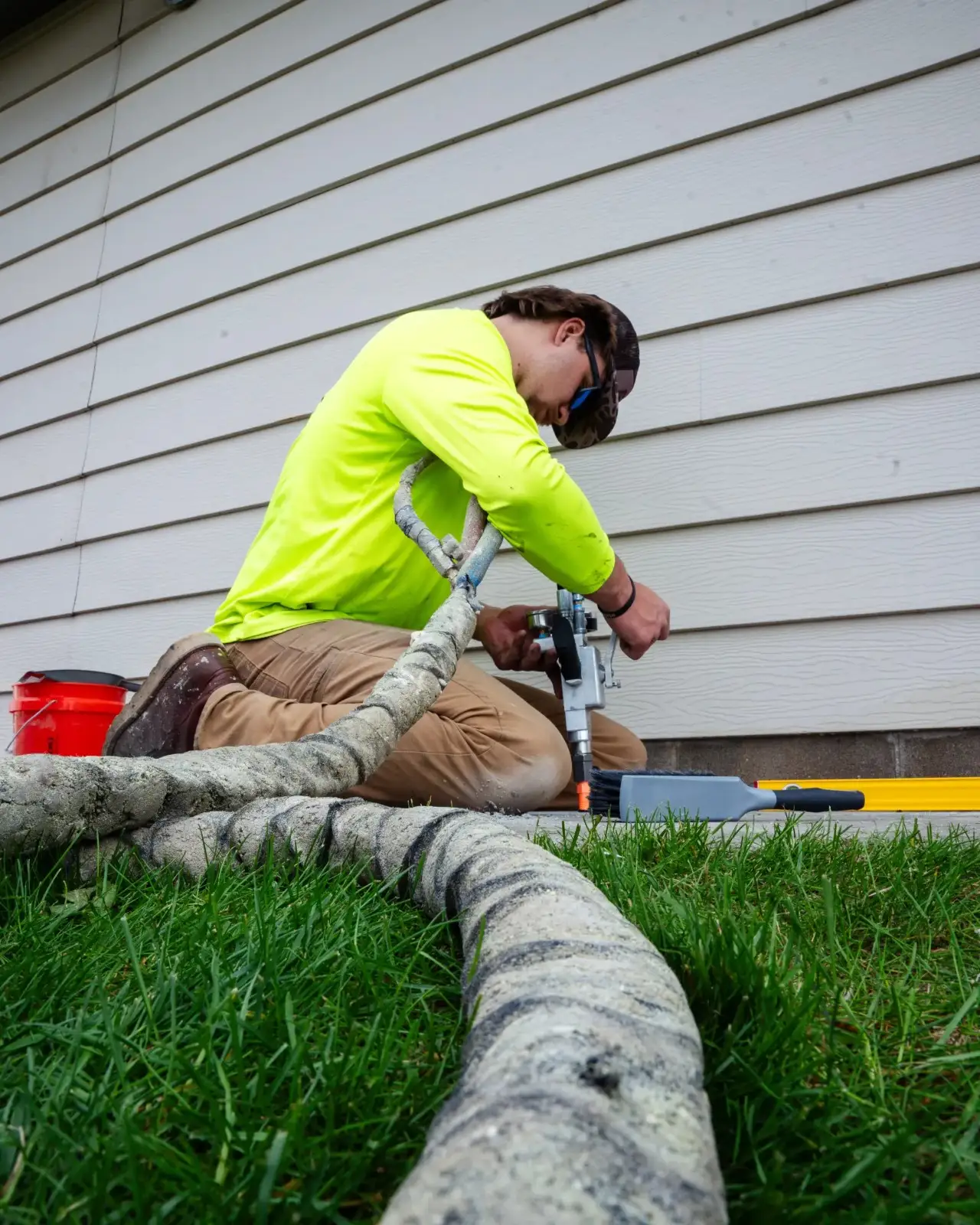
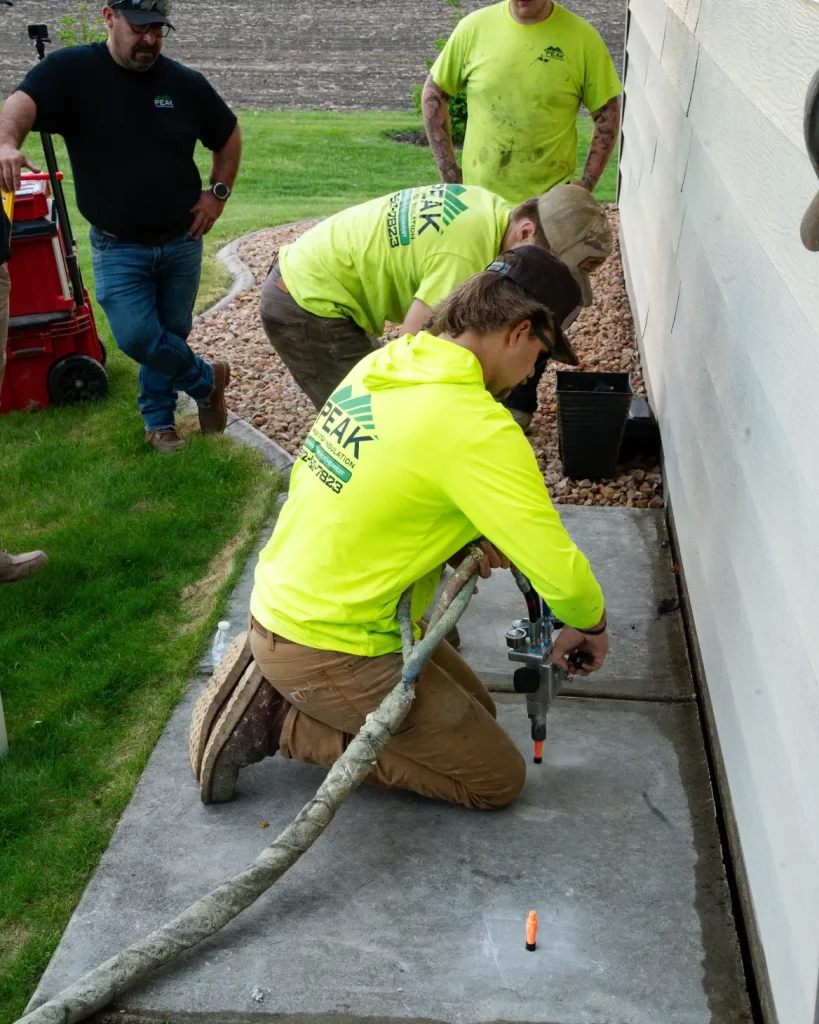
Our technicians drill small access holes in the settled concrete slab and inject a lifting material beneath it. As the material expands or builds pressure, it fills voids and raises the slab back to its original position. Access holes are then patched, and the surface is ready for use shortly after completion.
Most residential concrete lifting projects are completed in a matter of hours. Polyurethane foam injection cures in as little as 15 to 30 minutes, meaning walkways and driveways can be used the same day. Full slab replacement typically requires demolition, pouring, and several days of curing before the area is usable.
Concrete lifting restores level surfaces, and polyurethane foam provides long-lasting, erosion-resistant support beneath the slab. Long-term permanence depends on addressing underlying conditions like drainage issues and soil stability. We evaluate these factors during our assessment to minimize the chance of resettlement.
Coverage depends on your policy and the cause of settlement. If the settling was caused by a covered event, such as a water line break or storm damage, your insurance may contribute to repair costs. For routine settlement from soil movement or freeze-thaw cycles, it is typically considered a maintenance expense.
Focus on any surface people regularly walk on. This includes sidewalks leading to entrances, front steps and stoops, driveway sections near the garage or road, patios, and the path from parking areas to building doors. Even small height differences between panels deserve attention, especially on routes used by customers, tenants, or visitors.