
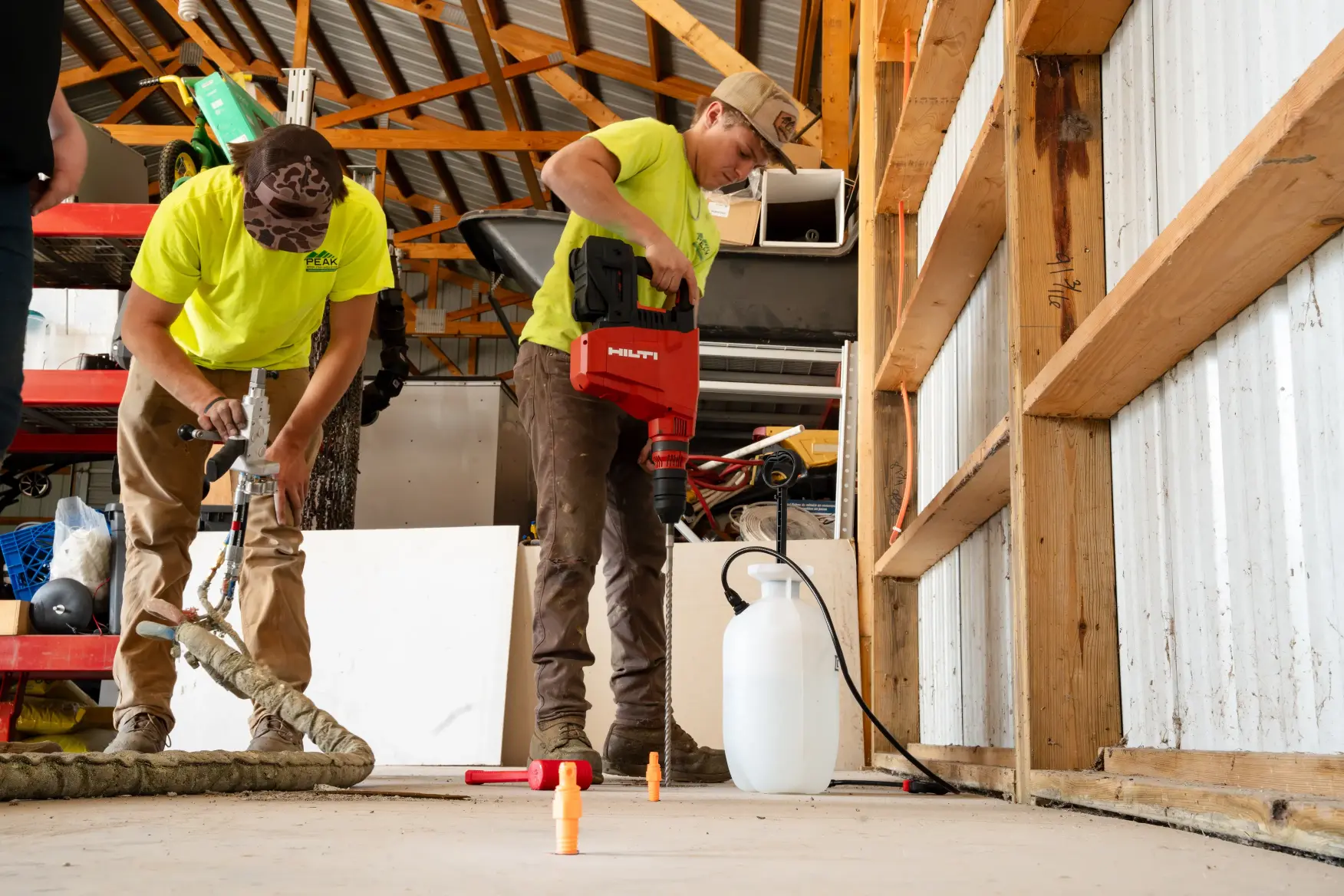
Most residential concrete lifting projects in Albertville are completed within a single day, with many standard jobs finished in just one to three hours. Small repairs like a single sidewalk panel or garage slab settlement can be wrapped up quickly, while larger projects such as full driveway leveling or commercial warehouse work may extend into one to three days. The specific timeline depends on the method used, the size of the affected area, the severity of the settlement, and the condition of the concrete itself. For a better understanding of the process and what to expect, review this concrete lifting guide before starting your project.
Concrete lifting, also known as slab jacking, is the process of raising a sunken concrete slab by injecting material beneath it under pressure. According to the American Concrete Institute (ACI), slabjacking is used to level and align concrete slabs-on-ground that have shifted due to settlement, erosion, flooding, or shrinkage of the soil or base below the slab. The method is commonly applied to driveways, sidewalks, patios, garage floors, and pool decks.
In Albertville and the broader Wright County region, concrete settlement is driven heavily by Minnesota’s climate. The Minnesota Department of Natural Resources tracks frost depth data showing that ground freezing can reach over 30 inches deep in a typical winter, with a 25-year median deepest frost of 20 inches. When moisture in the soil beneath a concrete slab freezes, it expands and pushes the concrete upward. When it thaws, the soil settles unevenly, leaving voids and causing slabs to sink or crack. The Federal Highway Administration (FHWA) notes that frost action requires three conditions: frost-susceptible soils, subfreezing temperatures, and a source of water. All three are present throughout Albertville’s glacial till soils, making concrete settlement a recurring problem.
The method chosen for your project directly affects how quickly the work is completed and how soon you can use the repaired surface. The Wikipedia entry on concrete leveling outlines three primary methods, each with different characteristics that influence project timelines.
This is the fastest method available for concrete lifting. Small holes, typically less than one inch in diameter, are drilled into the slab, and a two-part polyurethane polymer is injected beneath the surface. The foam expands rapidly, filling voids and lifting the slab. The material reaches full cure in as little as 15 to 30 minutes, meaning the repaired surface can bear normal traffic almost immediately after work is completed. The entire process for a standard residential job is often finished in one to two hours.
This method uses a mixture of soil, sand, water, and cement pumped through larger holes (1 to 2 inches in diameter). It has been used since the early 20th century and is effective for large-area lifting. However, the setup, mixing, and pumping process is slower than foam injection. Foot traffic may be allowed immediately, but full use of the slab typically requires a 24-hour curing period. If you’re noticing uneven slabs or trip hazards, knowing when to schedule concrete lifting in Annandale, MN can help prevent further settlement and costly repairs.
A pulverized limestone slurry, sometimes mixed with Portland cement, is pumped beneath the slab through 1-inch holes. This method offers precise, low-pressure control over the lift and produces high compressive strength once cured. The timeline is similar to mudjacking, with same-day completion for most residential projects but a longer wait before the slab is ready for heavy loads.
| Method | Hole Size | Cure Time | Usable Same Day? | Best Project Size | Noise Level |
|---|---|---|---|---|---|
| Polyurethane Foam | Under 1 inch | 15-30 minutes | Yes | Small to medium | Low |
| Mudjacking | 1-2 inches | 24 hours | Limited | Small to large | Moderate |
| Limestone Grout | 1 inch | 24 hours | Limited | Small to large | Moderate |
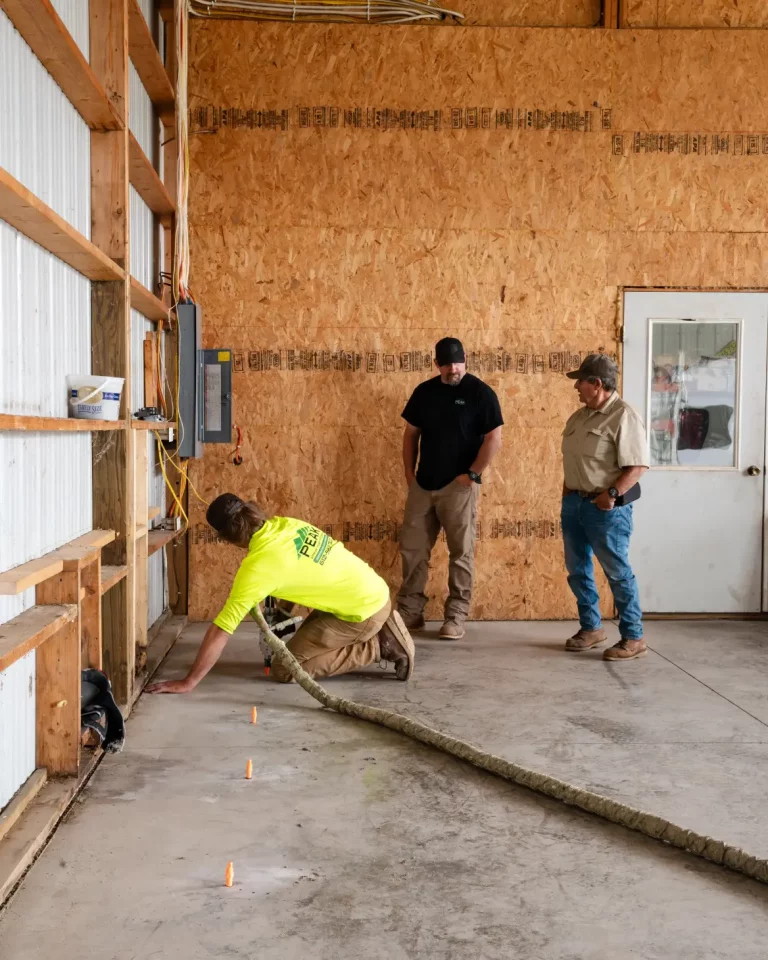
The single largest factor in determining completion time is how much concrete needs to be lifted. A single settled sidewalk panel or garage apron can be completed in about an hour. A standard residential driveway with multiple settled sections might require three to six hours. Full commercial projects involving warehouse floors, large parking areas, or multiple structures may need one to three days, with crews working systematically across the site.
Slabs that have sunk significantly often have larger voids beneath them that need to be filled before the lifting process begins. The ACI field guide notes that if the soil is tight to the underside of the slab, a void may need to be created first using compressed air or water before grout injection can begin. This preparatory step adds time to the overall project, making professional concrete lifting in Annandale, MN the best approach for achieving safe, long-lasting results.
Cracked, badly deteriorated, or structurally compromised concrete may require additional assessment and a more cautious lifting approach. The ACI notes that slabjacking should be performed in increments no greater than 1/4 inch at any one hole location to avoid cracking the slab further. If a slab is in poor condition, replacement may be recommended instead, which extends the timeline to several days or longer.
One advantage of concrete lifting over new concrete pours is that slabjacking can be performed in virtually any weather, including cold temperatures. However, extremely cold conditions can affect the performance of certain materials and equipment. The Minnesota DOT maintains frost and thaw depth monitoring stations across the state, with a station in nearby Otsego serving the Wright County area. During spring thaw periods, the ground may be saturated and unstable, which can complicate lifting work and extend project duration.
Projects with limited access, such as backyard patios with narrow gate clearance or interior slabs, may require additional time for equipment setup and material transport. Clearing the work area of debris, furniture, or landscaping features before the crew arrives helps keep the project on schedule.
| Project Type | Typical Duration | Time Until Full Use |
|---|---|---|
| Single sidewalk panel or step | 1 hour | Same day (foam) / 24 hrs (grout) |
| Driveway (2-3 car, partial settle) | 3-4 hours | Same day (foam) / 24 hrs (grout) |
| Full driveway leveling | 4-6 hours | Same day (foam) / 24 hrs (grout) |
| Patio or pool deck | 3-6 hours | Same day (foam) / 24 hrs (grout) |
| Garage floor | 3-5 hours | Same day (foam) / 24 hrs (grout) |
| Porch with multiple sections | Half to full day | Same day (foam) / 24 hrs (grout) |
| Commercial warehouse floor | 1-3 days | Same day (foam) / 24 hrs (grout) |
Minnesota’s climate creates a compounding effect on concrete settlement. Each winter, freeze-thaw cycles can worsen existing voids beneath slabs and create new ones. What starts as a minor dip in a driveway can develop into a significant trip hazard or structural concern within a single season. The FHWA notes that in central states like Minnesota, many more freeze-thaw cycles occur over a winter season compared to the most northern states, meaning the cumulative damage can actually be greater here despite milder average temperatures.
Waiting to address sunken concrete does not save money. The longer a slab sits unsupported, the more likely it is to crack, which can push the repair from a straightforward lifting job to a full slab replacement. A lifting project completed in a few hours preserves the existing slab, while replacement typically requires demolition, hauling, new pour, and curing over several days or weeks.
If you have sunken or uneven concrete around your Albertville property, our team at Peak Spray Foam Insulation is ready to assess the situation and provide a clear, honest recommendation. We evaluate each project individually and work efficiently to get your concrete back to level with minimal disruption to your daily routine. Call us at (612) 482-4742 or email [email protected] to discuss your project.
Request a Quote | Schedule Your On-Site Assessment
Yes, slabjacking can be performed in virtually any weather condition, including cold temperatures. However, extreme cold may affect material performance and equipment operation, so crews plan accordingly for winter work.
With polyurethane foam leveling, you can typically drive on the repaired slab the same day, often within 30 minutes of completing the lift. Mudjacking and limestone grout methods generally require a 24-hour wait before vehicle traffic.
Concrete lifting addresses the immediate settlement and stabilizes the slab, but if the underlying soil conditions are not resolved, settlement may recur over time. Addressing drainage and water management around the slab improves long-term results.
If the slab has extensive structural cracking, lifting may not be appropriate because the slab could break further during the process. In those cases, replacement is usually the recommended alternative.
Yes, larger voids require more material and more time to fill before the lifting process begins. Slabs with significant settlement or deep voids may extend the project by an hour or more compared to shallow-settled slabs.