

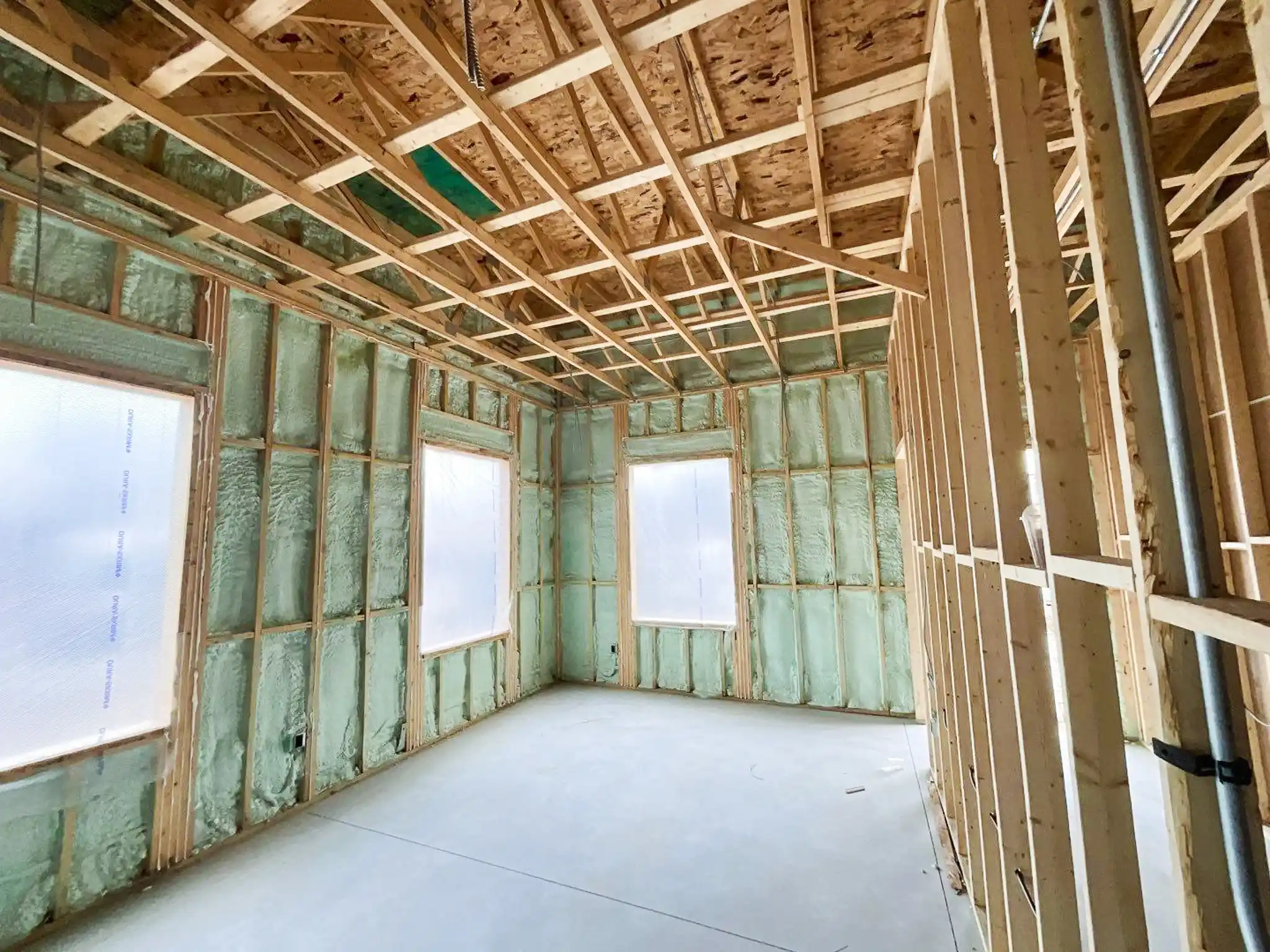
Yes, spray foam insulation is one of the most effective ways to seal hidden air leaks and calm drafty areas in Becker, MN homes. Unlike fiberglass batts or loose fill, which only slow heat transfer, spray foam insulation in Becker, MN, starts as a liquid, expands up to 30 to 60 times its original volume, and adheres to irregular surfaces, filling the cracks, gaps, and penetrations where drafts actually begin. In Becker’s cold, heating-dominated climate, the right foam depends on where the leak sits: closed-cell foam for rim joists, crawlspaces, and other damp or exposed areas where rigidity and moisture resistance matter, and open-cell foam for interior cavities and sound control. The winning approach always starts with finding the leaks first, then matching the material to each spot.
Becker sits in Sherburne County between the Mississippi and Elk Rivers, roughly 45 minutes northwest of the Twin Cities, and winters here put every gap in a home’s envelope to work. Warm air rises and escapes through the attic while cold air pushes in low, so the draft you feel by the couch often originates at a rim joist, top plate, or ceiling penetration you have never seen.
The DOE’s own guidance is blunt about this: insulation is like a sweater, it slows heat loss but does not block wind. Air sealing is the windbreaker. Leaks make rooms feel drafty, force heating equipment to run longer, and let in moisture that can warp wood and feed mold. Most of the 19 key leak areas are hidden under attic insulation, behind rim joists, or inside wall penetrations, which is why a blower door test or thermal imaging is often needed to find them (DOE Guide to Air Sealing).
One clue worth checking yourself: dirty spots on attic insulation mark the air paths, because moving air filters dust as it passes through.
Spray polyurethane foam is created when two chemical parts mix at the spray gun and react. That reaction makes the foam expand and harden, filling cracks, crevices, and voids while conforming to whatever shape it meets. Its most important attribute for drafty homes is air sealing: foam blocks convective heat transfer by closing the paths air uses to move through walls and ceilings (Wikipedia – Spray Foam).
Here is how the common materials compare:
| Material | R-Value Per Inch | Air Sealing Ability | Best Use in a Drafty Home | Key Notes |
|---|---|---|---|---|
| Closed-cell spray foam | R-5.1 to R-6 | Excellent, also a vapor barrier at proper thickness | Rim joists, crawlspaces, exterior walls, shops | Rigid, adds structural stiffness, resists moisture |
| Open-cell spray foam | ~R-3.8 | Very good, expands to fill cavities and cracks | Interior walls, attics, sound-sensitive rooms | Flexible, spongy, absorbs noise |
| Blown-in fiberglass | ~R-3 to R-4 | Minimal, needs separate air sealing | Topping up attic floors | Fast to install over large open areas |
| Batt insulation | ~R-3 to R-4 | Minimal, gaps remain at cuts and wiring | Open stud walls in new construction | Least expensive material, least airtight |
The practical takeaway: batts and loose fill insulate, foam insulates and seals. In a leaky Becker home, that difference is what turns a cold room into a comfortable one.
Walls and rim joists together typically account for more than 40% of a house’s total envelope area, so sealing those assemblies pays off fast (DOE Insulation and Air-Sealing Essentials).
| Draft Area | Why It Leaks | Recommended Approach |
|---|---|---|
| Rim joist / basement top | Gap between foundation and framing, rarely sealed in older homes | Closed-cell foam sprayed to “picture frame” each joist bay |
| Attic (hatch, top plates, recessed lights) | Warm air escapes at every ceiling penetration | Air seal first, then insulate toward the R-60 zone target |
| Crawlspace | Penetrations, exposed earth, humid summer air | Closed-cell foam plus a sealed ground vapor layer |
| Window and door frames | Framing gaps behind trim | Low-expansion foam plus caulk and weatherstripping |
| Older wall cavities | Settled or missing insulation | Targeted foam retrofit into the empty cavities |
The attic deserves special attention. Sealing attic leaks and bringing insulation up to recommended levels is the single upgrade ENERGY STAR highlights for comfort, with savings of up to 10% on annual energy bills (ENERGY STAR Home Upgrade). Insulation and air sealing improvements that meet the 2021 IECC may also qualify for a federal tax credit, so ask us about eligibility before your project starts.
Every home is different, but our typical project prices give Becker, MN homeowners a realistic starting point:
| Service | Typical Low | Typical Average | Typical High |
|---|---|---|---|
| Closed cell spray foam | $2,000 | $25,000 | $200,000 |
| Blown-in fiberglass | $1,000 | $6,000 | $130,000 |
| Batt insulation | $1,000 | $15,000 | $60,000 |
| Pole barn insulation | $15,000 | $30,000 | $50,000 |
Pricing shifts with the job. Larger square footage, difficult access, removal of old insulation, moisture or mold remediation, higher thickness for added R-value, and labor availability all push a quote up. Larger, open-cell spray foam service projects with easy access and minimal prep usually come in lower. Location matters too, so we confirm travel and site conditions during the walkthrough before locking in your number.
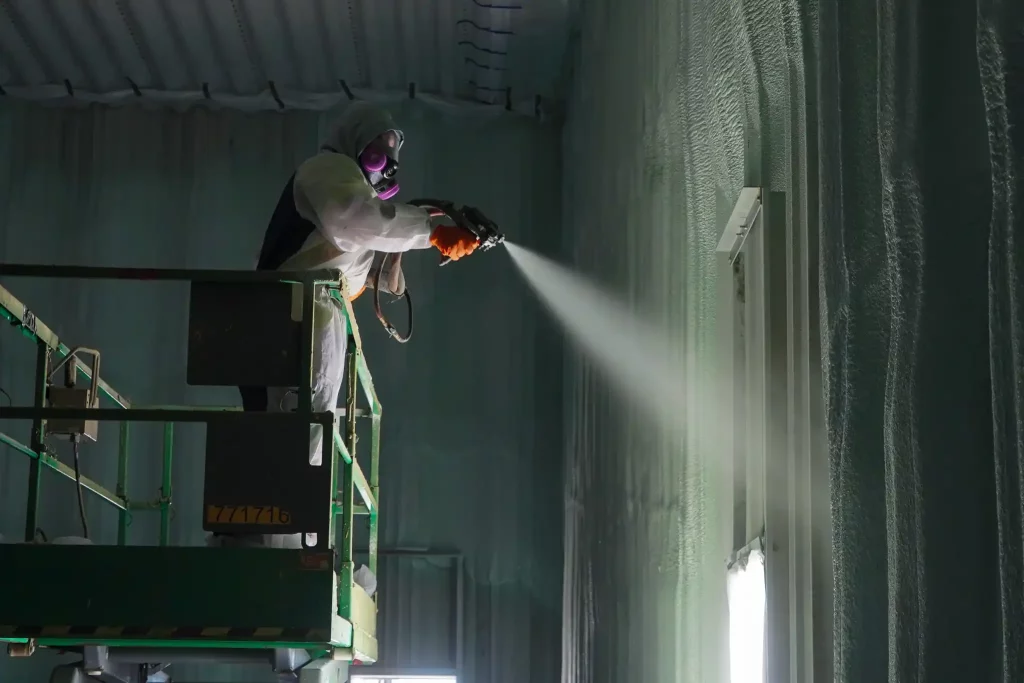
Homeowners ask us about smell and off-gassing more than almost anything else, and the honest answer comes down to chemistry and cure time. SPF products combine a Side A isocyanate and a Side B polyol blend that react as they leave the gun; during application and curing, occupants and pets stay out of the work area (U.S. EPA – Spray Polyurethane Foam). Modern foams cure quickly, and once cured the foam is inert.
Ventilation is the other half of the equation. Before any tightening project, ventilation needs and combustion appliances are evaluated so that sealing the home does not trap moisture or gases indoors. We build both conversations into every estimate.
| Situation | Recommended Approach | Why It Works |
|---|---|---|
| New construction | Closed-cell rim joists, blown-in attic, batt or foam walls | Cheapest moment to get the envelope right |
| Existing drafty home | Assessment first, then closed-cell rim joists and crawlspace, sealed attic | Targets the biggest leaks before spending on material |
| One stubborn cold room | Targeted closed-cell foam at the problem assembly | Small scope, fast comfort win |
| Pole barn or shop | Full pole barn insulation package | Handles large open volumes and condensation |
| Tight budget | Air seal the worst leaks now, insulate in phases | Caulk and weatherstripping alone often pay back in about a year |
At Peak Spray Foam Insulation, our team specializes in closed-cell and open-cell spray foam, blown-in fiberglass, batt insulation, pole barn, and commercial insulation for homeowners throughout the Becker area. We locate the drafts first, match the right material to each leak, and walk you through the timeline, safety, and savings before we ever start spraying. Email us at [email protected] or call (612) 482-4742 to talk with our team.
Your home should feel warm at the rim joist, quiet at the wall, and comfortable in January. Let’s make that the standard, not the exception.
Yes. Closed-cell foam expands directly into the gap between the foundation and the framing, sealing the leak while adding insulation and moisture resistance in a single step.
Closed-cell is the workhorse for cold or damp locations like rim joists and crawlspaces because it hits R-5.1 to R-6 per inch and blocks air and vapor. Open-cell fits interior walls and attics where flexibility and sound control matter more.
During application and curing the chemicals are reacting, so people and pets stay out of the work area, then the cured foam is inert. We give you a clear re-entry and ventilation timeline before the job starts.
It can if ventilation is ignored, which is why airflow and combustion appliances are evaluated before sealing. A properly sealed home still needs controlled fresh air, and we plan for it.
Typical closed-cell projects range from about $2,000 to $200,000, with an average near $25,000. Square footage, access, old insulation removal, and moisture conditions drive most of the variation.