
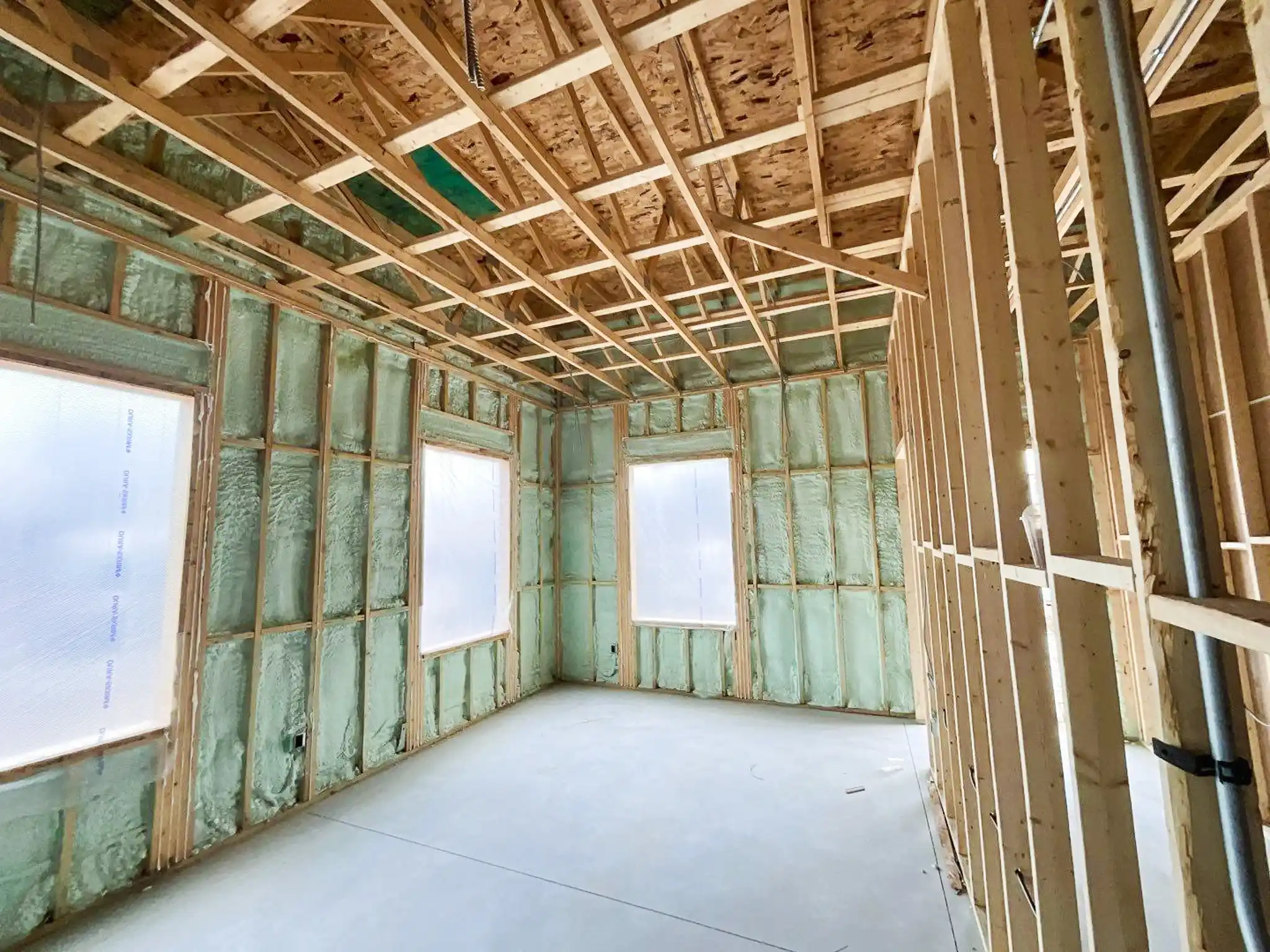
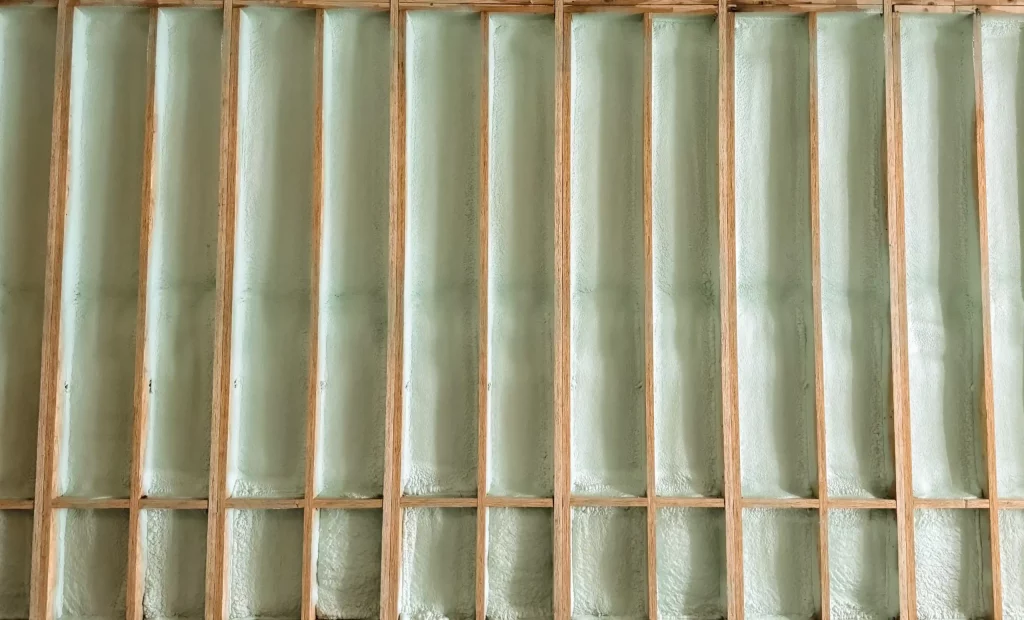
Closed-cell spray foam is a rigid, high-density insulation material that functions as both a superior thermal barrier and a highly effective moisture-vapor retarder. Because it cures into a solid, impenetrable layer, it is the standard choice for building projects requiring maximum R-value per inch, increased structural reinforcement, and reliable protection against unwanted air and water infiltration.
If you are currently evaluating your insulation options, it is essential to understand the material’s unique performance characteristics and whether it fits your specific building needs.
At its most basic level, closed-cell spray foam is a two-component polyurethane system. When a trained technician mixes these components at the spray gun, they undergo a rapid exothermic chemical reaction that causes the liquid to expand into a dense, solid foam.
The “closed-cell” term refers to the microscopic structure of the millions of tiny, individual bubbles trapped within the cured foam. Unlike open-cell foam, where these cells are broken and interconnected—allowing air to move through the material—closed-cell foam insulation benefits include sealed cells filled with a specialized blowing agent. This trapped gas is the secret behind why the material achieves such high thermal resistance in a relatively thin layer.
Because the material becomes extremely rigid upon curing, it also acts as a powerful structural adhesive. It bonds firmly to the studs, joists, and sheathing, effectively tying the building components together into a more unified structure. This added rigidity can provide measurable benefits in how a building handles external forces.
Choosing between closed-cell and open-cell foam often comes down to the specific physical requirements of the area you are insulating. Understanding these differences prevents common mistakes, such as using a vapor-permeable product in a space that needs a vapor barrier. The following table highlights the functional differences between the two primary spray foam types.
| Feature | Closed-Cell Spray Foam | Open-Cell Spray Foam |
|---|---|---|
| Density | High (Rigid) | Low (Soft/Spongy) |
| R-Value per Inch | 6.0 – 7.0 | 3.5 – 4.0 |
| Vapor Barrier | Yes (Class II) | No |
| Sound Absorption | Low | High |
| Primary Use | Moisture-prone, tight spaces | Interior walls, attics |
While open-cell foam is often less expensive and provides excellent sound-dampening qualities for interior rooms, it remains vapor-permeable. If your project involves a crawl space, basement, or metal building where moisture control is the absolute priority, closed-cell foam is typically the superior engineering choice because it physically stops vapor from migrating into the wall cavity where it could cause condensation.
The primary reason professional contractors and informed homeowners specify closed-cell spray foam is its ability to solve multiple building-envelope problems in a single, efficient application.
Its high R-value means you can achieve modern, stringent energy-code requirements in wall cavities that would be far too narrow for traditional fiberglass or open-cell insulation. Furthermore, because it creates a continuous air and vapor barrier, it effectively eliminates the convection currents that often bypass traditional batt insulation. According to FEMA, closed-cell spray foam is classified as a flood-resistant material. Because the cells are sealed, the material does not absorb water and maintains its structural integrity even after being exposed to standing water, which can be a life-saver in flood-prone zones.
The higher upfront cost of closed-cell foam is a frequent, understandable concern for homeowners. However, when evaluating the true “worth” of the project, it is essential to look far beyond the initial invoice to the long-term lifecycle value of your home.
In many scenarios, the initial cost is offset by significant long-term gains. By creating a completely sealed building envelope, you drastically reduce the workload on your heating and cooling system. This leads to lower monthly utility bills and often gives you the potential to downsize your HVAC system, as a smaller, less expensive heating and cooling unit can handle a well-insulated home. When you consider that a poorly sealed, drafty home may require constant HVAC repairs or eventual, expensive remediation for moisture-related mold and wood rot, the upfront investment in a premium sealant often protects the long-term value and structural integrity of the entire building. According to the Department of Energy, air sealing with high-performance materials is one of the most effective, highest-ROI ways to improve a building’s overall energy efficiency and comfort.
Because of its unique combination of rigidity and moisture-blocking capabilities, this material is most effective in specific parts of a building where moisture issues, temperature extremes, or structural gaps are common concerns.
Closed-cell spray foam is a professional-grade product that requires specific safety protocols and high-level training. During the actual installation, the chemical reaction releases vapors that require the area to be strictly evacuated until the product has finished its initial curing phase and the space has been properly ventilated. Read our customer reviews to learn about customers’ experiences with our services.
Because the installation process involves precise temperature and pressure settings to ensure the foam expands and cures as intended, this is definitely not a project for DIY kits. Improper mixing or application can lead to “off-ratio” foam, which may remain tacky, fail to bond correctly, or fail to reach its intended R-value. A professional installer will always verify the surface conditions, apply the foam to the correct thickness, and ensure the building is ready for re-occupancy according to Environmental Protection Agency safety guidelines.
Insulation is not a one-size-fits-all product. The right choice depends on your local climate, the specific age and construction of your property, and the long-term performance goals you have for your building. Peak Spray Foam Insulation specializes in identifying exactly where air and moisture are compromising your home’s energy efficiency and providing the right, tailored application to fix those issues permanently.
If you are unsure whether closed-cell foam is the right move for your project, reach out to our team for a professional assessment. We serve the local area with expert installation and the technical knowledge required to ensure your insulation performs flawlessly for the life of your building.
It bonds tightly to framing, which can mask minor leaks. Always fix plumbing or roof issues before installing any insulation to prevent hidden, long-term damage.
Yes, it is excellent for attics, especially when creating an unvented, conditioned space, as it provides a superior air seal against harsh roof deck temperature fluctuations.
No. The chemical curing process is typically complete within 24 hours. Once the area is properly ventilated by professionals, the off-gassing process effectively ceases entirely.
No. Proper application requires specialized, high-pressure equipment and precise chemical mixing. Improperly applied foam may remain tacky, fail to cure, or reach the incorrect R-value.
Closed-cell is rigid and moisture-resistant with a higher R-value per inch. Open-cell is softer, vapor-permeable, and often provides better sound dampening for interior walls.