

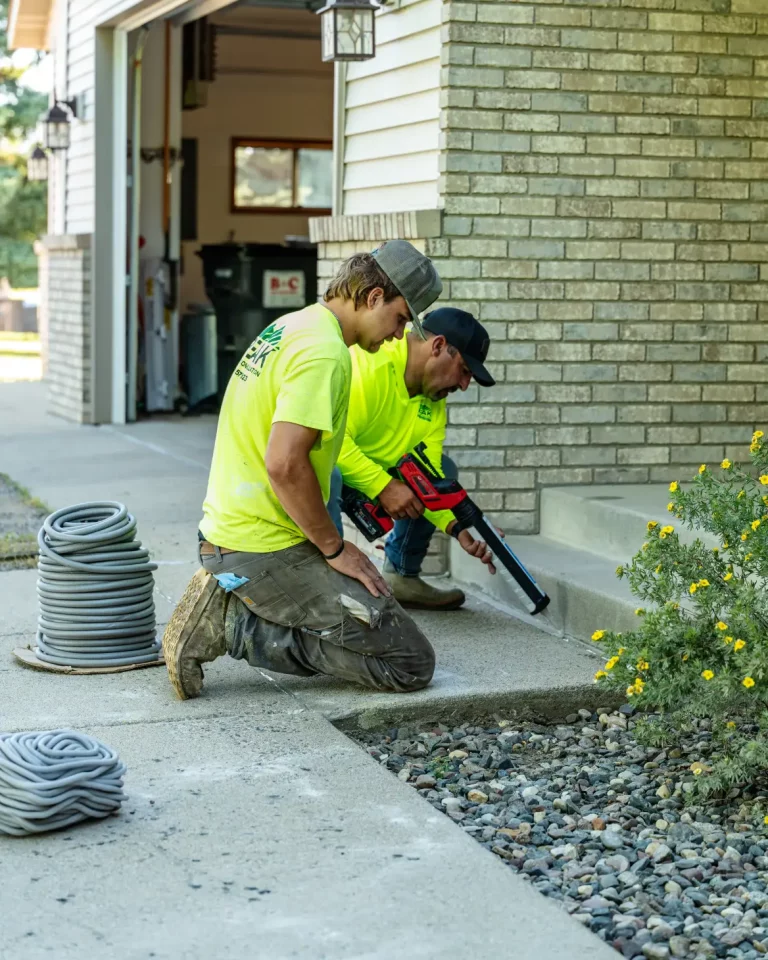
Uneven concrete around St. Cloud, MN homes is caused primarily by frost heave, soil settlement, water erosion, and expansive clay soils that shift beneath slabs during Minnesota’s extreme freeze-thaw cycles. The most effective way to lift sunken concrete back to level is through polyurethane foam injection, a method that pumps expanding foam beneath the slab to raise and stabilize it without the heavy weight or mess of traditional mudjacking. The Ultimate Guide to Concrete Lifting for Homes and Commercial Properties explains how this approach can restore and stabilize settled concrete. Understanding the specific soil conditions and frost depth in the St. Cloud area is the first step toward a permanent fix.
The soil beneath most St. Cloud area homes is glacial till, a dense, unsorted mixture of clay, silt, sand, gravel, and compacted debris left behind by retreating glaciers. As the Federal Highway Administration describes it, glacial till is a mixture “produced by the plowing action of glaciers” whose characteristics vary depending on the sediments and bedrock eroded, creating a highly unpredictable material FHWA Geotechnical Aspects of Pavements.
This unpredictability is precisely what causes problems for concrete slabs. The clay and silt particles in glacial till hold moisture, while the sand and gravel create irregular drainage paths. When temperatures drop below freezing, the moisture in these fine-grained particles expands, and the uneven composition of the soil means some areas heave more than others. The result is differential movement that cracks, tilts, and separates concrete surfaces.
Minnesota’s state soil, the Lester series, is a well-drained loam formed in glacial till that covers much of central and south-central Minnesota, including counties near St. Cloud. Its subsoil contains higher clay content classified as loam or clay loam, which significantly affects water movement, compaction, and the workability of the ground beneath structures. Soils4Teachers – Lester Minnesota State Soil.
Frost heave occurs when three conditions converge beneath a concrete slab: frost-susceptible soil, subfreezing temperatures penetrating into the ground, and a source of water. As described by Wikipedia’s frost heaving entry, ice lenses grow within the soil through capillary action, drawing water upward from a groundwater source. The force of these growing ice lenses can lift soil and overlying concrete by a foot or more.
In St. Cloud, all three conditions are present every winter. The glacial till is frost-susceptible, temperatures routinely drop well below zero for extended periods, and the high water table and snowmelt provide a continuous moisture source. According to the Pavement Interactive reference on frost action, many agencies classify soils as frost-susceptible if 10% or more of particles pass a 0.075 mm sieve or 3% or more pass a 0.02 mm sieve. The silty and clay-rich portions of glacial till easily exceed these thresholds.
When these three elements occur uniformly, heaving is uniform and less damaging. But in real-world conditions around homes, soil composition, moisture levels, and drainage vary across even a single driveway or sidewalk. The result is differential frost heave, which is what causes the visible cracking and unevenness homeowners notice each spring.
The Minnesota State Building Code (MSBC Rules 1303.1600) establishes frost depth requirements for construction. Stearns County, where St. Cloud is located, falls below the line on the official frost depth map, requiring a minimum footing depth of 42 inches (3.5 feet) on the Minnesota DLI Frost Depth Map.
Most residential concrete flatwork, such as sidewalks, driveways, patios, and garage slabs, is poured at a depth of only 4 to 6 inches. Concrete Lifting Solutions in St. Cloud, MN must account for the soil conditions beneath these slabs, as the ground freezes solid every winter and ice lenses can form within inches of the slab bottom. Concrete poured for sidewalks and patios does not need to extend below frost depth, but it sits directly on frost-susceptible ground with no protection.
This is why frost heave damage on residential flatwork is far more common than on home foundations. Foundations are required to extend below the frost line, while sidewalks and driveways sit right in the active freeze zone.
While frost heave dominates in Minnesota, several other factors contribute to slab settlement and cracking:
When fill soil is brought in during construction and not properly compacted before concrete is poured, it will settle over time under its own weight and the weight of the slab. This type of settlement usually appears within the first few years after construction and progresses as the soil continues to consolidate.
Poor drainage around a home’s foundation can channel water beneath concrete slabs. Over time, flowing water washes away fine soil particles, creating voids beneath the concrete. The slab loses support and sinks into the void. This is especially common where downspouts discharge near sidewalks or where grading directs water toward the foundation.
Tree roots growing beneath slabs can push concrete upward as they expand. When a tree is removed, the roots decompose and shrink, leaving voids that cause the slab to settle into the empty space. This creates a cycle of heaving followed by settling.
Certain clay minerals expand significantly when wet and shrink when dry. Seasonal moisture fluctuations cause these soils to cycle between expansion and contraction, producing a repetitive lifting and dropping motion that cracks concrete over time. As the FHWA notes, clay soils with high plasticity “tend to swell when wet” and are responsible for premature maintenance on many miles of roadway each year FHWA Geotechnical Aspects of Pavements.
| Cause | Season When Most Active | Speed of Damage | Reversibility |
|---|---|---|---|
| Frost heave | Winter into spring | Rapid during deep freezes | Partially, slab may settle after thaw |
| Poor compaction | Year-round | Slow, progressive over years | Not reversible, requires leveling |
| Water erosion | Spring and fall | Moderate, depends on drainage | Not reversible without repair |
| Tree root growth | Spring through fall | Slow and steady | Can stabilize after tree removal |
| Expansive clay | Seasonal wet/dry cycles | Repeated, cumulative | Recurring without soil treatment |
Polyurethane foam injection involves drilling small holes (typically 5/8 inch) through the concrete slab and injecting a two-part polyurethane material that expands to fill voids and lift the slab. The foam cures within minutes, creating a dense, stable base that is both lightweight and water-resistant. Research documented by the NSF-funded frost heave mitigation study notes that polymer injection has been tested as a thermal insulation barrier in pavement structures, demonstrating that polyurethane foam materials are effective at stabilizing subsurface conditions and resisting freeze-thaw cycles.
Advantages:
Mudjacking pumps a slurry mixture of sand, cement, and soil beneath the slab through larger holes (1-2 inches). The slurry fills voids and provides a new base. Mudjacking has been used for decades and remains a viable option for certain applications.
Advantages:
Disadvantages:
Full replacement involves removing the damaged concrete and pouring new slabs. This is the most expensive option and is typically reserved for slabs that are severely cracked, crumbling, or structurally compromised beyond what leveling can address.
| Method | Weight of Material | Cure Time | Hole Size | Water Resistance | Best Application |
|---|---|---|---|---|---|
| Polyurethane foam | 2-4 lbs/cu ft | 15-30 min | 5/8 inch | High | Frost-heave areas, settled slabs |
| Mudjacking slurry | ~100 lbs/cu ft | 24-48 hrs | 1-2 inches | Low | Large uniform settlement |
| Full replacement | N/A | 7+ days | N/A | N/A | Severely cracked or crumbling slabs |
| Scenario | Home Type | Problem | Solution | Outcome |
|---|---|---|---|---|
| Frost-heaved sidewalk | 1970s split-level in St. Cloud | Sidewalk sections lifted 2 inches at joints, creating trip hazard | Polyurethane foam injection through slab joints | Leveled in one afternoon, foam resisted subsequent freeze-thaw |
| Settled garage slab | New construction (2021) in Sartell | Garage floor settled 1.5 inches near door, water pooling at entry | Polyjacking with joint resealing | Slab lifted level, drainage restored, usable same day |
| Sunken patio | Ranch-style home in Waite Park | Patio had dropped 3 inches over 15 years from soil erosion | Polyurethane injection with drainage correction | Patio raised and stabilized, gutters redirected to prevent recurrence |
| Cracked driveway | Two-story home in Sauk Rapids | Driveway cracked and uneven from repeated frost heave cycles | Polyurethane foam leveling with crack repair | Even surface restored, foam base provides better frost resistance |
Walk your property in early spring after the ground has thawed but before new growth obscures the slab edges. Measure the vertical displacement at crack points and joints using a straight edge and tape measure. Note where water pools after rain, as these low spots indicate settlement. Photograph everything for comparison later.
Check that gutters discharge at least 5 feet from the foundation and that the ground slopes away from the home at a minimum 2% grade. Downspouts that dump water directly against or under concrete slabs accelerate both erosion and frost heave. Addressing drainage is a prerequisite for any lasting leveling repair.
Frost heave damage typically produces heaved sections in winter that partially settle back in spring, leaving a slightly raised, cracked appearance. Settlement from soil compaction or erosion produces consistent sinking that does not recover seasonally. Understanding the difference helps determine whether leveling alone will solve the problem or whether additional drainage or soil work is needed.
For St. Cloud area homes subject to deep frost penetration and freeze-thaw cycling, polyurethane foam injection is generally the better long-term choice. Its lightweight composition does not overload already compromised subgrades, and its closed-cell structure resists the moisture intrusion that drives frost heave in the first place.
Once the slab is level, seal all joints and cracks with a quality polyurethane sealant to prevent water from infiltrating beneath the slab. This is a low-cost maintenance step that dramatically reduces the likelihood of future settlement and frost-related damage.
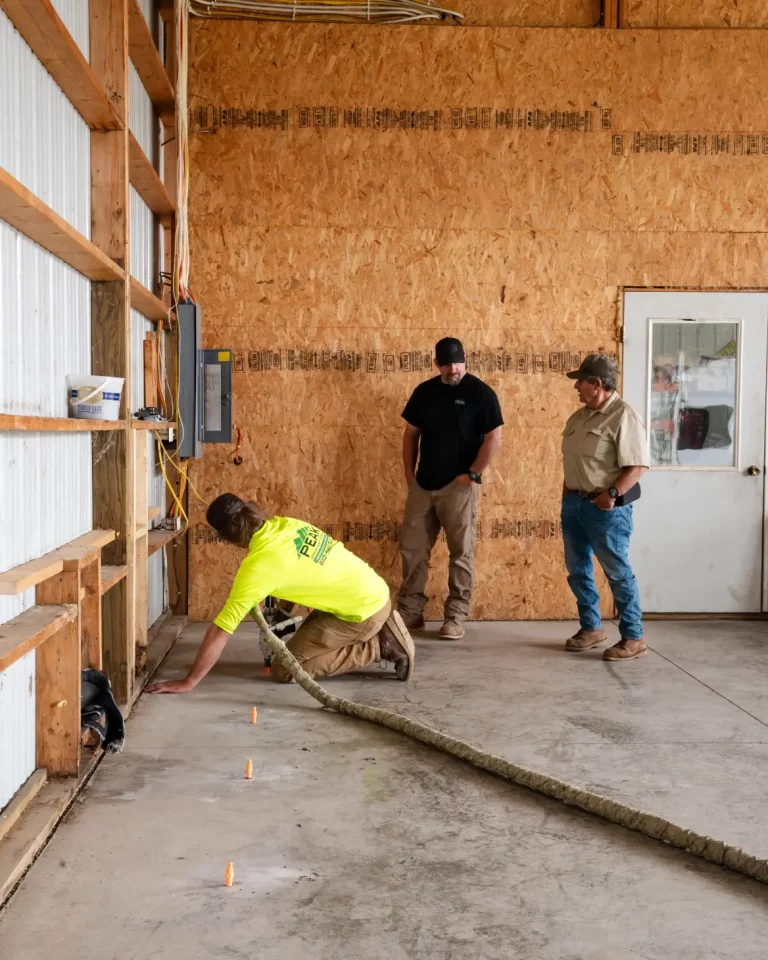
Several variables determine how well and how long a concrete leveling repair holds up, especially in Minnesota’s climate:
Peak Spray Foam Insulation brings deep expertise in polyurethane foam materials and application techniques to every project. Our team understands the unique soil conditions and frost challenges that St. Cloud, MN homeowners face, and we know how to assess whether foam injection is the right solution for your specific situation. Whether your sidewalk has heaved from winter frost, your garage slab has settled from poor compaction, or your patio is cracking from seasonal soil movement, our professionals can evaluate the cause and recommend the most effective approach.
Request a Quote | [Schedule a Concrete Assessment]
Call us at (612) 482-4742 or email [email protected] to get started. We serve homeowners throughout the St. Cloud area and surrounding communities, and we are committed to honest assessments and lasting repairs.
Frost heave damage typically causes slabs to rise in winter and partially drop back in spring, leaving a cracked, slightly elevated appearance. Settlement from poor compaction or erosion causes consistent, progressive sinking that does not improve with the seasons.
Polyurethane foam creates a stable, lightweight base that resists water absorption, but it cannot stop frost heave entirely. It does, however, reduce the moisture availability beneath the slab that drives ice lens formation, making recurrence less likely.
Most residential projects, including a typical driveway or sidewalk section, can be completed in a few hours. The foam cures in 15 to 30 minutes, and the slab is ready for normal use the same day.
The repair itself is permanent, but the underlying soil and drainage conditions that caused the original problem must be addressed. If water continues to erode soil beneath the slab or frost-susceptible soils remain unchecked, settlement can recur.
Most structurally intact concrete slabs can be lifted, including driveways, sidewalks, patios, garage floors, and pool decks. Slabs that are severely cracked, crumbling, or structurally failed may require replacement instead.