

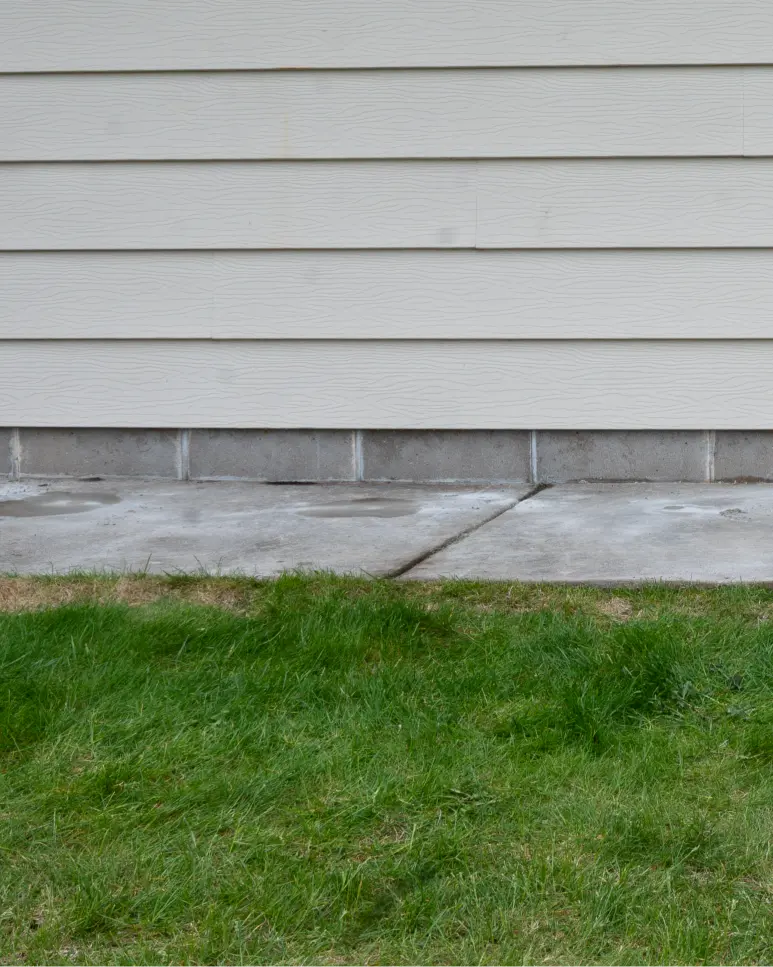
St. Cloud homeowners with sunken or uneven concrete should act quickly when settlement creates trip hazards, visible cracks wider than a quarter inch, or signs that the slab is still actively moving. Our Minnesota freeze-thaw cycles and local soil conditions make concrete settlement a recurring problem, but not every dip or crack demands immediate professional lifting. The Ultimate Guide to Concrete Lifting helps explain the distinction based on safety risk, whether the underlying cause is still active, and whether secondary damage is spreading to other parts of the property. Below is a clear breakdown of what to watch for, what the local ground conditions contribute, and when waiting is no longer a safe option.
Understanding what is happening beneath your slab starts with the ground itself. A geotechnical evaluation prepared for the City of St. Cloud found that the area’s subsurface soils consist primarily of sand with interbedded layers of silt and fat clay, along with existing fill that can be highly variable in composition and thickness. Some of those fill layers contain organic material, which compresses over time under the weight of concrete slabs. The report noted that existing fill soils should be considered unsuitable for structural support beneath buildings because they may contain compressible materials that can cause excessive settlement.
The University of Minnesota Extension reports that much of central Minnesota is underlain by Alfisols and Entisols, soil orders that include loamy to clayey materials with varying moisture retention. Clay-rich soils expand when wet and shrink when dry, creating a cycle of movement beneath any concrete resting on top. In St. Cloud specifically, the presence of fat clay layers at depths between 15 and 20 feet means the soil can behave unpredictably as groundwater levels fluctuate seasonally.
On top of that, Minnesota winters deliver some of the deepest frost penetration in the United States. According to the Minnesota DNR State Climatology Office, frost depth under sod in the region has reached 32 to 35 inches in multiple years, with a median maximum depth of 20 inches over a 25-year monitoring period. Under exposed concrete with no snow cover, frost penetrates even deeper. Each freeze-thaw cycle lifts the slab slightly, then lets it settle again when the ground thaws. Over years, this produces the uneven, sunken surfaces we see on driveways, sidewalks, patios, and garage floors across St. Cloud.
The most urgent reason to call a professional is a physical safety hazard. Any vertical offset between adjacent concrete slabs, or a noticeable dip that creates a stumble risk, should be evaluated right away. This is especially true if your household includes older adults, young children, or frequent visitors.
The National Institutes of Health, published via StatPearls, reports that over 30 percent of adults over age 65 fall each year, and environmental factors such as uneven surfaces and poor lighting account for 30 to 50 percent of those falls. Approximately 10 percent of falls result in serious injuries, including fractures and head trauma. A sunken sidewalk section or a driveway slab that has dropped by even a half inch can catch a shoe edge or cause a loss of balance, particularly in wet or icy conditions that St. Cloud experiences for much of the year.
Not all concrete cracks are equal. Hairline cracks from normal curing or minor shrinkage are common and generally cosmetic. But cracks that are visibly widening, lengthening, or branching signal that the slab is still moving. This Old House recommends that homeowners watch specifically for cracks wider than a quarter inch, horizontal cracking, or any crack that has changed since you first noticed it. These patterns often indicate uneven settlement or pressure from expanding soil beneath the slab.
If you can mark a crack with a pencil and date it, do so. Compare it in 30 days. Any measurable change means the underlying problem is active.
Sunken concrete outside can mean foundation settlement underneath. Watch for these interior red flags:
When these interior signs appear at the same time as exterior concrete settlement, the problem has moved past cosmetic concern and into structural territory. A professional assessment at this stage is not optional.
Not every concrete issue requires an emergency call. This table helps you sort what you are seeing into the right category.
| Sign You Notice | What It Usually Means | Recommended Action |
|---|---|---|
| Hairline crack, no change over months | Normal curing or minor shrinkage | Monitor quarterly, no immediate action needed |
| Small dip in patio slab, no cracks | Early soil consolidation or minor settling | Monitor for changes, consider drainage improvements |
| Trip hazard half inch or more | Differential settlement between slabs | Schedule professional lifting assessment promptly |
| Crack wider than a quarter inch, actively growing | Active soil movement or void formation | Professional evaluation needed right away |
| Water pooling in low spots after rain | Voids forming beneath the slab | Professional lifting needed to prevent further settlement |
| Multiple cracks with sticking doors or sloping floors | Foundation-related structural movement | Immediate professional structural assessment |
| Gaps between concrete and garage wall | Settlement pulling slab away from structure | Professional lifting recommended before gap widens |
Some homeowners attempt to address sunken concrete with surface grinding, patching compounds, or by tearing out and repouring the slab. Each of those approaches has limitations:
Surface grinding levels the top but does nothing to fill the void underneath. The slab will continue to settle, and the problem returns, often worse.
Patch compounds cover cracks cosmetically but do not address the soil voids or the movement causing them. Patches crack again as the slab continues shifting.
Full replacement is expensive, disruptive, and time-consuming. It also does not guarantee the new slab will not settle again if the underlying soil conditions are not corrected.
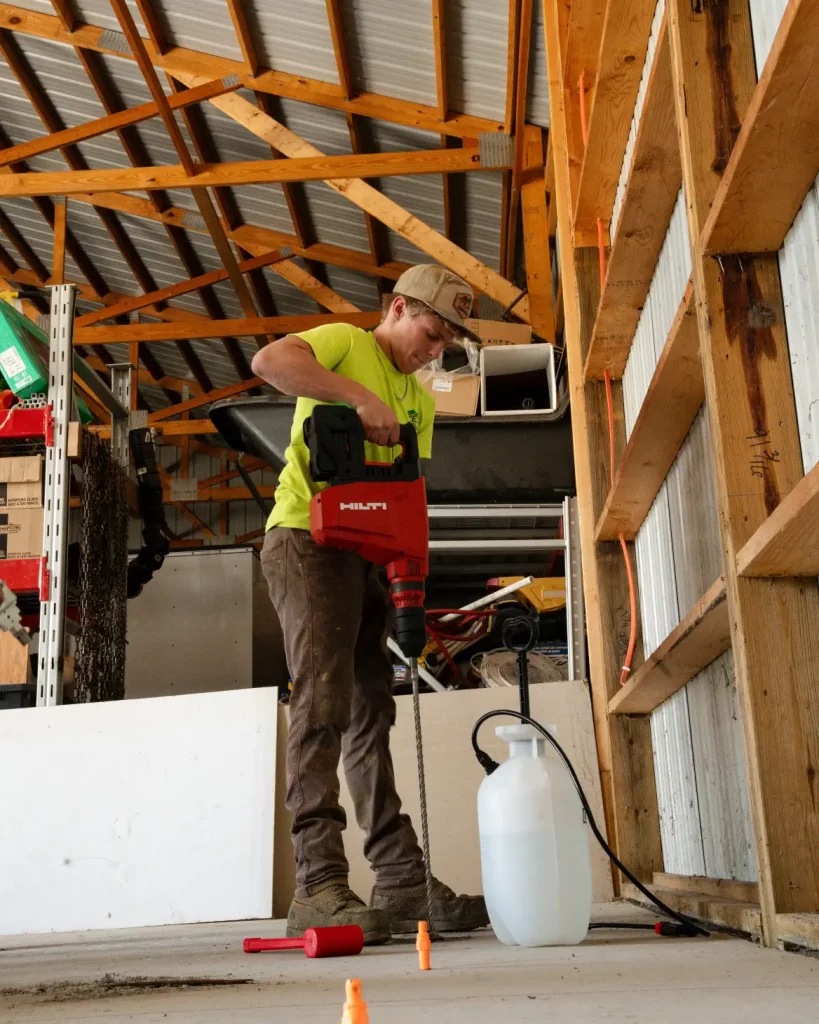
Professional concrete lifting, often done with polyurethane foam injection, addresses the actual problem. Small holes are drilled into the slab, and high-density foam is injected beneath it. The foam expands to fill voids, compacts loose soil, and lifts the concrete back toward its original position. The process stabilizes the slab, redirects water away from the void area, and can typically be completed in a matter of hours with the surface usable the same day.
Different situations call for different levels of urgency. Here is how to think about it based on where the problem is and who uses the space.
Sidewalks and front walkways: If these connect to the public right-of-way or are used by mail carriers, delivery drivers, or neighbors, treat any trip hazard as urgent. A fall on a public-facing walkway carries real liability exposure. Get it lifted before someone gets hurt.
Driveways and garage floors: These see daily vehicle traffic, which accelerates damage. A sunken driveway section causes water to pool, which speeds up freeze-thaw deterioration in winter. If your car scrapes or tilts going into the garage, the settlement has progressed enough to warrant lifting.
Patios and pool decks: These are lower priority from a structural standpoint but still matter for safety and property value. Address trip hazards if you entertain guests frequently or if children use the space.
Basement and interior slab floors: Sunken basement floors with visible cracks, especially those paired with water intrusion, need a structural evaluation. The cause could be tied to the same soil conditions that affect exterior slabs, but the stakes are higher because they involve the living space and potential moisture damage.
Choosing the right team to lift your concrete matters as much as recognizing the problem. Look for these indicators:
Peak Spray Foam Insulation serves St. Cloud, MN, and surrounding communities with professional concrete lifting services that address the soil conditions and seasonal demands unique to our area. Whether you have noticed a trip hazard on your sidewalk, cracks spreading across your driveway, or your garage floor pulling away from the foundation wall, our team provides honest assessments and effective lifting solutions. Reach out to us at [email protected] or call (612) 482-4742 to discuss your property.
Request a Quote | Schedule an Assessment
Frost heave can lift and shift slabs multiple times each winter. Once voids form beneath the concrete, settlement accelerates with each spring thaw, making early intervention important.
If there is no trip hazard and no active crack growth, monitoring through winter is reasonable. However, any safety hazard or actively growing crack should be evaluated before freeze-thaw cycles add more movement.
Professional foam lifting works on driveways, sidewalks, patios, garage floors, and many basement slabs. A professional inspection will determine whether your specific slab is a good candidate.
Most residential concrete lifting projects are completed within a few hours. The surface is typically ready for normal use the same day, unlike full replacement which takes days or weeks.
When done properly, polyurethane foam lifting fills voids and compacts the soil beneath the slab, providing long-term stability. Reputable providers also offer warranties to cover their work.