

In Hutchinson, Minnesota, where winters stretch from November through March with sustained subfreezing temperatures, the parts of your property that matter most for reducing heat loss are the attic, exterior walls, rim joists, basement or crawlspace walls, and any floors over unconditioned spaces. Hutchinson sits squarely in a cold-climate zone where the Department of Energy recommends ceiling insulation values up to R-60 and wall assemblies combining cavity insulation with continuous exterior insulation in Hutchinson, MN. Prioritizing these areas, in the right order, makes the difference between a home that stays comfortable and one that drains your heating budget every winter.
The attic is where most residential heat loss occurs. Warm air rises naturally, and in a poorly insulated attic, it passes straight through the ceiling and escapes. In cold-climate zones like Hutchinson, the Department of Energy recommends attic insulation at R-60 or higher. Most older homes in Minnesota were built with far less than that, sometimes as low as R-11 or R-19, meaning there is often substantial room for improvement.
Beyond simply adding material, the attic requires careful air sealing. Gaps around recessed lights, plumbing stacks, HVAC registers, and the attic hatch can allow warm air to bypass insulation entirely. An Insulation Guide: Types & Surfaces can help property owners understand how different insulation approaches apply to attic surfaces and other areas. Sealing these penetrations before adding insulation is an important step in reducing unwanted air movement and improving the overall performance of the insulated assembly.
Our team evaluates existing attic insulation levels, identifies air leak pathways, and recommends the right approach, whether that is blown-in fiberglass for a straightforward top-up or spray foam for combined air sealing and insulation.
Exterior walls represent the largest surface area of your home’s thermal envelope. According to the DOE, walls and rim joists typically make up more than 40% of the total envelope area of a house. That means even moderate heat transfer through walls adds up quickly over a Minnesota winter.
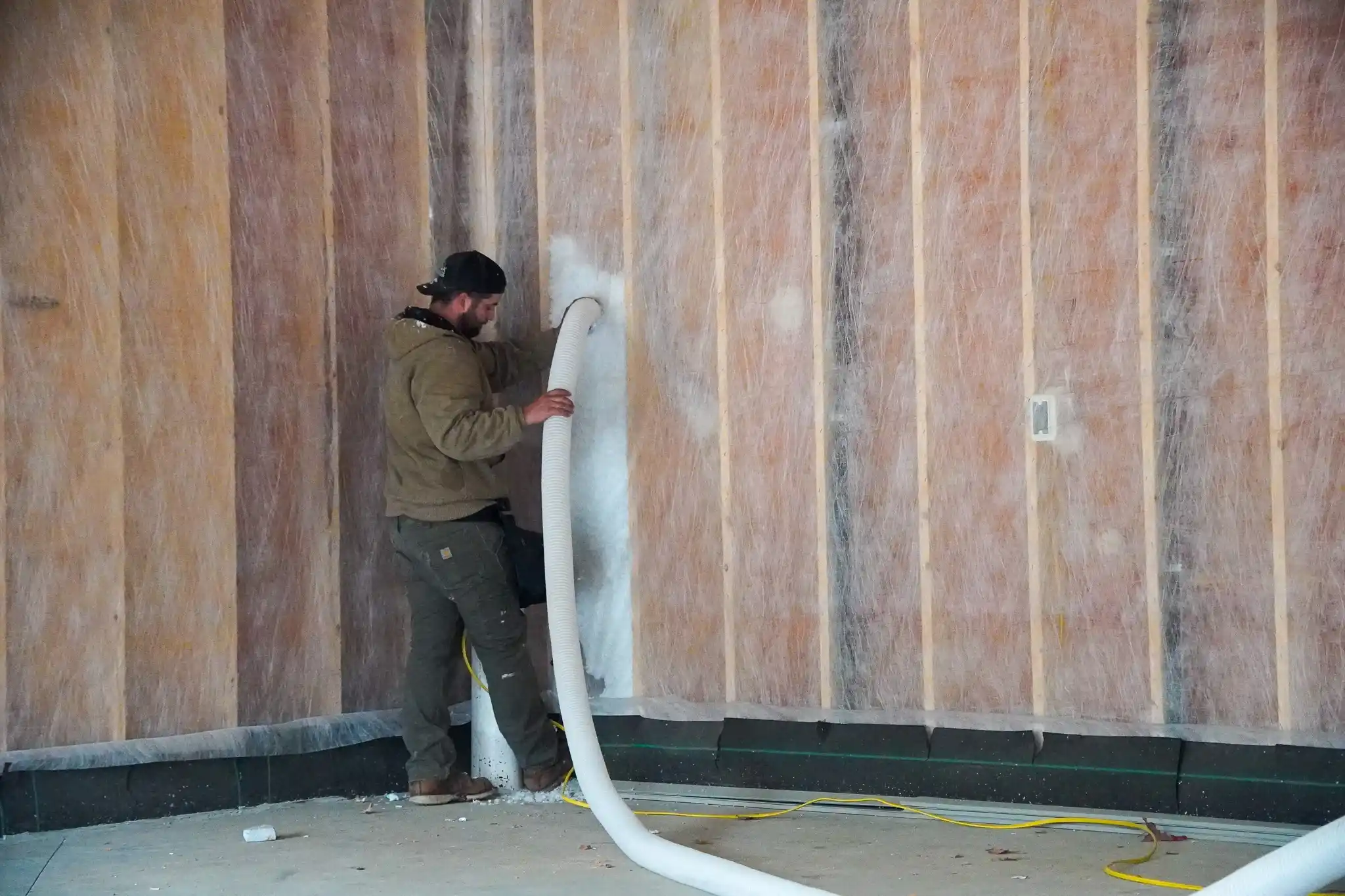
In new construction, achieving the recommended R-20-plus cavity fill plus R-5 continuous insulation is straightforward. In existing Hutchinson homes, the approach depends on what is practical. If a re-siding project is already planned, adding continuous exterior insulation at that time is the most cost-effective method. For homes not undergoing exterior work, dense-pack cellulose or blown-in fiberglass installed through drilled holes can fill empty wall cavities, while spray foam applied at the rim joist addresses the critical transition between the foundation and the framed walls.
The rim joist, also called the band joist, is the area where the floor framing meets the foundation wall. It is one of the most overlooked and under-insulated parts of a home, yet it is a major source of air infiltration and conductive heat loss.
Rim joists are notoriously difficult to insulate with fiberglass batts because the framing is irregular and the cavities vary in size. Spray foam is the standard solution here because it expands to fill gaps completely and also acts as an air barrier. In Hutchinson homes with unfinished basements, our crew applies spray foam directly to each rim joist bay from the interior, sealing the perimeter of the building envelope at one of its weakest points.
Heat loss from basements accounts for a significant portion of a home’s total energy consumption. The Building Science Corporation notes that basements can account for up to one quarter of typical home energy use, which makes basement insulation essential in Minnesota’s heating-dominated climate.
However, basement insulation must be done carefully. Traditional approaches using interior fiberglass batts with polyethylene vapor barriers have been shown to trap moisture against foundation walls, leading to mold, decay, and odors. The recommended approach in cold climates is to place rigid foam insulation or spray foam directly against the concrete foundation wall, which keeps moisture-sensitive materials away from the concrete and allows the foundation to dry inward.
For Hutchinson homeowners with unfinished basements, insulating the perimeter walls now means lower heating costs and a more comfortable living space when the basement is eventually finished.
Many Hutchinson homes, particularly older ones, have vented crawlspaces. In a cold climate, a vented crawlspace means cold air flows directly beneath your floor, and the floor insulation is the only barrier between your living space and outdoor temperatures. This is an inefficient and often uncomfortable arrangement.
The modern best practice is to seal and insulate the crawlspace walls rather than insulate the floor above. This brings the crawlspace into the conditioned envelope of the home, eliminating cold floors and reducing the risk of frozen pipes in winter. Sealed crawlspaces also require a continuous vapor retarder over the exposed earth floor, as specified by the Building America Solution Center (PNNL).
Any floor that sits above an unheated garage, unconditioned basement, or vented crawlspace needs insulation. Heat conducts downward through these floors, and in Hutchinson’s winter conditions, that translates directly to higher heating bills and cold floors above.
Batt insulation installed between the floor joists is the most common solution here, though spray foam can also be used when air sealing is needed at the same time. The key is ensuring the insulation has full contact with the floor above and that any gaps around wiring or plumbing penetrations are sealed.
Not every area of your property can or should be insulated at the same time. Budget, access, and the current state of each area all play a role. Here is how we recommend thinking about priority:
| Priority | Area | Why It Matters | Typical Approach |
|---|---|---|---|
| 1 | Attic / Ceiling | Largest single source of heat loss; easiest to access and upgrade | Blown-in fiberglass or spray foam |
| 2 | Rim Joists | Major air leak pathway between foundation and framing; high impact per dollar spent | Closed cell spray foam |
| 3 | Exterior Walls | Largest envelope surface area; moderate to high heat loss | Blown-in insulation or spray foam |
| 4 | Basement Walls | Significant conductive loss; moisture control considerations | Spray foam or rigid foam board |
| 5 | Crawlspace | Cold floors, frozen pipe risk; often overlooked entirely | Spray foam walls + vapor barrier |
| 6 | Floors Over Garages | Targeted loss area; less total square footage than walls or attic | Batt or blown-in insulation |
The right insulation material depends on the area being treated, the existing conditions, and whether air sealing is also needed. Here is a comparison of the main insulation types our team works with:
| Insulation Type | Best Application | Air Sealing | Moisture Resistance | Typical R-Value Per Inch |
|---|---|---|---|---|
| Closed Cell Spray Foam | Rim joists, crawlspaces, basements, walls | Excellent, acts as air barrier | Very high | 6.0 – 7.0 |
| Blown-In Fiberglass | Attics, existing wall cavities | Minimal on its own | Good when kept dry | 2.2 – 2.7 |
| Batt Insulation | New construction walls, floors over garages | Minimal on its own | Low if exposed to moisture | 2.9 – 3.8 |
Closed cell spray foam stands out for Hutchinson properties because it provides both thermal resistance and an air barrier in a single application. This is especially valuable at the rim joist and in crawlspaces, where air sealing and insulation need to happen together.
Older Hutchinson Homes (Pre-1980): These properties often have little to no wall insulation, minimal attic insulation, and no rim joist insulation. Start with the attic and rim joists, then address wall cavities and the basement. A whole-house approach over one to two seasons delivers the best results.
Homes Built 1980-2000: These typically have some attic insulation but often at levels well below the current R-60 recommendation. Walls may have R-13 batts, which is under today’s code for climate zone 6. Focus on bringing the attic up to current standards and adding insulation at the rim joist.
New Construction: The most cost-effective time to insulate is during construction, before drywall closes off wall cavities. Meeting or exceeding current code requirements at the framing stage costs less per R-value than any retrofit approach.
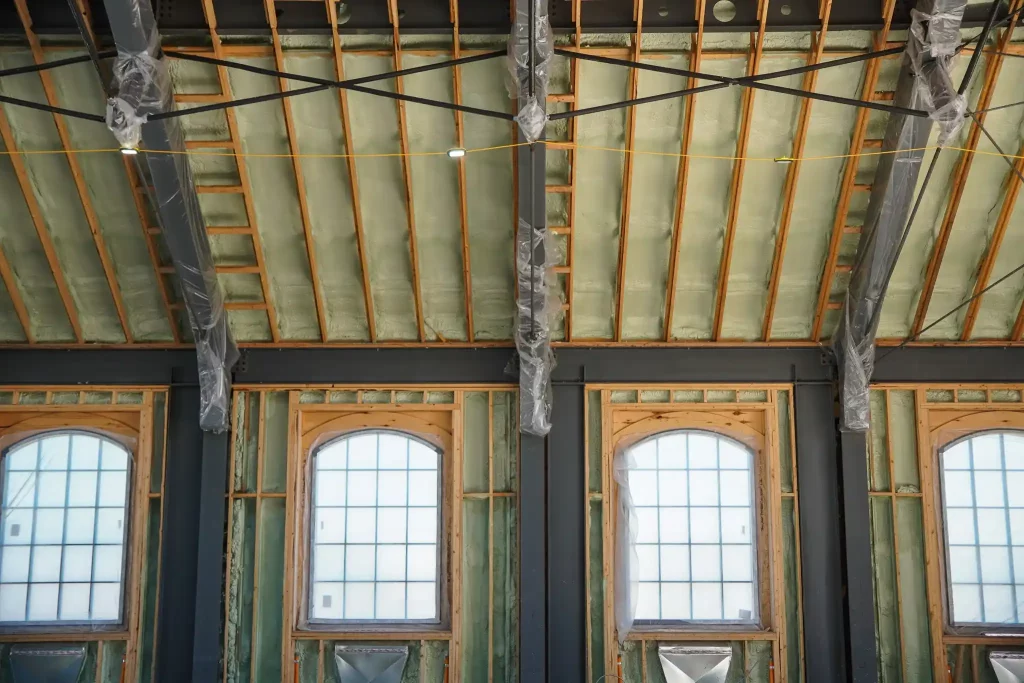
Pole Barns and Outbuildings: Uninsulated pole barns lose heat rapidly through the roof and walls. Spray foam applied to the roof deck and walls provides the highest R-value in the limited cavity space these structures typically offer.
A solid insulation strategy for your Hutchinson property should meet a few practical tests. The right plan will address air sealing alongside insulation, since the EPA has found that air leaks reduce insulation effectiveness and proper sealing is a prerequisite for real energy savings. Your insulation provider should walk you through which areas matter most for your specific home, explain what materials they recommend and why, and be transparent about what the project will and will not accomplish. Look for clear communication about R-value targets for each area, realistic timelines, and attention to moisture control, especially in basements and crawlspaces. The Ohio State University Green Home Technology Center emphasizes that insulation values should be matched to each specific building element based on climate and exposure, not applied as a one-size-fits-all number across the entire home.
Peak Spray Foam Insulation helps Hutchinson, MN homeowners identify exactly where their property is losing heat and which insulation upgrades will deliver the biggest impact. Our team assesses attics, walls, rim joists, basements, and crawlspaces, then recommends the right materials and approach for each area. Whether you are tackling one problem area or planning a whole-home insulation upgrade, we provide straightforward guidance and professional installation.
Request a Quote | Schedule an Insulation Assessment
Call us at (612) 482-4742 or email [email protected] to get started. We serve homeowners throughout the Hutchinson area and surrounding communities.
The attic is almost always the best starting point because it is the largest single source of heat loss, accessible without major construction, and delivers the fastest payback on investment.
Yes, insulation resists heat flow in both directions. It keeps warm air inside during winter and blocks hot outdoor air from entering during summer, reducing cooling costs as well.
In most cases, yes. Our team can drill small holes through the exterior or interior and blow insulation into the wall cavities, then seal the holes, leaving your walls intact.
The rim joist is where the wood framing meets the concrete foundation, creating irregular cavities and gaps that let significant air pass through. Spray foam seals and insulates these areas simultaneously.
Most single-area projects like attics or rim joists are completed in one day. Whole-home insulation packages may take two to three days depending on the scope and access requirements.