

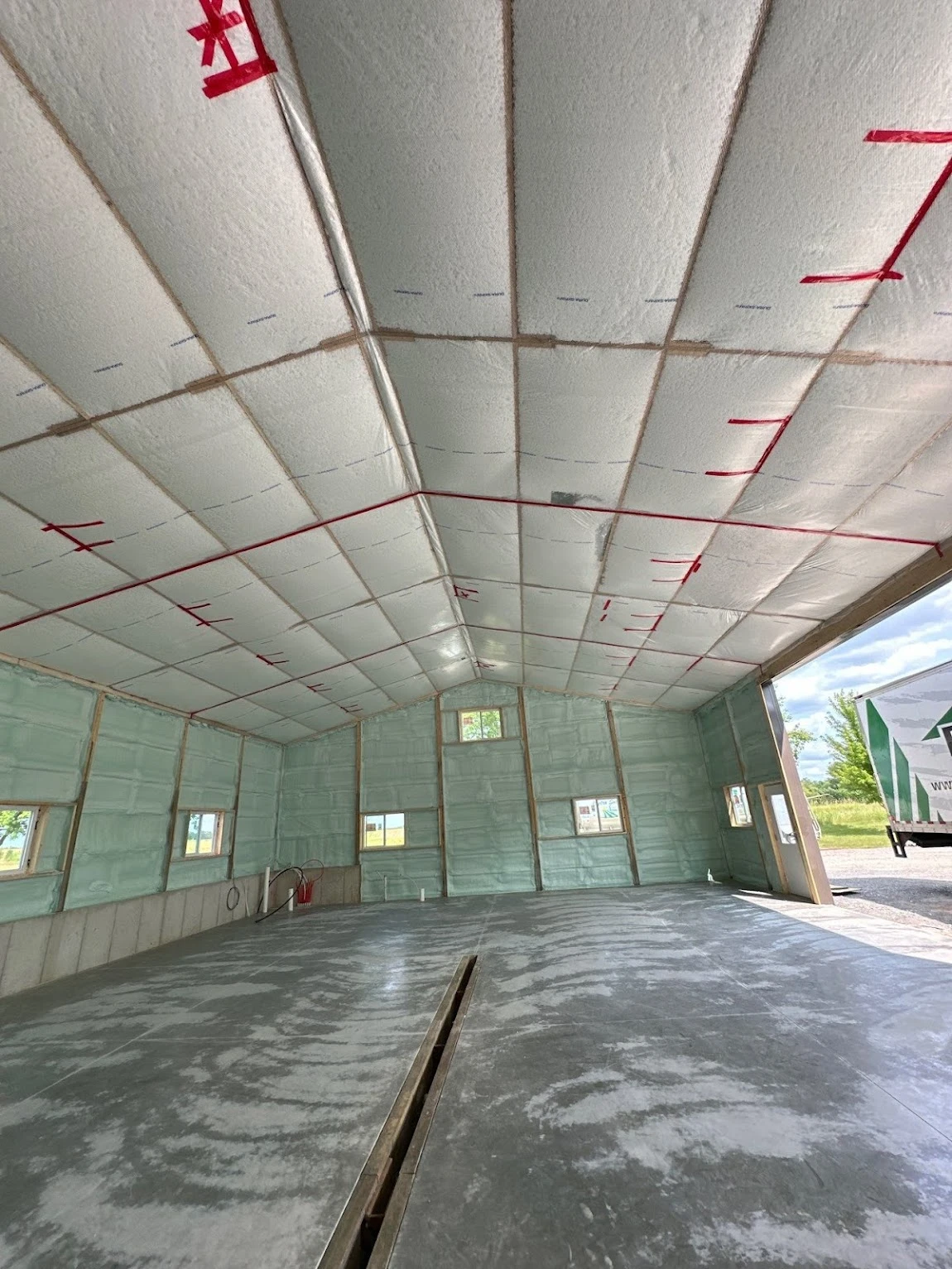
losed-cell spray foam insulation in Annandale, MN homeowners install seals air leaks, resists moisture and adds about R-6 per inch in one layer. The closed-cell spray foam insulation guide explains these performance benefits. That makes it a strong fix for frosty rim joists, ice dams caused by attic air leaks, damp basement walls and cold floors over garages. It costs more than fiberglass, so it pays off most where air and moisture problems are worst.
Before you price out closed-cell spray foam in Annandale, MN homeowners should know what the material does. It’s a two-part polyurethane sprayed as a liquid that expands and hardens in place. More than 90% of its cells stay closed, and that’s where its strength and high R-value come from.
The U.S. Department of Energy’s Building America spray foam guide lists closed-cell foam at roughly R-6 per inch, notes it won’t absorb water and rates it below 1 perm at 2 inches. In plain terms, one product insulates, stops air and slows vapor. Fiberglass only insulates, and only when air isn’t moving through it.
| Feature | Closed-Cell | Open-Cell |
|---|---|---|
| R-value per inch | About R-6 | About R-3.6 |
| Density | About 2 lb/ft³ | About 0.5 lb/ft³ |
| Water | Won’t absorb it | Can hold it |
| Vapor at 2 in. | Vapor retarder | Lets vapor pass |
| Best spots | Basements, rim joists, crawl spaces | Above-grade walls, roofs |
Most comfort problems in Minnesota homes come from air and moisture moving where the insulation can’t stop them. These four spots are where closed-cell foam earns its higher price.
The rim joist is where the floor framing meets the foundation, and it’s one of the leakiest spots in a house. Fiberglass stuffed into those bays lets warm, moist indoor air reach cold wood, where it can frost in winter and lead to mold or rot. Closed-cell spray foam insulation services can help seal these gaps and reduce moisture exposure. Two to three inches of closed-cell foam seals the bay and keeps that air off the wood. The DOE guide also notes the code lets closed-cell foam stay exposed on basement rim joists at under 3¼ inches.
Ice dams often start when warm house air leaks into the attic and melts snow on the roof. The water refreezes at the cold eaves, backs up under shingles and can stain ceilings or soak insulation. A thin coat of closed-cell foam over top plates, light boxes and plumbing chases cuts off that warm air. Blown insulation on top then brings the ceiling up to code R-value.
Concrete stays cool and draws moisture from the soil. When warm basement air reaches a cold wall behind fiberglass and plastic, it can condense and cause musty odors and mold. Closed-cell foam sprayed right onto the concrete keeps room air off the wall. The U.S. Department of Energy warns that open-cell foam shouldn’t go below ground level, where it can soak up water.
Rooms over garages and floors over crawl spaces often feel cold because batts sag away from the subfloor. That gap lets cold air move freely. Closed-cell foam bonds to the underside of the subfloor, so it can’t fall out of place.
Annandale is in Wright County, which Minnesota places in climate zone 6. Code minimums there are stricter than in many states, so the right insulation choice matters.
Under Minnesota Rules 1322.0402, zone 6 homes need at least R-49 in ceilings, R-20 (or R-13 plus R-5 continuous) in wood-frame walls and R-15 on basement walls. The rule sets vapor permeance limits for closed-cell foam sprayed inside foundation walls and requires a 1-inch gap between the foam and any framing. For one basement option, it caps interior insulation at R-11 unless that insulation is closed-cell spray foam.
Thickness counts too. The DOE guide recommends at least 2 inches of closed-cell foam in “flash-and-batt” walls where heating degree days top 6,000, so the foam’s inner face stays warm enough to avoid condensation. Central Minnesota’s long heating season generally puts homes in that range.
Not always. It’s a strong tool, but you should weigh the trade-offs before spending the money. Many closed-cell spray foam insulation problems Annandale, MN homeowners run into come from poor installation rather than the material.
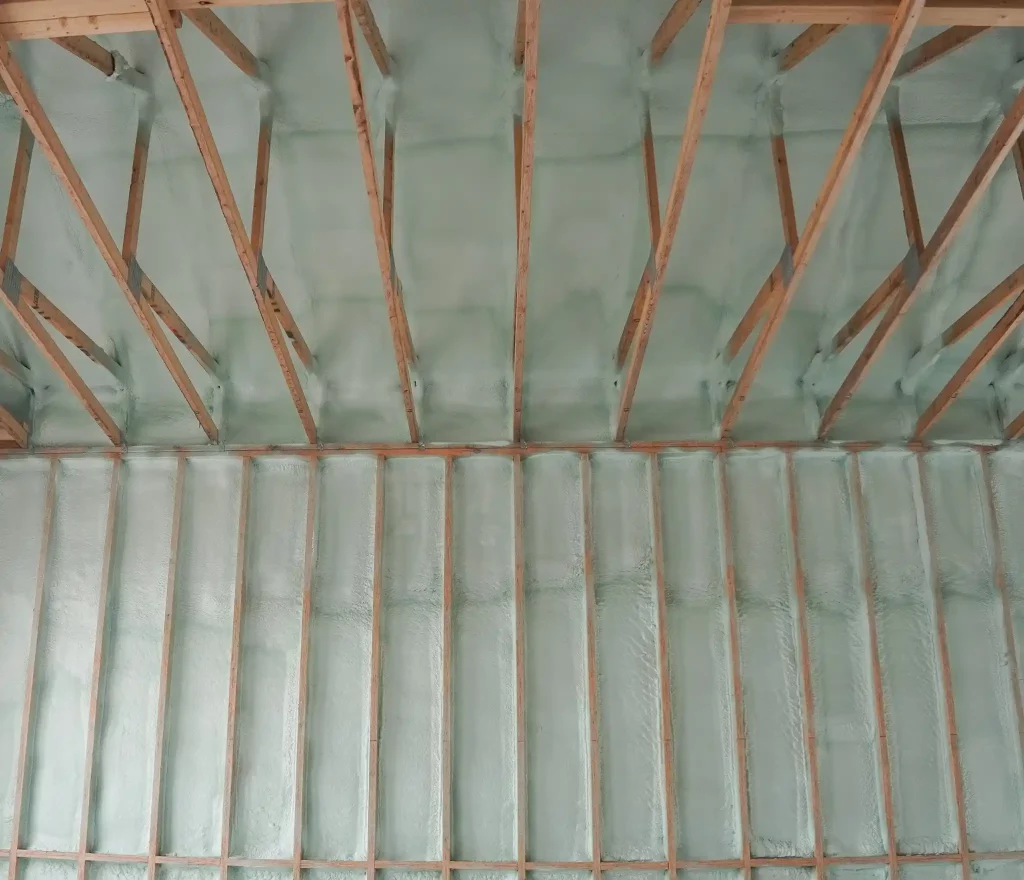
A little prep makes closed-cell spray foam installation Annandale, MN jobs go faster and cleaner. Run through this list first.
If drafts, frosty rim joists, ice dams or a damp basement are wearing on you, the fix starts with finding where air and moisture are getting in. As a closed-cell spray foam contractor in Annandale, MN residents can reach directly, our team has provided insulation services in Minnesota since 2009. We also install fiberglass batt and loose-fill, so we can pair foam with lower-cost insulation where it makes sense.
We offer closed-cell spray foam services Annandale, MN homeowners can book with a free quote. Call Peak Spray Foam Insulation in Annandale, MN at (612) 482-4742 or email [email protected] to schedule yours.
Two to three inches is common. At about 2 inches it acts as a vapor retarder, and below 3¼ inches it can usually stay exposed on basement rim joists.
Yes. Minnesota code allows it to be sprayed straight onto foundation walls, with a 1-inch gap before any framing and a drywall-type covering in finished spaces.
Closed-cell. Open-cell foam can absorb water, so the DOE advises against using it below ground level.
It depends on the product. Some manufacturers recommend about 24 hours, so ask your installer for the exact re-entry time.
It helps by sealing attic air leaks that warm the roof. Enough attic insulation and good roof venting still matter for the best results.