

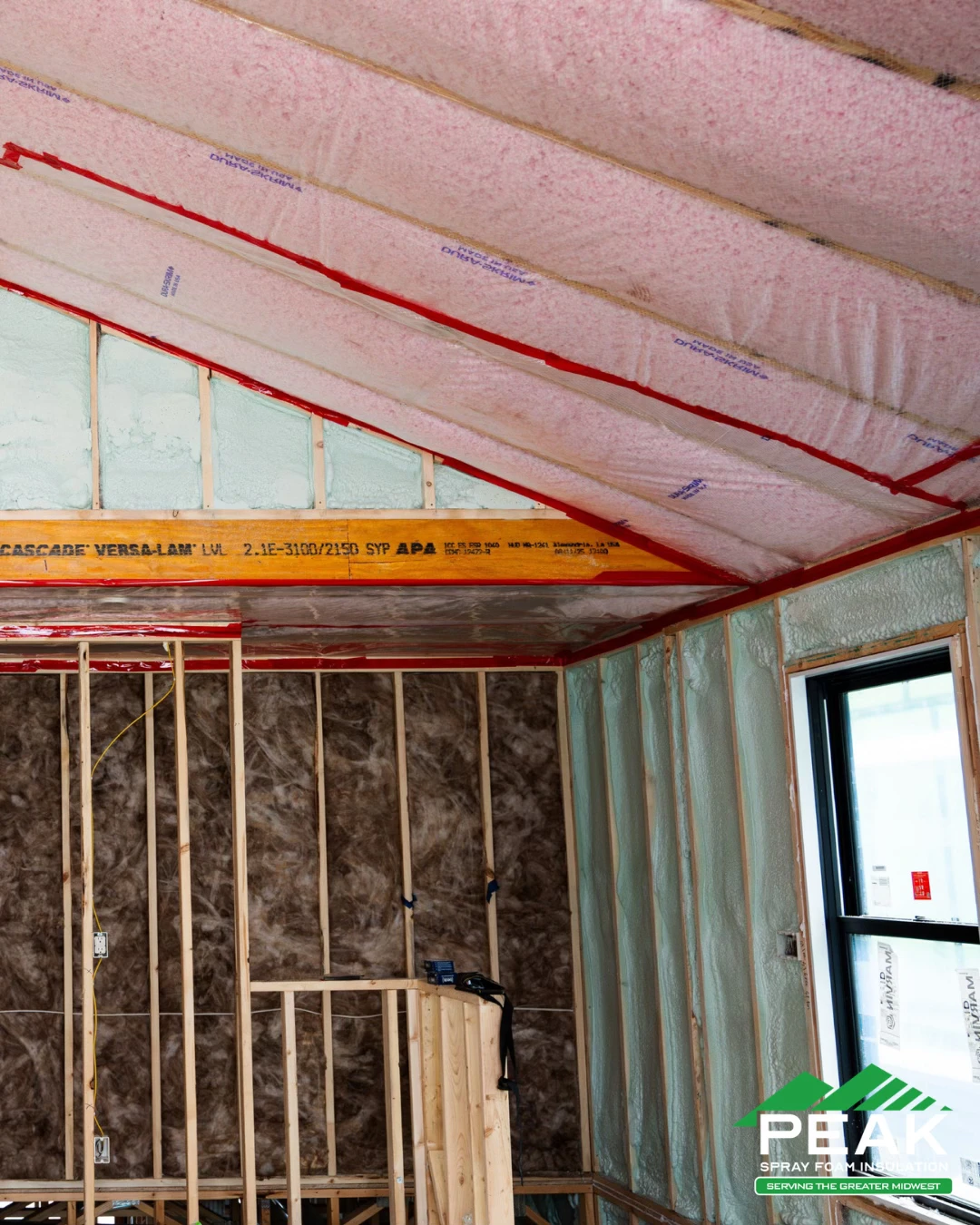
Spray foam insulation protects properties in Sartell, MN from extreme cold and moisture damage by creating a continuous air barrier and vapor retarder that eliminates the gaps, cracks, and air leakage pathways where heat escapes and water vapor infiltrates. In a climate where winter temperatures routinely drop below 5°F and can plunge past -18°F during deep cold snaps WeatherSpark climate data), spray foam insulation in Sartell, MN does something traditional insulation materials like fiberglass batts and blown cellulose cannot: it seals and insulates in a single application. For Sartell homeowners, the right approach depends on whether the priority is maximum moisture resistance with closed-cell foam, cost-effective depth with open-cell foam, or a hybrid strategy that combines both. The building envelope, specifically how walls, roofs, foundations, and rim joists are sealed and insulated, determines whether a property holds heat through a Minnesota winter or loses it along with a significant portion of the heating budget.
Sartell’s climate places year-round demands on the building envelope, with freezing winters and humid, rainy summers creating different insulation challenges. A spray foam insulation guide can help property owners understand how this material addresses heat loss, air movement, and moisture-related concerns. During winter, heat can escape through under-insulated walls, roofs, framing gaps, rim joists, windows, doors, and other penetrations, while summer humidity can introduce additional moisture concerns. Spray foam insulation expands into gaps and creates a more continuous insulation layer, helping reduce uncontrolled air movement and limit pathways for moisture-laden air to enter. The appropriate spray foam solution should be selected according to the specific building assembly, moisture conditions, ventilation requirements, and area being insulated.
Moisture damage in Sartell MN properties comes from multiple directions simultaneously. Interior moisture generated by daily activities (cooking, bathing, breathing) travels through wall and ceiling assemblies via air leakage and vapor diffusion. When this warm, moist indoor air contacts cold surfaces below the dew point, typically uninsulated or poorly insulated framing cavities, condensation forms and accumulates. Over time, this trapped moisture leads to mold growth, wood rot, and structural degradation. The DOE’s Building America research has identified that basements and crawlspaces are the most vulnerable areas because cold concrete and masonry surfaces create ideal conditions for condensation.
Exterior moisture from rain, snowmelt, and groundwater adds further risk, particularly for foundations and rim joist areas where traditional insulation like fiberglass batts can absorb and hold moisture against framing lumber.
Spray polyurethane foam (SPF) insulation is applied as a liquid mixture of two chemical components that expand and cure into a solid cellular material. The expansion allows the foam to fill cavities completely and adhere to surrounding surfaces, creating a monolithic layer that blocks air movement, resists heat transfer, and limits moisture diffusion. According to research from Oak Ridge National Laboratory, properly applied spray foam ensures that the air barrier and thermal barrier align, because the foam provides both functions in a single material.
| Property | Closed-Cell SPF | Open-Cell SPF |
|---|---|---|
| R-Value Per Inch | ~6.0 | ~3.5 |
| Moisture Permeability | Low (vapor retarder) | Higher (breathable) |
| Water Resistance | Resists liquid water | Should not contact water |
| Air Barrier Quality | Excellent air barrier | Air barrier when sufficiently thick |
| Density | Medium (1.75-2.25 lb/ft3) | Low (0.4-1.2 lb/ft3) |
| Structural Rigidity | Higher rigidity and strength | Lower rigidity |
| Sound Absorption | Absorbs sound | Absorbs sound very well |
Closed-cell foam forms bubbles with solid walls that enclose gas within the foam structure. This gives it a higher R-value per inch, lower moisture permeability, and greater structural rigidity. The DOE’s basement insulation research found that closed-cell spray foam provides the best moisture control of all interior foundation insulations, functioning as an excellent air barrier and a Class I, II, or III vapor retarder depending on thickness.
Open-cell foam has broken bubble walls that allow air to fill the cells. This makes it more permeable to moisture vapor but gives it superior sound absorption qualities. It requires greater thickness to achieve the same R-value as closed-cell foam, but covers more area per dollar of material.
Unvented attic assemblies with spray foam applied directly to the underside of roof sheathing are one of the most effective strategies for cold-climate homes. Building Science Corporation’s hygrothermal modeling of unvented roof assemblies in Minneapolis (a climate comparable to Sartell) found that code-compliant roofing systems using closed-cell spray foam on plywood sheathing can safely dry minor rainwater leakage while maintaining sheathing moisture content well within safe ranges.
Moving the insulation and air barrier from the attic floor to the roof deck encloses HVAC ductwork within the conditioned space, eliminating the significant energy losses that occur when ducts run through vented attics in winter. ORNL case study data showed that a sealed and insulated attic remained within a few degrees of conditioned living space temperatures year-round, while a vented attic in the control home reached 133°F in summer.
The DOE’s Building America research identifies basements as one of the most challenging construction assemblies in cold-climate homes, noting that they can account for 10-30% of total heat loss while presenting significant mold and rot risk. When cellulose or fiberglass insulation is installed against basement walls, it absorbs moisture and stays chronically damp, a problem worsened by impermeable vapor barriers that trap moisture in the wall assembly.
Closed-cell spray foam applied directly to basement walls or rim joists provides air sealing, insulation, and vapor retarder properties without absorbing moisture. It adheres completely to foundation surfaces and seals the gaps where framing meets concrete, which are among the most common air leakage pathways in any home.
Rim joists are consistently identified as major air leakage locations in energy audits. The junction where the floor framing meets the foundation wall creates multiple penetrations (plumbing, electrical, vents) and framing gaps that allow significant infiltration. Spray foam fills these irregular cavities completely and adheres to both wood and concrete, creating an airtight seal that fiberglass batts simply cannot achieve.
For new construction and gut renovations, spray foam applied in wall cavities eliminates the air leakage that occurs through electrical boxes, plumbing penetrations, and framing gaps behind traditional insulation. ORNL retrofit case studies documented air leakage reductions from 17 ACH down to under 5 ACH after systematic spray foam application across attics, walls, and basements.
| Application | Recommended Foam Type | Why |
|---|---|---|
| Basement walls and rim joists | Closed-cell | Best moisture control; resists water absorption; acts as vapor retarder |
| Crawlspaces (especially damp or humid) | Closed-cell | Water resistance prevents moisture wicking into framing |
| Attic roof deck (unvented assembly) | Closed-cell or hybrid | Vapor control prevents condensation on roof sheathing |
| Above-grade walls (new construction) | Open-cell or hybrid | Cost-effective for achieving high R-values in large cavities |
| Sound-dampening partitions | Open-cell | Superior sound absorption qualities |
| Flood-prone or high-water-table areas | Closed-cell | Water resistance prevents structural damage |
Hybrid strategies like flash-and-batt or flash-and-fill apply a thin base layer of closed-cell foam (typically 1-2 inches) as the air and vapor barrier, then add a thicker layer of open-cell foam, fiberglass batts, or blown-in insulation to reach the target R-value. This approach captures the moisture control benefits of closed-cell foam while using less expensive materials for the bulk of the thermal resistance. In cold climates, Building America research suggests that the closed-cell base layer should provide at least 50% of the total R-value to prevent condensation within the assembly.
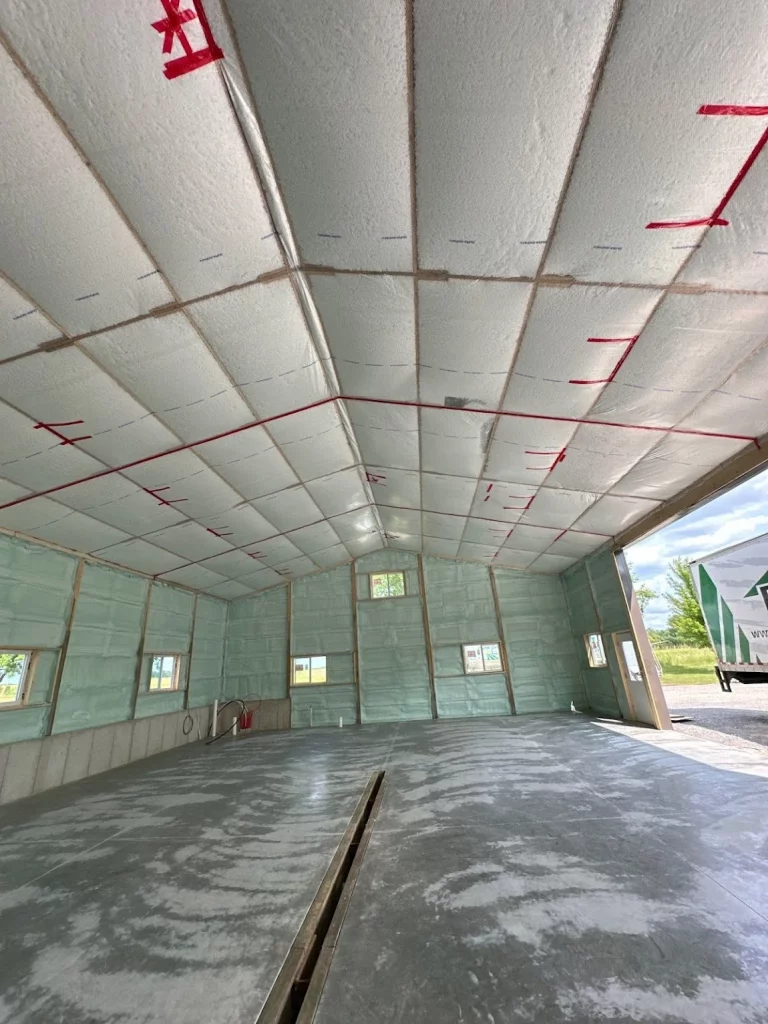
Applying spray foam over wet or damp substrates is the most significant installation error. Building Science Corporation’s field evaluations found that SPF installed on wet OSB sheathing resulted in poor adhesion and eventual structural failure. The substrate must be dry and clean (paintable condition) before application.
Skipping the blower door test after installation means there is no way to verify that the foam sealed the intended leakage pathways. ORNL research demonstrated that infrared imaging combined with a blower door at 40 Pascals reveals air intrusion patterns invisible to visual inspection, allowing targeted corrections before the contractor leaves the site.
Using open-cell foam in direct contact with water or in basements with known moisture issues leads to water absorption and potential mold growth behind the insulation layer, as noted in DOE basement insulation research. Open-cell foam should never substitute for closed-cell foam in below-grade or high-moisture applications.
Ignoring ventilation after tightening the building envelope can create indoor air quality problems, particularly in cold climates with extreme conditions like Sartell (see WeatherSpark climate data). Guidance from DOE cold-climate studies, the ASHRAE 62.2 ventilation standard, and BPI combustion safety protocols require mechanical ventilation when natural air exchange drops below minimum thresholds.
Our team at Peak Spray Foam Insulation has extensive experience insulating homes, pole barns, and commercial buildings across central Minnesota, including Sartell and surrounding communities. We specialize in closed-cell and open-cell spray foam applications for attics, crawlspaces, walls, basements, and rim joists, and we tailor every project to the specific conditions of each property. Whether you are building new, retrofitting an older home, or insulating a pole barn or commercial building, we assess the building envelope, identify the priority areas for air sealing and insulation, and recommend the foam type and application strategy that matches your climate zone and budget.
Contact us at (612) 482-4742 or email [email protected] to discuss your insulation needs, or reach out now to Request a Quote.
Schedule an Insulation Assessment
Fiberglass batts slow heat transfer but do not seal air leaks. Spray foam expands to fill gaps and cracks, providing both insulation and an airtight seal in a single layer, which makes it significantly more effective against heat loss and moisture infiltration in Minnesota winters.
Spray foam applied to the underside of the roof deck in an unvented attic assembly keeps the roof surface at a temperature closer to outdoor conditions, reducing the snowmelt and refreezing cycle that causes ice dams. Combined with adequate attic insulation, this addresses the root cause rather than just the symptoms.
Yes. Many spray foam applications target accessible areas like attics, crawlspaces, rim joists, and basements where existing insulation can be removed or worked around. Wall cavities can also be treated during siding replacement or other renovations that expose the framing.
Closed-cell spray foam resists water absorption, acts as a vapor retarder depending on thickness, and creates an airtight seal against the foundation wall. This prevents warm interior air from condensing on cold concrete surfaces and keeps groundwater moisture from reaching framing and finished materials.
In most cases, yes. Tightening the building envelope with spray foam reduces natural air leakage below ASHRAE 62.2 minimum ventilation requirements, so mechanical ventilation (such as an ERV or HRV) becomes necessary to maintain healthy indoor air quality. Our team evaluates this as part of every project assessment.