

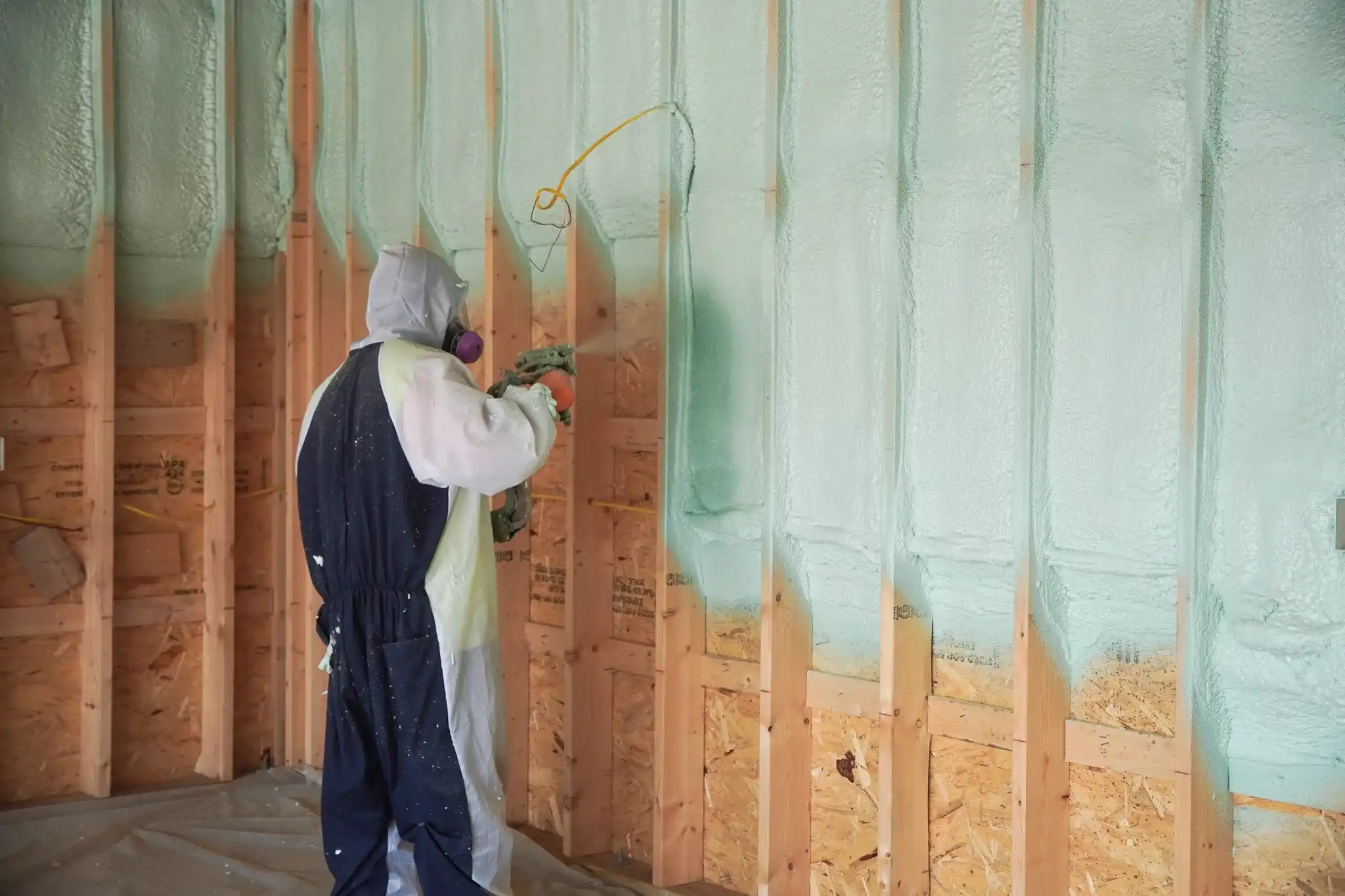
The crew just left. Your attic smells faintly like a new car, there are a few stray drips of foam on a tarp by the hatch, and you’re standing there with a box of Christmas decorations in your hands, trying to decide if it’s safe to go back up. Sound familiar?
It’s one of the most common moments in a spray foam project, and almost nobody explains it well before the truck pulls out of the driveway. “Dry” and “fully cured” get used like they mean the same thing, and in a St. Cloud, MN winter, the gap between those two points can be the difference between a smooth project and an unnecessary headache. This guide breaks down exactly what’s happening inside that foam hour by hour, why Minnesota’s climate changes the math, and when it’s actually fine to walk back in. If you’d rather skip straight to a real answer for your project, request a free quote and our team will walk you through the specifics for your home.
These two words get used interchangeably online, and that’s exactly where most of the confusion comes from. They describe different stages of the same chemical reaction, and knowing which stage you’re in tells you what’s actually safe to do.
Spray foam starts as two liquid components, commonly called side A and side B, that react and expand almost instantly into a solid, lightweight structure once they’re mixed at the gun. Within a few minutes to about an hour, the surface stops feeling sticky. This is the stage most people mistake for “done.”
Once the foam is firm enough to trim, cut, or lightly bump into without leaving a dent, it’s considered handling-ready. That usually happens within the first hour or two, though a thick closed-cell application can take a bit longer to reach this point.
This is the stage that actually matters for re-occupancy and finish work. Full cure is when the foam has completed its chemical reaction and reached its intended density, strength, and R-value. This is the reaction chemistry described in detail on Wikipedia’s overview of spray foam, where an isocyanate component reacts with a polyol to expand and set into a rigid or semi-rigid cellular structure. Until this stage is complete, you shouldn’t paint over it, cover it with drywall, or assume the space is at full performance.
St. Cloud homes often use both types in the same project. Open-cell foam typically goes into attic floors and interior partitions, while closed-cell foam handles basements, rim joists, and any exterior application where moisture resistance matters. Because they’re built differently, they don’t dry at the same pace.
Open-cell spray foam is lower density and expands aggressively the moment it hits the surface. It reaches tack-free quickly, and under normal conditions it typically finishes curing within about 24 hours.
Closed-cell spray foam is denser, applied in thinner layers, and delivers a higher R-value per inch along with genuine vapor resistance. Because installers spray it in controlled passes, often called lifts, to manage heat buildup inside the foam, it commonly takes closer to 24 to 48 hours to cure fully, and a thicker application can stretch beyond that.
| Stage | Open-Cell Foam | Closed-Cell Foam |
| Tack-free | Within minutes | Within minutes |
| Handling-ready | About 1 hour | 1 to 2+ hours, depending on thickness |
| Full cure | Around 24 hours | Around 24 to 48 hours |
| Best suited for | Attics, interior walls | Basements, rim joists, exterior applications |
St. Cloud sits in a humid continental climate zone, and the seasonal swing here is not subtle. January highs average around 19°F with lows dipping near negative 1°F, while July highs climb into the low 80s, according to Wikipedia’s entry on St. Cloud’s climate and geography. That swing has a real effect on how a spray foam job behaves once the gun stops spraying.
Cold temperatures slow down the chemical reaction that drives curing, plain and simple. That’s why a winter attic or garage job needs to be handled differently than a summer one. Experienced crews pre-heat the material and the substrate itself and control application thickness carefully. If you’re scheduling a project in January or February, it’s reasonable to expect the cure time to sit toward the longer end of the range.
Humidity plays its own role, particularly in basements and crawl spaces near St. Cloud’s river valley neighborhoods where ambient moisture tends to run higher. This is actually one reason closed-cell spray foam gets favored in those areas. Its vapor resistance holds up better when the surrounding air is already damp.
Thicker foam simply takes longer to cure all the way through, because the center of a thick pass stays insulated from the surrounding air longer than the surface does. That’s the entire reason professional installers spray in controlled lifts instead of one heavy pass. It keeps the cure predictable and keeps the foam from overheating internally, which can actually damage the material.
Good airflow helps the off-gassing smell fade evenly and speeds up the point where a room is comfortable to be in without a mask or respirator. It doesn’t necessarily speed up the internal cure itself, but it makes a real difference in how quickly the space feels normal again.
Wondering whether your specific project, whether it’s a full attic, a pole barn, or just a rim joist, falls on the faster or slower end of this range? Contact Peak Spray Foam Insulation, and we’ll give you a realistic timeline before the crew even shows up.
Re-entry time isn’t one universal number. It depends on what part of the house was sprayed and which type of foam went in.
| Area of the Home | Typical Foam Used | Safe Re-Entry Window |
| Attics | Open-cell | A few hours, once the space has been ventilated |
| Basements and crawl spaces | Closed-cell | Longer window, due to denser foam and less natural airflow |
| Rim joists and basement rims | Closed-cell | Similar to basements, plan on a full day before extended time nearby |
| Pole barns and ag buildings | Mixed | Larger open volumes ventilate faster, but exterior wall applications still need the full cure window |
As a general rule, keep the immediate work area clear for several hours right after installation, and avoid spending extended time in an unventilated space until your installer confirms it’s fully cured.
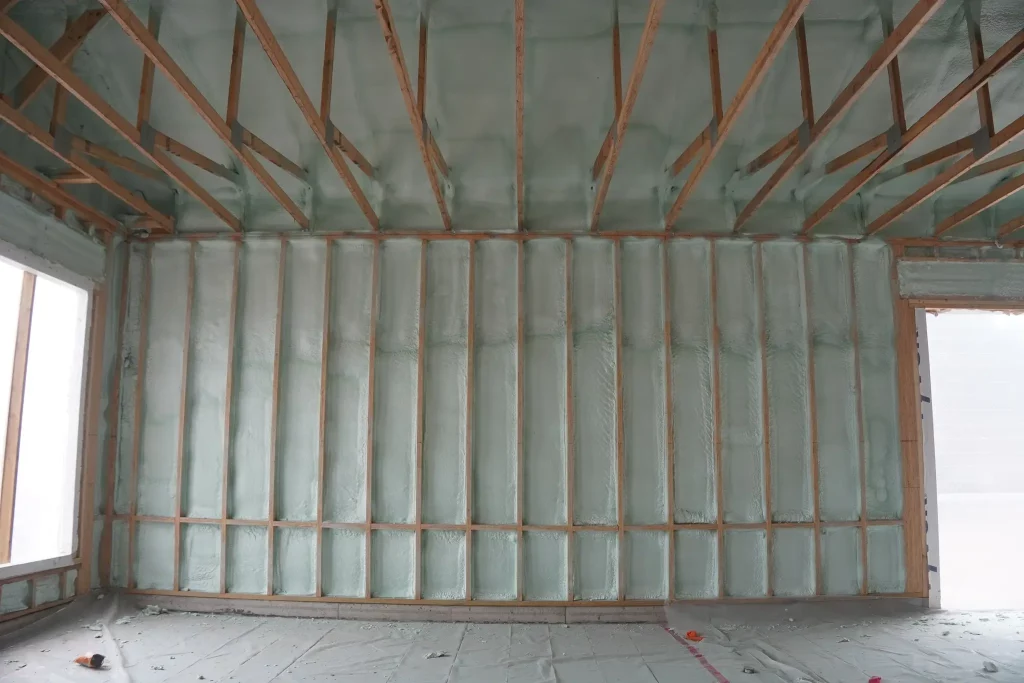
| Time After Spraying | What’s Happening |
| 0 to 10 minutes | Foam expands and becomes tack-free to the touch |
| 1 to 2 hours | Foam is firm enough to trim; brief, ventilated re-entry is usually fine |
| 24 hours | Open-cell foam has generally reached full cure |
| 24 to 48 hours | Closed-cell foam reaches full cure, especially in thicker applications |
| 48 to 72 hours | Recommended window before painting, drywalling, or fully closing up the space on larger or cold-weather jobs |
Cure time isn’t something a good crew leaves to chance. As Minnesota’s first SPFA PCP-accredited spray foam contractor, our certified Master Installers work with calibrated equipment that controls material temperature, spray pressure, and lift thickness, the exact variables that determine whether a job cures predictably or turns into a guessing game. That accreditation isn’t a marketing badge. It reflects the training and process controls that keep a January attic job and a July pole barn job both curing the way they’re supposed to.
St. Cloud’s housing stock is a mix, and that mix changes what a realistic drying timeline looks like from one project to the next. Older bungalows and ranch homes from the 1950s through the 1980s, common near downtown and the Cathedral Area, often have uninsulated rim joists and basements that call for closed-cell foam and its longer, moisture-resistant cure profile. Newer suburban builds tend to see faster attic retrofits with open-cell foam. Out in Stearns County, pole barns and agricultural buildings frequently combine both foam types depending on the wall assembly, which means the drying timeline for one building can genuinely include both ends of the range described above.
If your home falls into one of these categories and you’re not sure which foam type makes sense, our team can walk through it with you as part of a free quote for spray foam insulation services in St. Cloud, MN.
Whether you’re insulating a rim joist, a full attic, or a pole barn out in Stearns County, our certified team can give you a realistic cure-time timeline before the job even starts, not a generic number pulled from a warmer climate. Contact Peak Spray Foam Insulation for a free quote, or call (612) 482-4742 to talk through your specific project today.
For most residential jobs, yes. Installers typically isolate and ventilate the treated area, so you can stay in the unaffected parts of the home right away. Follow your installer’s specific guidance for the room that was sprayed, and if you have young kids or anyone with respiratory sensitivities, it’s worth asking for a slightly longer buffer.
Wait until the foam has fully cured before covering it. That’s generally 24 to 48 hours depending on the foam type and thickness, and up to 72 hours for thicker closed-cell applications. Peak Spray Foam Insulation will confirm the exact window for your job before wrapping up, so you’re not left guessing.
Yes, and it’s worth planning around. Cold temperatures slow the underlying chemical reaction, which is exactly why winter installs are handled with pre-heated material and carefully controlled lift thickness to keep the cure time predictable rather than leaving it to chance.
Off-gassing is a normal part of the curing process, not a sign something’s wrong. It’s the reason ventilation and a re-entry waiting period are standard practice on every job. A professional installer will let you know when the space is genuinely ready to return to.
Properly installed spray foam can last the lifetime of the building without settling, sagging, or losing its insulating performance. That’s part of why choosing an experienced, accredited installer matters so much upfront. It’s not just about the cure time; it’s about whether the job holds up for decades afterward.