
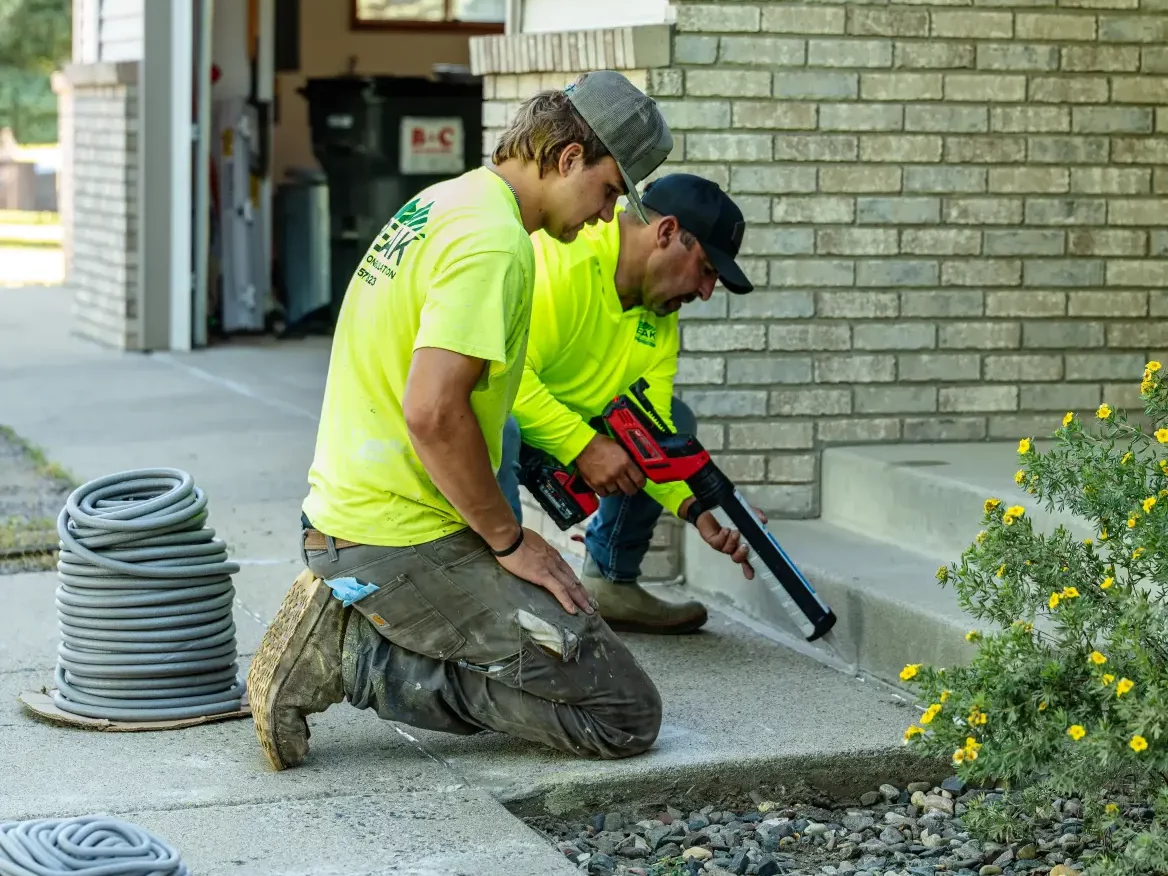
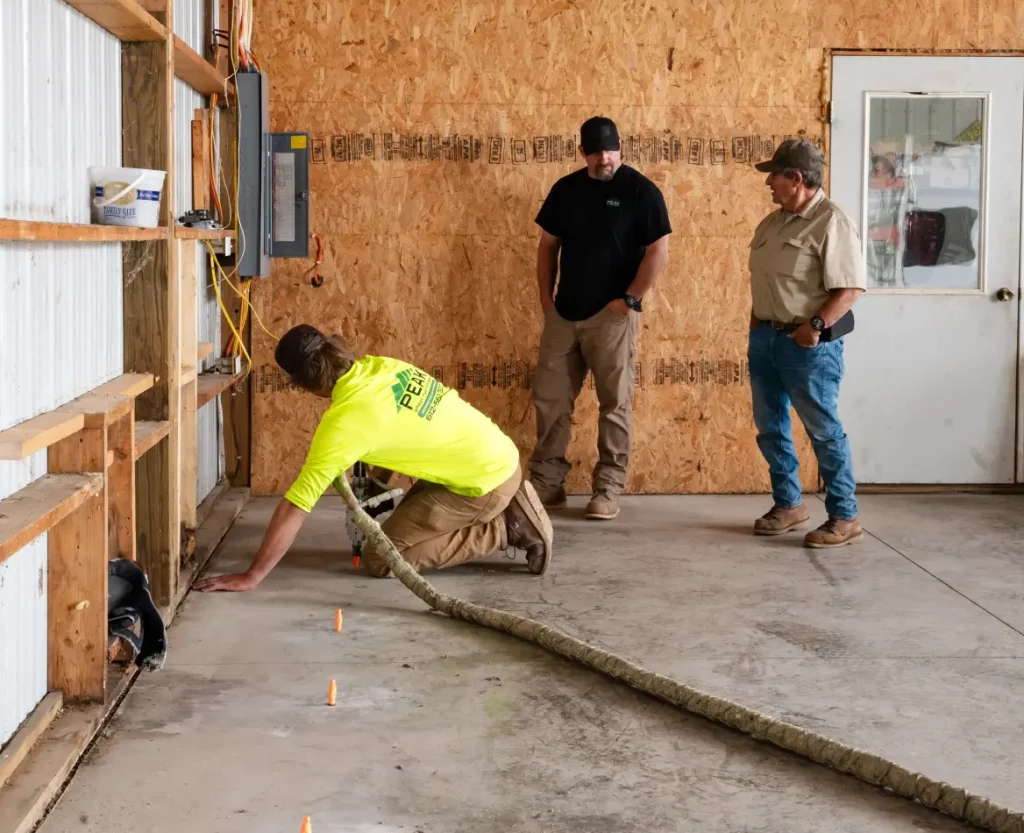
Homeowners hiring Concrete Lifting Services in St. Michael, MN can expect an inspection, small drilled holes, slow, controlled foam injection, level checks, and patched surfaces, often finished in one visit. Lifting keeps your existing slab in place, and we explain every step as we go. We also offer a free quote.
Minnesota winters are hard on concrete. Water gets under a slab, freezes, thaws, and leaves the soil looser than before. After a few seasons, that movement leaves gaps and low spots. Frost also reaches deeper than many people expect. The Minnesota Department of Natural Resources notes that frost goes deeper in cleared areas like roadways and sidewalks than under sod, so a plowed driveway can freeze harder than your lawn.
Soil and water matter just as much. Minnesota Department of Transportation research found that clay subgrades heave more than sand, and that better drainage means less heave. If a downspout dumps water beside your slab all year, the soil underneath can wash out and leave a void.
Most Residential Concrete Raising in St. Michael, MN jobs involve driveways, walkways, steps, patios, and garage aprons. The warning signs are easy to spot once you know what to look for.
Lifting works best when the slab itself is still solid. If the concrete is crumbling or broken into many pieces, replacement may be the better call, and we’ll tell you that straight during the inspection.
When the slab is sound, lifting keeps it in place. You skip demolition, haul-away, and the wait for new concrete to cure. Lifting often costs less than replacement too, though the final number depends on slab size, how far it sank, and access.
Replacement makes more sense when the concrete is failing on its own. Lifting a slab that’s falling apart just moves the problem up a few inches.
Here’s how the Concrete Lifting Process in St. Michael, MN homeowners see from us usually runs. Every site is different, but the order stays about the same.
Most homeowners are surprised by how little mess there is. You won’t see a dump truck, a torn-up yard, or a week of barricades.
Lifting materials fall into two main groups. The right pick depends on how much void sits under the slab and how much weight the slab carries.
| Material | Strength | Trade-Off |
|---|---|---|
| Foam | Precise, light lift | Higher cost |
| Grout | Fills large voids for less | Heavier, bigger holes |
Road-slab guidance from Missouri puts it the same way: grout costs less and fills voids, while polyurethane lifts better at a higher price. We’ll walk you through what fits your slab before any work starts.
Professional Concrete Leveling in St. Michael, MN, can’t fix what caused the settling. If water keeps washing soil out, a lifted slab can sink again.
Being honest about these limits is part of the job. A slab that’s lifted and drained properly gives you the best shot at lasting results.
A little prep keeps the day moving.
If a sunken slab is a trip hazard or sending water toward your home, a quick look can show whether lifting fits. Peak Spray Foam Insulation offers free quotes, and we’ll explain what we see in plain words.
Call us at (612) 482-4742 or email [email protected].
Often as long as the slab itself, as long as the soil stays stable. Ongoing erosion is the main thing that shortens it.
Foam cures fast, often within minutes to an hour, but timing depends on the material and the slab. We’ll tell you when it’s safe on your job.
Interior slabs can often be lifted when voids underneath caused the drop. We check the floor and the cause first.
Small, patched holes rarely cause cracking. A slab that’s already badly cracked may not suit lifting at all.
It can close or shrink the gap when the settling came from voids below. If the steps are tilting for another reason, we’ll point that out during the inspection.