

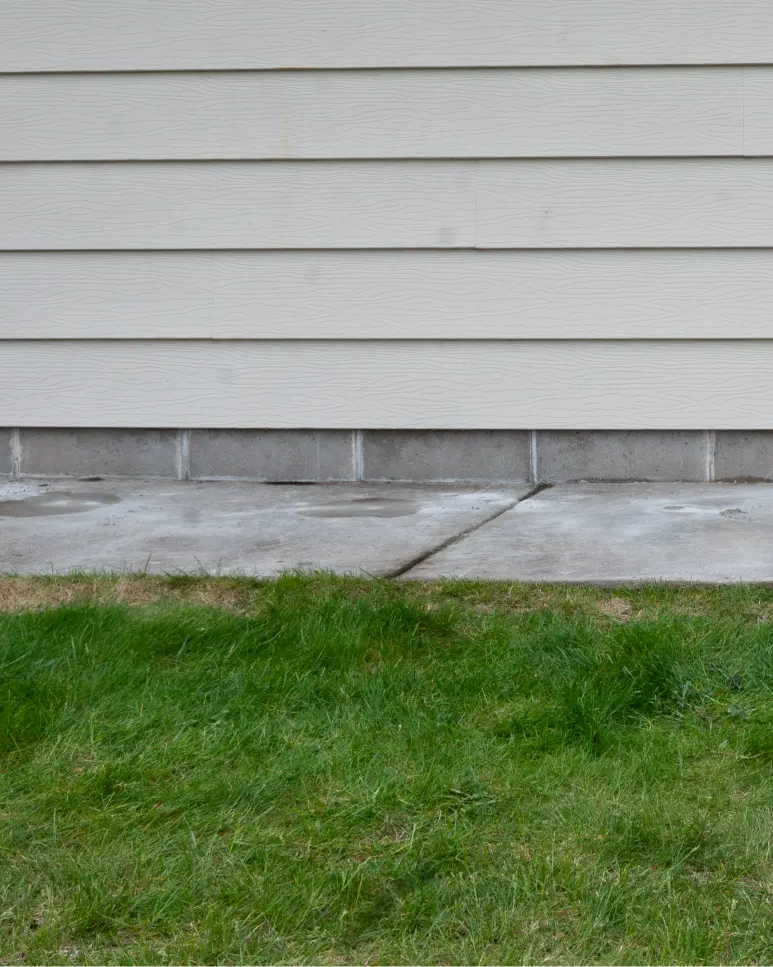
Yes, it often can. When a slab has sunk and now tilts toward your house, Concrete Leveling in St. Michael, MN lifts it back so water runs off again. It only works if the slab was poured with a good slope to begin with. A slab that never sloped correctly needs more than a simple lift.
Water takes the lowest path, and a sunken slab hands it a new one. When a patio, walkway, or driveway dips beside your foundation, rain and snowmelt pool there or run toward the wall. That’s where seepage, erosion, and winter ice begin.
Frost does much of the damage in our area. The Minnesota Office of the Revisor of Statutes sets the minimum frost-protection footing depth for Wright County at 42 inches. Wet soil swells as it freezes and loses support when it thaws, so slabs often sink unevenly over the seasons.
Downspouts add to it. Water dumped beside a slab washes out the soil underneath, and the slab drops into the void. Left alone, drainage problems around concrete tend to snowball, because every new gap collects more water. The concrete lifting guide explains how these issues affect concrete slabs.
Leveling only pays off if you know the target. Published guidance gives clear numbers for slabs and for the soil beside your foundation.
| Surface | Minimum Slope Away From the House |
|---|---|
| Patios, walks, driveways | 1/4 inch per foot, for 10 feet or the slab length |
| Soil next to the foundation | 1 inch per foot, for 6 feet |
The Building America Solution Center recommends at least 0.25 inch of drop per foot for patio slabs, walks, and driveways, for 10 feet or to the slab edge. On a 10-foot patio, that’s about 2 1/2 inches from the house to the far edge. The University of Minnesota Extension says soil should slope at least 1 inch per foot for 6 feet.
Here’s a quick check. Set a 4-foot level on the slab, running away from the wall, with one end against the house. A slab with a good pitch leaves a gap of about 1 inch under the far end. Flat or backward means water has no reason to leave.
Leveling raises a slab back to where it used to sit. It can’t fix a design that was wrong from day one.
The best Water Runoff Solutions usually work together. Lift the slab, seal the joints so water can’t slip underneath, extend downspouts, and fill low soil along the wall. When a good slope isn’t possible near the house, the Building America Solution Center says drains or swales can carry water away. We’d rather tell you that than sell you a lift that won’t help.
Not every slab affects runoff equally. Anything within about 10 feet of the house deserves a close look first.
A sunken patio is the classic culprit. Concrete Patio Leveling in St. Michael, MN often starts with a patio that drained fine when new and now holds a puddle against the back door. Walks along the foundation and driveway aprons at the garage can do the same thing.
Winter makes it worse. That puddle freezes into a slip hazard, and meltwater refreezing in the joints can keep pushing the slab around. Fixing the pitch before the next freeze costs less than repairing the damage after it.
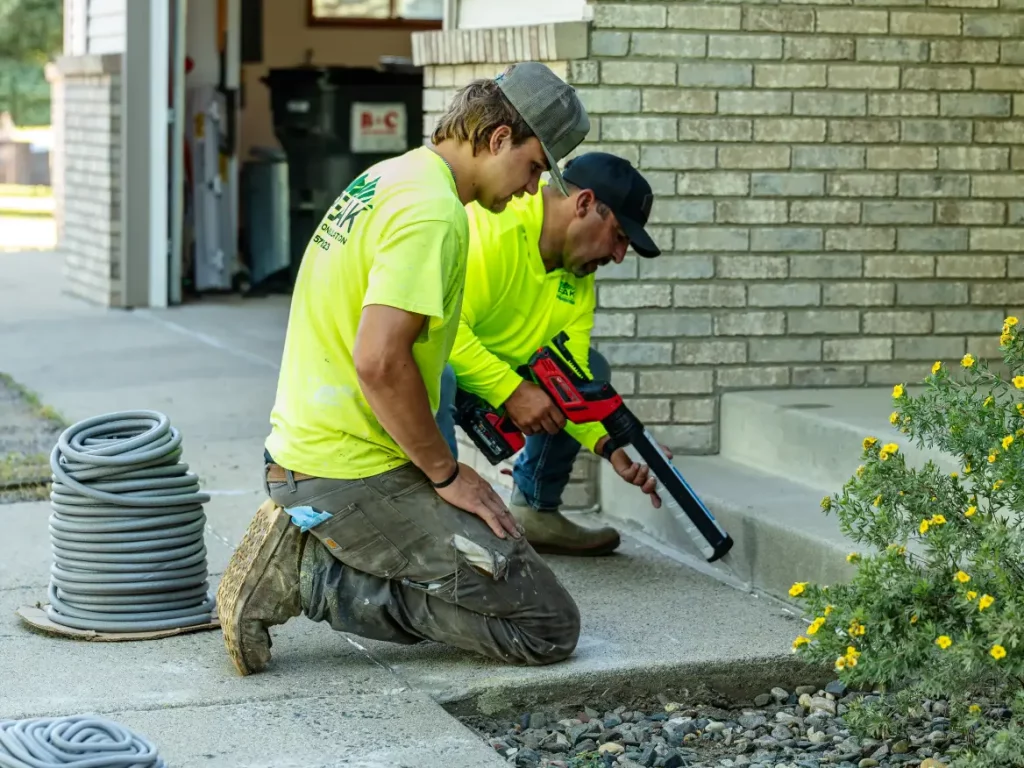
Concrete Slab Leveling in St. Michael, MN is a low-mess repair because the slab stays in place instead of getting torn out. The work usually follows four steps.
A few minutes of homework helps us give you a straight answer. Walk the property after a rain and note where water sits.
If water sits on your slabs or runs toward your house, let us take a look. Peak Spray Foam Insulation offers free quotes in St. Michael, MN. We’ll check the slope, explain whether lifting will solve it, and tell you if drainage work should come first.
Phone: (612) 482-4742
Email: [email protected]
Smaller jobs, like one patio or walkway section, often take part of a day. We’ll give you a time estimate with your quote.
Yes. We can raise only the low panels and match them to the slabs beside them.
Hairline cracks usually aren’t a problem. Slabs that are crumbling or broken into pieces often need replacement.
It can if the cause is still active. Washed-out soil from a downspout or poor grading may keep eroding the ground under the slab.
Often, yes. The slab stays in place, so there’s no demolition or haul-away. The final price depends on slab size and how far it sank.