
Choosing the right insulation for your home or building is one of the most impactful decisions you can make for energy efficiency, comfort, and long-term value. The right choice depends on your climate zone, the area being insulated, your budget, and whether you are building new or retrofitting an existing structure. Insulation types range from traditional fiberglass batts and blown-in materials to high-performance spray foam, each with specific strengths suited to different applications like attics, walls, crawlspaces, and commercial buildings. Understanding these options, their R-values, and how they perform in real-world conditions is the first step toward making a smart investment in your property.
Insulation resists the flow of heat through three mechanisms: conduction (heat through materials), convection (heat through air movement), and radiation (heat traveling in straight lines). Most insulation materials slow conductive and convective heat flow, while reflective barriers and radiant foils reduce radiant heat gain. According to the Department of Energy, heat naturally moves from warmer spaces to cooler spaces, so in winter it flows from your living areas to the outdoors, and in summer the reverse happens. Insulation disrupts that transfer, reducing the workload on your heating and cooling systems.
The performance of insulation is measured by its R-value, which indicates resistance to heat flow. A higher R-value means better thermal performance. The R-value depends on the material type, thickness, density, and installation quality. When calculating the total R-value for a multi-layered installation, you add the R-values of each layer together.
The Department of Energy identifies several major insulation categories, each suited to different parts of a building. Here is a breakdown of the most common types used in residential and commercial projects.
Fiberglass and mineral wool batts are the most widely available and recognized insulation types. They come in pre-cut widths designed to fit standard stud and joist spacing, making them straightforward to install in unfinished walls, floors, and ceilings. Batts are relatively inexpensive and suited for new construction where framing cavities are accessible. However, they can leave gaps around obstructions like wiring, plumbing, and electrical boxes if not carefully fitted, which is why many contractors also consider spray foam for new construction.
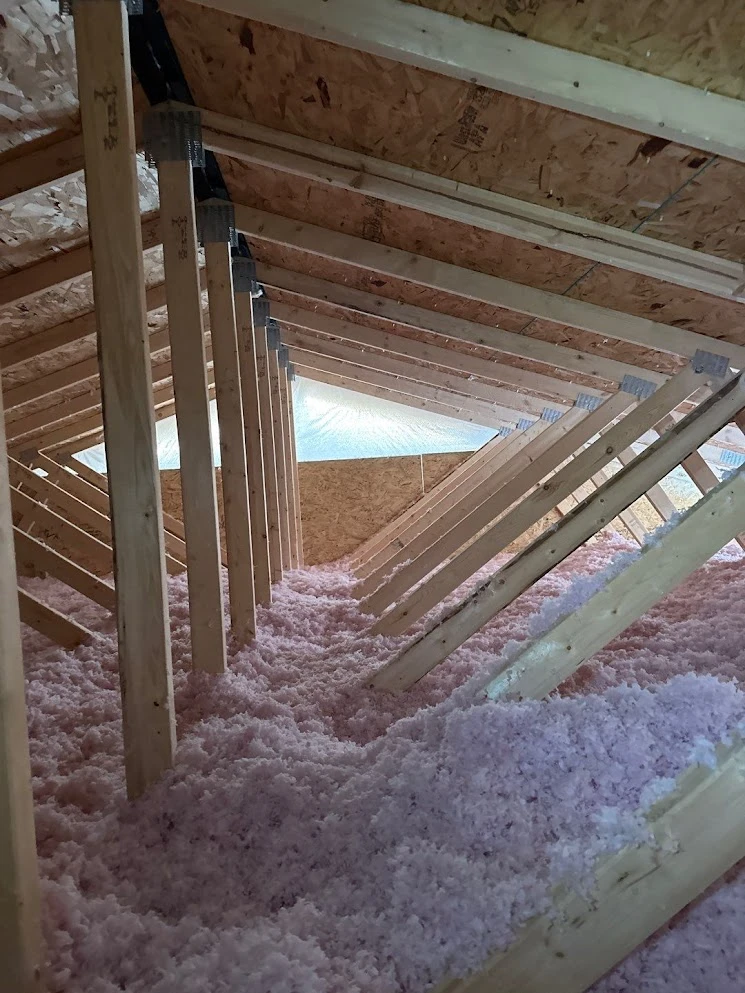
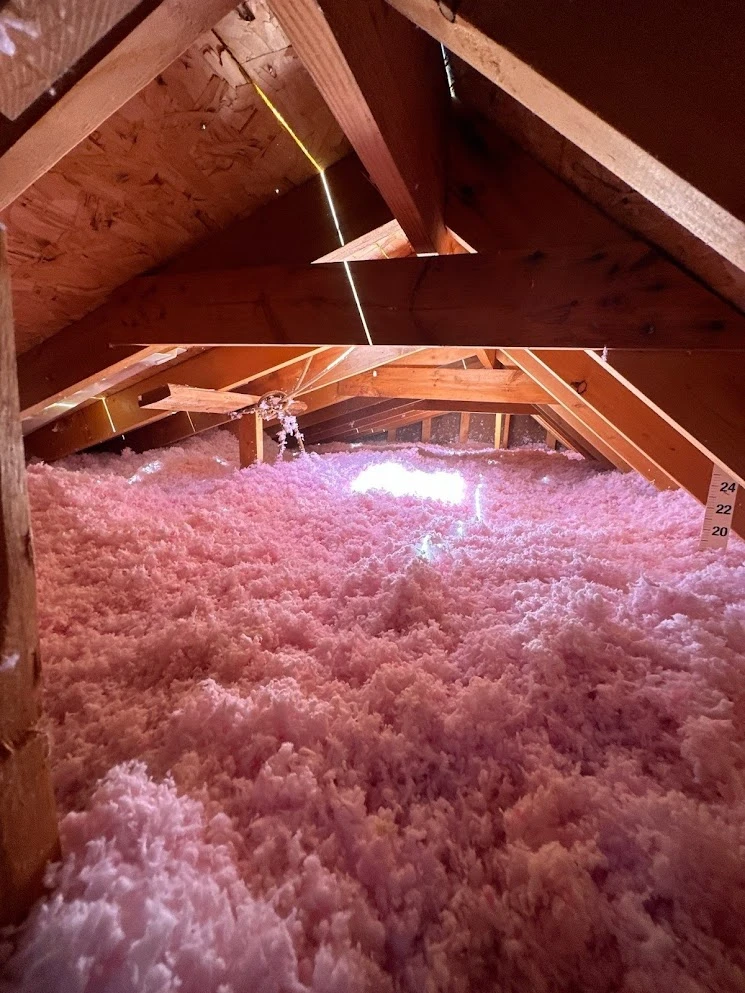
Cellulose, fiberglass, and mineral wool can be blown into wall cavities, attic floors, and hard-to-reach spaces using specialized equipment. This method conforms to irregular shapes and fills around obstructions better than batts. According to the DOE, cellulose is made primarily from recycled newsprint with 82% to 85% recycled content, while most fiberglass products contain 40% to 60% recycled glass. Blown-in insulation is a strong choice for retrofitting existing homes where wall cavities are closed.
Spray foam comes in two primary forms: closed-cell and open-cell. Closed-cell foam is denser, offers a higher R-value per inch, and acts as both an air barrier and a moisture barrier. Open-cell foam is lighter, less expensive, and allows water vapor to pass through. The DOE notes that foam insulation has higher R-values than traditional batt insulation for the same thickness and forms an air barrier that can eliminate the need for separate weatherization tasks like caulking, housewrap, and vapor barrier installation. Spray foam requires professional installation with specialized equipment.
Polystyrene (EPS and XPS), polyisocyanurate (polyiso), and polyurethane foam boards provide high insulating value in relatively thin panels. They are commonly used on exterior wall sheathing, basement walls, and foundations. Foam boards can block thermal bridging through studs and framing members when installed continuously. Some types, like polyiso, experience thermal drift over time as low-conductivity gases escape and are replaced by air.
Unlike bulk insulation that slows conductive heat flow, reflective systems work by bouncing radiant heat away from living spaces. These are most effective in hot climates for reducing cooling loads, especially when cooling ducts run through the attic. The DOE reports that radiant barriers can lower cooling costs 5% to 10% in warm, sunny climates.
The table below compares the most common insulation options across the factors that matter most when selecting a material for a project.
| Insulation Type | R-Value Per Inch | Air Sealing | Moisture Resistance | Best Application | Professional Install Required |
|---|---|---|---|---|---|
| Fiberglass batts | 2.9 to 3.8 | No | Low | Standard wall and floor cavities | No |
| Blown-in cellulose | 3.1 to 3.8 | Minimal | Moderate | Attics, existing wall cavities | Yes |
| Blown-in fiberglass | 2.2 to 2.7 | Minimal | Low | Attics, open floor cavities | Yes |
| Open-cell spray foam | 3.5 to 3.7 | Yes | Low | Wall cavities, attics | Yes |
| Closed-cell spray foam | 6.0 to 7.0 | Yes | High | Crawlspaces, basements, walls | Yes |
| Rigid foam board | 3.8 to 6.5 | No | Varies | Foundations, exterior sheathing | No |
| Radiant barrier | N/A | No | N/A | Hot climate attics | No |
The ENERGY STAR recommended R-values provide clear guidance based on climate zone. For Annandale, MN and the surrounding areas in Minnesota’s cold climate (Zone 6 to 7), the requirements are among the most demanding in the country.
| Climate Zone | Uninsulated Attic | Existing Attic (3-4 inches) | Uninsulated Floor | Uninsulated Wall |
|---|---|---|---|---|
| Zone 3 | R-49 to R-60 | R-38 to R-49 | R-19 | R-20 |
| Zone 4 (except Marine) | R-60 | R-49 | R-19 | R-20 + R-5 CI |
| Zone 6 | R-60 | R-49 | R-30 | R-20 + R-5 CI |
| Zone 7 and 8 | R-60 | R-49 | R-38 | R-20 + R-5 CI |
CI stands for continuous insulation applied to the exterior of the wall assembly. In Minnesota’s cold winters, reaching these R-values in attics and walls is essential for maintaining comfortable indoor temperatures and managing energy costs.
Attics are typically the first priority for insulation upgrades because they are accessible and lose more heat than any other part of the building envelope. For uninsulated attics, blown-in fiberglass or cellulose provides cost-effective coverage across large, open areas. In cathedral ceilings or conditioned attic spaces, spray foam applied to the underside of the roof deck creates both insulation and an air seal in one step.
Exterior wall cavities in existing homes can be insulated by blowing material through small holes drilled in the siding or interior wall. For new construction, batts or spray foam fit into open cavities before drywall is installed. Spray foam has a clear advantage in walls because it seals gaps and cracks that batts cannot reach.
Below-grade spaces benefit from closed-cell spray foam due to its moisture resistance. Fiberglass batts can be used in crawl space floors and basement walls, but they must be protected from moisture with proper vapor barriers. The DOE recommends sealing air leaks before insulating these areas, since moisture carried by air leaks can compromise insulation performance.
Commercial projects often require higher R-values, fire-rated assemblies, and code compliance that demands professional expertise. Spray foam, rigid foam board, and mineral wool are common in commercial applications due to their fire resistance and structural benefits.
| Project Type | Recommended Insulation | Key Considerations |
|---|---|---|
| New construction home | Spray foam walls + blown-in attic | Maximum air sealing, meets high R-value codes |
| Retrofit existing home | Blown-in attic + wall dense-pack | Non-invasive, improves comfort without major renovation |
| Pole barn or outbuilding | Closed-cell spray foam | Handles temperature swings, seals metal structures |
| Crawlspace encapsulation | Closed-cell spray foam | Moisture barrier prevents mold and air leaks |
| Commercial new build | Spray foam + rigid board combo | Meets fire codes, maximizes energy efficiency |
The EPA estimates that homeowners can save an average of 15% on heating and cooling costs, or 11% on total energy costs, by air sealing their homes and adding insulation in attics, floors over crawlspaces, and basements. In poorly insulated homes, the savings can be even higher. For a home in Minnesota where heating demands are significant, this translates to meaningful annual savings that compound over the life of the building.
Proper insulation eliminates cold spots, drafts, and temperature fluctuations between rooms. Homes with effective insulation and air sealing maintain more uniform temperatures throughout, reduce noise from outside, and provide better humidity control. ENERGY STAR notes that if you added up all the leaks and gaps in a typical home, it would equal leaving a window open every day of the year.
Insulation combined with proper air sealing reduces the infiltration of pollen, dust, and pollutants from outside. Spray foam’s air barrier properties also help prevent condensation within wall cavities, reducing the risk of mold growth and structural damage. In crawlspaces and basements, closed-cell foam provides a moisture-resistant barrier that protects the building envelope.
Reducing energy consumption directly lowers greenhouse gas emissions associated with heating and cooling. Research sponsored by NAIMA found that the insulation currently installed in U.S. buildings saves approximately 10.41 quadrillion Btu of energy annually, making insulation one of the most effective single measures for reducing building-related carbon emissions.
Whether you are building a new home, retrofitting an older property, or insulating a commercial building in the Annandale, MN area, our team at Peak Spray Foam Insulation has the experience and expertise to recommend and install the right insulation solution for your specific needs. We specialize in closed-cell spray foam, blown-in fiberglass, batt insulation, pole barn insulation, and commercial insulation projects. Contact us today at [email protected] or call (612) 482-4742 to discuss your project.
Schedule an Insulation Assessment
Let our professionals help you create a more comfortable, energy-efficient building that performs for years to come.
Check your attic first. If you can see the floor joists through the insulation, you likely need more. Homes built before 2012 are especially likely to be under-insulated according to current energy code standards.
Closed-cell foam is denser, offers a higher R-value per inch, and acts as a moisture barrier. Open-cell foam is lighter, less expensive, and allows vapor to pass through, making it better for interior wall cavities in dry conditions.
Yes, blown-in cellulose or fiberglass can be installed through small holes drilled in the wall, either from the exterior when re-siding or from the interior, with the holes patched afterward.
When properly installed, spray foam insulation can last the lifetime of the building without settling, degrading, or losing its air-sealing properties.
It depends on your location and the scope of work. Many insulation retrofits do not require permits, but new construction, commercial projects, and structural changes typically do. Check with your local building department.