

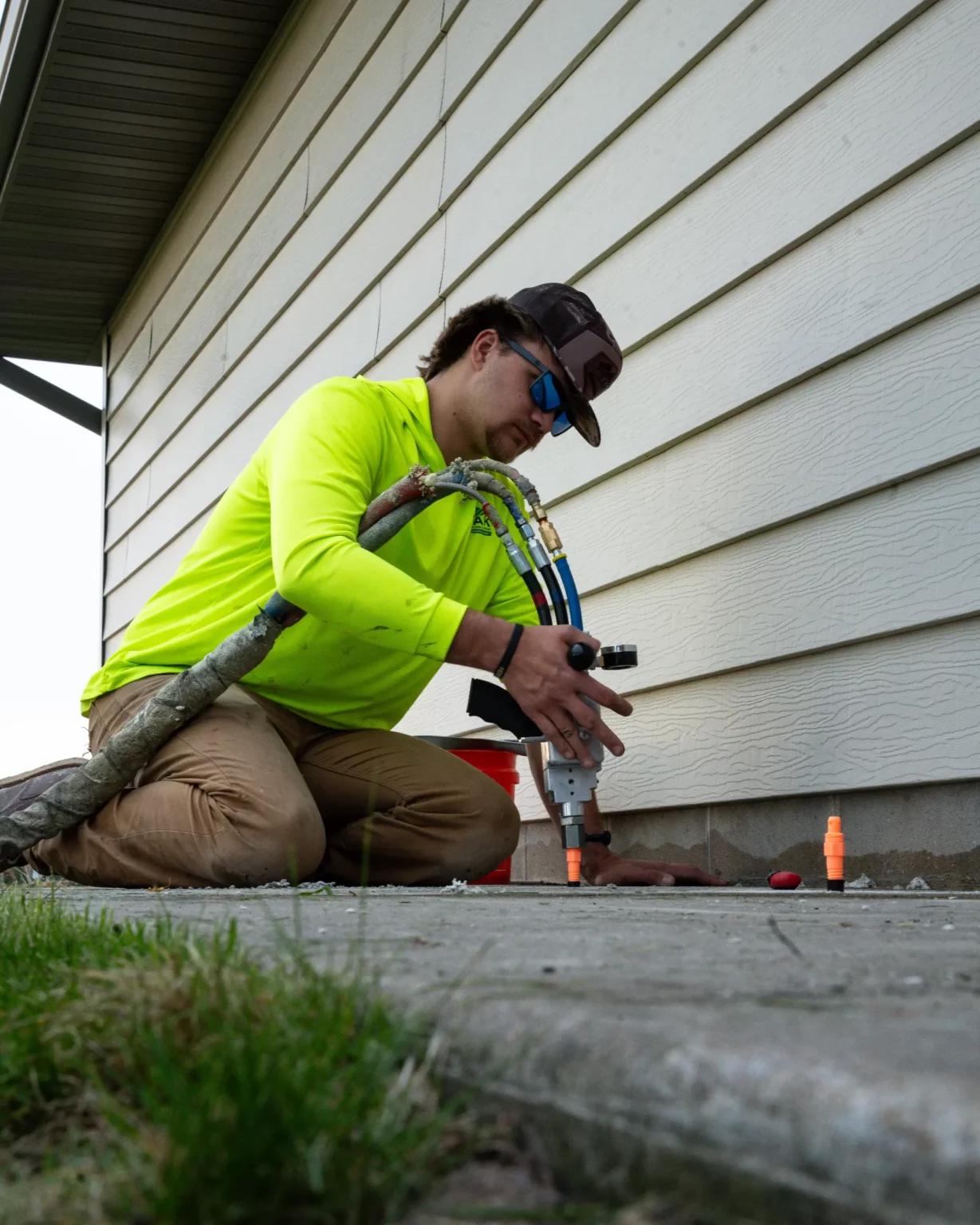
Choose a Concrete Lifting Contractor in St. Cloud, MN homeowners can trust by checking three things: the lifting method, the equipment on the truck, and a written estimate after an on-site visit. Ask what caused your slab to sink, not just how the crew plans to lift it back into place.
Sunken concrete is a trip hazard, and it can send water toward your foundation. Lifting puts the slab back at its original height without tearing it out. The basic job is simple. Your contractor drills small holes, pumps material into the void underneath, and raises the slab until it sits level. When you compare a Concrete Lifting Company in St. Cloud, MN property owners can call, look at the method first. It drives the cost, the mess, and how the repair holds up.
You can often spot trouble before it gets expensive. Catching it early usually means a simpler repair.
Central Minnesota freezes deep in winter, then thaws into wet, soft soil in spring. That cycle moves concrete, and knowing the cause helps you judge any contractor’s plan. Frost damage needs freezing temperatures, soil that holds water, and a water source, according to the Minnesota Local Road Research Board. Clay and silt are common trouble soils because they hold moisture. As they thaw, they lose strength, so a slab can drop unevenly. That study covers roads, but the same soil behavior often applies under driveways and sidewalks.
Moisture matters too. Minnesota LTAP reports that precipitation has risen by about half an inch to an inch before and after the cold season, and extra moisture can worsen heaving. The same research found no clear rise in freeze-thaw cycles, and its authors note the results may not hold statewide. A slab that sinks near a downspout may have a water problem on top of a soil problem.
Two methods dominate the work. Mudjacking pumps a cement-based slurry, and foam lifting injects polyurethane. Neither wins every job, so ask your contractor why they picked one for your slab. Spray Foam Systems explains that mudjacking uses a slurry of cement, sand, soil, and water. It also notes that the heavier material can add load to weak soil. Because that company sells foam products, weigh its comparison with that in mind. Mudjacking has worked well on many jobs for many years.
| Factor | Mudjacking | Polyurethane Foam |
|---|---|---|
| Material | Cement, sand, soil, water | Expanding polyurethane |
| Weight on Soil | Heavier | Lighter |
| Hole Size | Larger | Smaller |
| Cure Time | Longer | Typically minutes |
| Water Exposure | More vulnerable | Resists washout |
Price depends on the method, slab size, and access. When a contractor offers both methods, ask for both quotes in writing so you can compare them side by side.
Equipment says a lot about how a crew works. You don’t need to know every machine, but you should know what to look for before drilling starts.
Any Concrete Leveling Contractor in St. Cloud, MN residents consider should show you this gear and explain what each piece does.
A few direct questions will tell you more than a polished brochure. Write the answers down so you can compare estimates later.
The best Concrete Raising Services in St. Cloud, MN customers can hire put the scope and price in writing before any work begins.
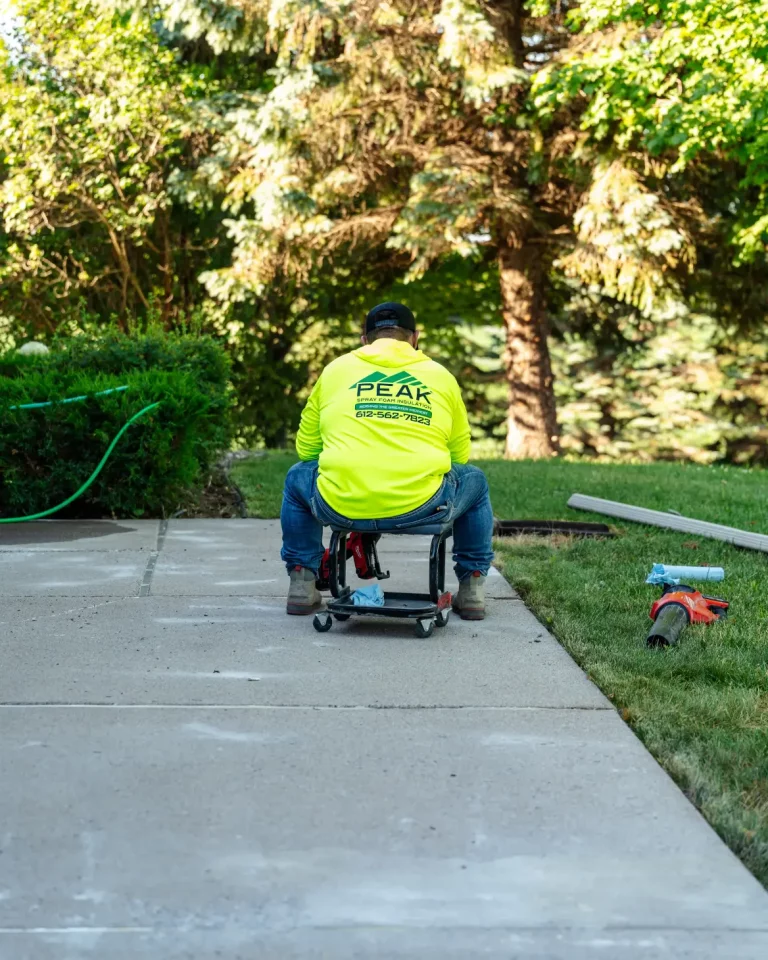
Some warning signs show up early. Walk away if you see these.
Not sure what’s going on under your driveway, patio, or sidewalk? Peak Spray Foam Insulation in St. Cloud, MN offers a free quote. Tell us where the concrete is sinking, and we’ll go over your options with you.
It often is, but not always. The answer depends on the slab’s size, condition, and the cause of the settling.
It can if the soil or water problem underneath isn’t fixed. That’s why the cause of the settling matters as much as the lift.
Heavily damaged concrete may not lift cleanly, and replacement can make more sense. A contractor should tell you that plainly after seeing the slab.
Yes, contractors commonly lift garage floors, patios, driveways, and sidewalks. Access and slab condition decide whether a specific job is a good fit.
No, lifting doesn’t repair a sinkhole. A sinkhole points to a bigger soil problem that needs a different fix.