
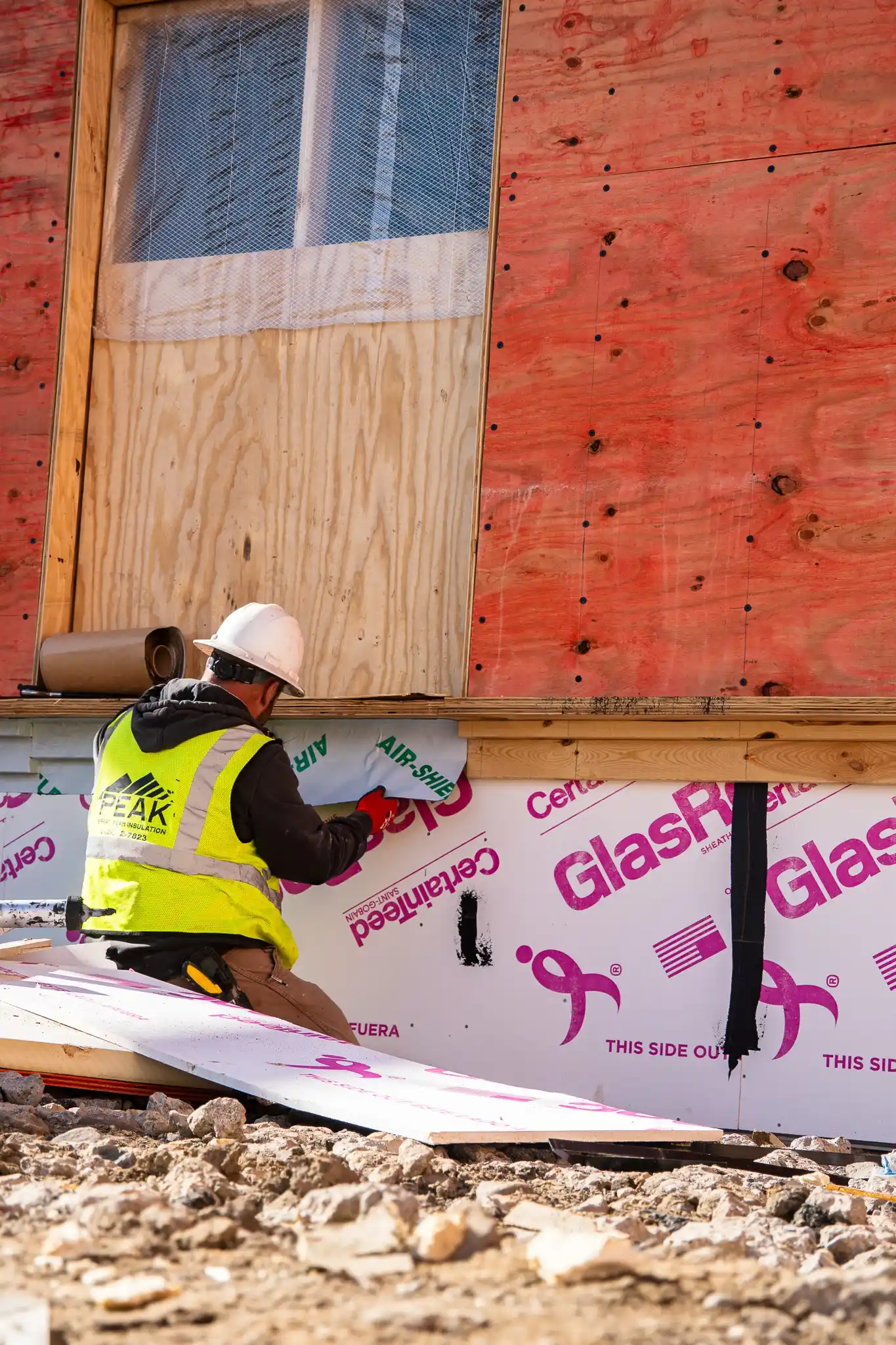
Unseen gaps in a commercial building's exterior allow conditioned air to escape and moisture to seep in, leading to skyrocketing energy bills and potential structural decay. Installing a high-performance Air Barrier Application in Annandale and surrounding areas, including Monticello, St. Michael, Albertville, Otsego, Elk River, St. Cloud, Sauk Rapids, and Waite Park, creates a continuous, airtight shield that fortifies the building envelope of schools, brick structures, and other commercial properties against the unpredictable Minnesota climate.
Advanced protection goes beyond simple insulation by managing air pressure and moisture vapor, ensuring a healthier indoor environment and significant long-term financial savings. By choosing this modern approach to building science, commercial property owners invest in a future-proof structure that remains comfortable, dry, and efficient regardless of the season. For residential properties, a Tyvek-style weather barrier material is typically applied instead.
Uncontrolled air leakage is one of the primary drivers of energy waste in commercial properties such as schools and brick buildings. A seamless weather barrier acts as a protective skin, preventing the "chimney effect" where warm air escapes through the top of a building while pulling cold air in through the bottom. This specialized service ensures that HVAC systems do not have to work overtime to compensate for lost air, directly lowering utility costs. By sealing every crack and crevice, the building maintains a stable internal temperature, which significantly reduces the wear and tear on mechanical heating and cooling systems.
Beyond energy efficiency, air barriers provide a critical defense against moisture-related damage. In a climate like Annandale's, where humidity and extreme temperature swings are common, vapor can condense inside walls and lead to hidden rot or mold growth. A properly applied barrier manages this moisture flow, keeping the structural components of the commercial building dry and sound. This preventative measure is essential for maintaining the property's resale value and ensuring the health of the occupants by blocking outdoor allergens and pollutants from entering the interior space.
A commercial building envelope is a complex system that must balance air tightness with the ability to manage water vapor. Utilizing liquid-applied or self-adhering membranes ensures that the transition points between different building materials, such as where a wall meets a window or a foundation, are completely sealed. This level of detail is vital because even the smallest oversight can lead to significant energy loss and moisture intrusion over time. Focusing on a holistic sealing strategy ensures that the entire structure performs as a single, efficient unit rather than a collection of leaky parts.
| Feature | Liquid-Applied Barriers | Sheet-Applied Membranes |
|---|---|---|
| Seamlessness | High (Monolithic) | Moderate (Seams Required) |
| Complex Geometry | Excellent for irregular shapes | Difficult to detail |
| Adhesion | Direct chemical bond | Mechanical or adhesive bond |
| Application Speed | Rapid coverage | Labor-intensive detailing |
Industry data from the Department of Energy suggests that air leakage can account for up to 40% of the energy used to heat and cool a typical building. This statistic highlights why building envelope sealing is no longer an optional upgrade but a necessity for modern commercial construction. Choosing the right materials for the specific climate conditions in Minnesota ensures that the barrier remains flexible and effective even during the deepest winter freezes or the most humid summer days.
It is a common misconception that insulation and air barriers are the same thing, but they serve different technical purposes. While closed-cell spray foam provides excellent thermal resistance and can often function as an air seal within a wall cavity, a dedicated air barrier is a specialized system designed for the exterior or interior skin of commercial buildings such as schools and brick structures. An air barrier application is not itself a spray foam; rather, it is a combination of advanced membranes and sealants that wrap the structure to control air pressure and moisture.
Using these two distinct technologies together offers the ultimate level of protection for commercial properties in Annandale, MN. While the spray foam handles the temperature regulation, the air barrier manages the physical movement of air and liquid water through the building assembly. Recognizing that the air barrier is a separate, specialized layer ensures that the building meets the highest standards of modern engineering. This distinction is critical for architects and commercial property owners who want to ensure their structures are completely protected from every environmental angle.
The effectiveness of any air barrier system is heavily dependent on the quality of the products used during the installation process. High-grade materials must be able to withstand the physical stresses of a commercial building's natural expansion and contraction without cracking or peeling. Utilizing industry-leading solutions from Grace and W.R. Meadows ensures that every layer of the barrier system, from the primers to the detail membranes, works in harmony to provide a lifetime of protection. These products are engineered to provide superior adhesion to various substrates, including concrete, masonry, and brick.
Precise material selection is the cornerstone of a successful project. For instance, vapor-permeable membranes allow walls to "breathe" while remaining airtight, which is crucial for preventing trapped moisture. On the other hand, non-permeable options are often required in specific zones to stop vapor drive entirely. Matching the material properties to the specific needs of the commercial structure ensures the best possible performance and protection, while residential projects typically rely on Tyvek-style wraps.
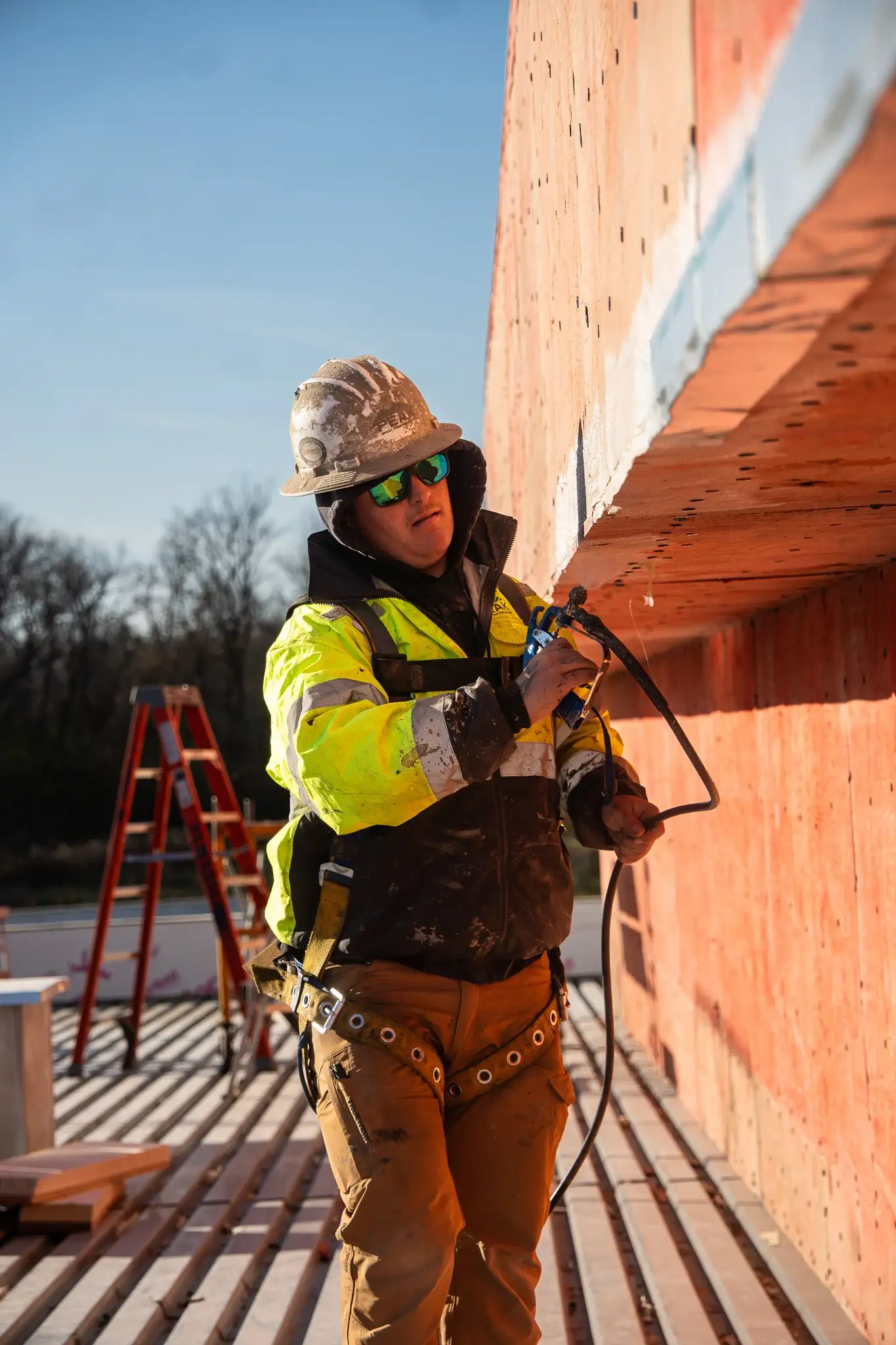
Modern air barrier systems are designed to be applied to a wide variety of commercial surfaces and locations within a building's structure. Whether it is a new construction project or a renovation of an existing school or brick property, these barriers can be integrated into the design to maximize efficiency. High-traffic areas, storage spaces, and specialized commercial environments benefit from the added protection of a dedicated air and weather shield. The versatility of liquid membranes allows for application on complex architectural shapes that traditional Tyvek-style residential wraps simply cannot cover effectively.
Things to consider: When planning an application for an older commercial structure, it is important to assess the existing ventilation system. Since an air barrier significantly tightens the building, ensuring proper mechanical ventilation is key to maintaining a fresh indoor atmosphere and preventing "stale" air.
Annandale experiences a wide range of weather conditions, from heavy snow and sub-zero temperatures to intense summer heat and thunderstorms. These fluctuations put immense pressure on a commercial building's exterior, causing materials to expand and contract. A local approach to air barrier installation takes these specific environmental factors into account, utilizing materials that remain pliable and durable under local stress. This localized focus ensures that the energy-saving benefits of the barrier do not degrade after just a few seasons.
Investing in energy-efficient air barriers also contributes to the overall sustainability of the Annandale community. By reducing the carbon footprint of individual commercial buildings, property owners help lower the collective energy demand of the region. This service is a practical way to support environmental goals while simultaneously improving the operational comfort and financial health of businesses and institutions. The result is a community of commercial structures that are tougher, more efficient, and better prepared for the future.
The installation process requires a meticulous eye for detail to ensure that no gaps are left behind. Every penetration through the commercial building envelope, such as pipes, wires, and vents, must be carefully flashed and sealed. This level of precision prevents the "pumping" of air that occurs when wind hits a building, which can force moisture deep into the wall cavities. A systematic application process ensures that the barrier is continuous and free of defects, providing a reliable shield that commercial property owners can depend on for decades.
Schools and brick buildings benefit immensely from this service because it directly impacts the comfort of the interior space. By eliminating cold spots and drafts, the building feels more consistent and stable for occupants. Furthermore, the reduction in outdoor noise infiltration is a common but often overlooked benefit, creating a quieter and more productive indoor environment. For residential homes, a Tyvek-style weather barrier delivers comparable protection in a format suited to lighter-frame construction, offering a high return on investment for property owners.
Protect your property from the elements and reduce your energy expenses with a professional air barrier system. Peak Spray Foam Insulation offers a free consultation and free quote for all projects in Annandale and the surrounding areas. Call (612) 482-4742 or email [email protected] to schedule your assessment today.
No, while spray foam can air-seal, a dedicated air barrier is a specific system of membranes used for comprehensive commercial building envelope protection.
Stopping the movement of moisture-laden air into wall cavities, it prevents the condensation that mold needs to thrive.
Yes, liquid-applied membranes are highly effective for retrofitting existing schools and brick structures to improve their efficiency and durability.
It creates a controlled environment where you can use mechanical ventilation to manage air quality rather than relying on random leaks.
Liquid-applied systems are relatively fast to install and can cover large commercial surface areas quickly while providing a seamless finish.